Before you expose a new AI‑driven capability to paying customers, you need a disciplined AI feature evaluation process. Skipping systematic testing can turn a promising model into a source of latency spikes, unexpected costs, or user frustration. This guide walks founders, product managers, and ops leads through the practical steps that turn experimental code into a reliable product feature.
Why AI Feature Evaluation Matters for Growing Products
Scaling SaaS and B2B platforms demand predictability. An AI component that behaves well in a sandbox can quickly become a bottleneck when traffic multiplies. Early evaluation surfaces hidden costs—such as cloud inference fees—or edge‑case failures that would otherwise erode trust. Moreover, investors and stakeholders expect data‑backed decisions; a rigorous evaluation provides the evidence needed to justify continued investment. By treating the AI model as a product feature rather than a research artifact, you align engineering, product, and ops teams around shared success criteria, reducing the risk of costly rollbacks after launch.
Define Success Metrics: Accuracy, Latency, Cost, and UX
Metrics are the language of evaluation. Accuracy (or recall/precision) tells you whether the model solves the problem; latency measures the end‑to‑end response time that users experience; cost captures compute spend per request; and UX quantifies the perceived value—often through task completion time or satisfaction surveys. Prioritize these metrics based on the feature’s context: a recommendation engine may tolerate a few hundred milliseconds, while a fraud detection model must respond in under 50 ms. Document thresholds in a shared spreadsheet so that engineers, product owners, and ops leads can all see when the model meets or falls short of expectations.
Build a Minimum Viable AI Test Harness
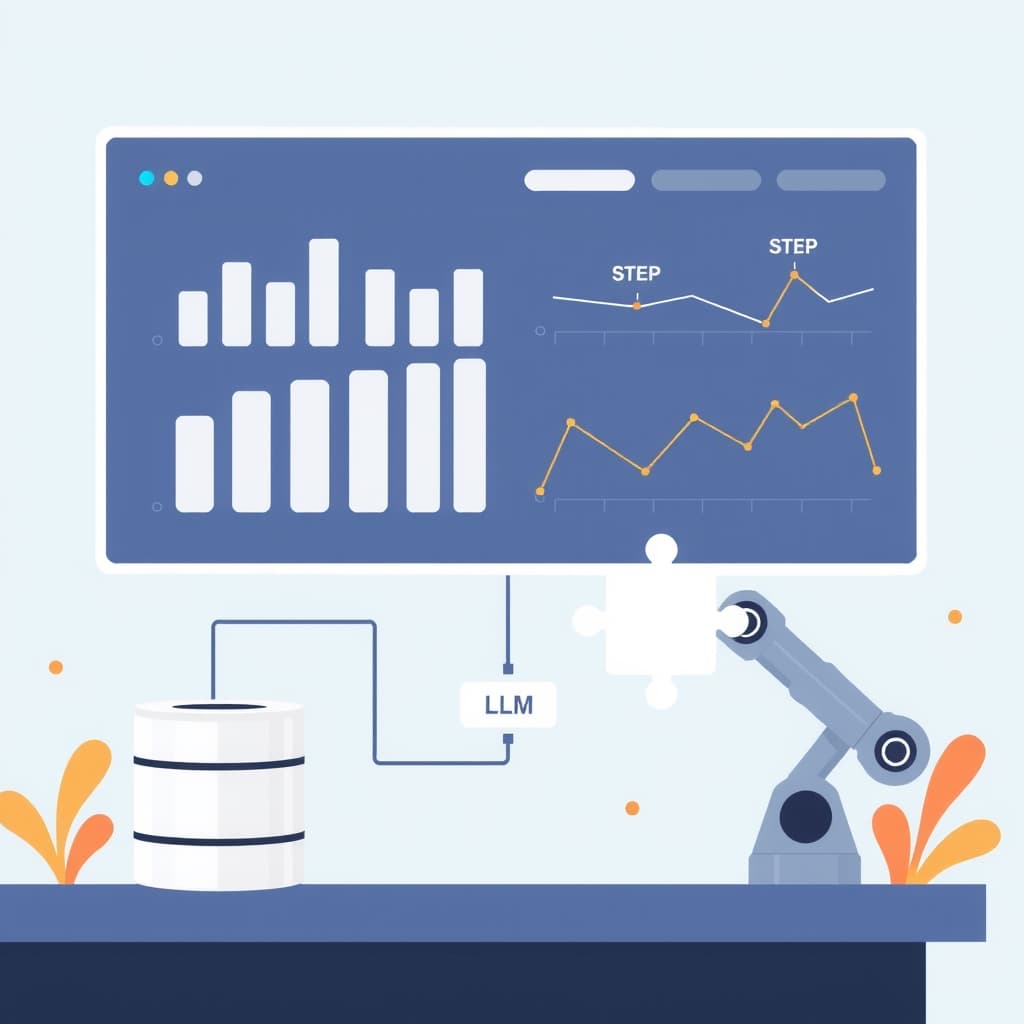
The test harness is a lightweight service that wraps your model with the same API contract, authentication, and monitoring you’ll use in production. Deploy it in a staging environment and instrument it with logs, request tracing, and health checks. Keep the harness simple: a single endpoint that accepts the same payload as the live feature, forwards it to the model, and returns the prediction along with latency and cost metadata. This isolation lets you iterate on model versions without impacting downstream services, and it provides a repeatable platform for the benchmarks described later.
Data Collection & Ground‑Truth Sets for Reliable Benchmarks
High‑quality evaluation hinges on representative data. Assemble a ground‑truth set that mirrors real user inputs, including edge cases and seasonal variations. Label the data using domain experts or a vetted crowdsourcing process to avoid bias. Store the dataset in a version‑controlled bucket so you can roll back if the labeling criteria change. When you run the test harness against this set, capture both model outputs and the ground‑truth labels; compute confusion matrices, ROC curves, or business‑specific KPIs. Regularly refresh the dataset to keep the benchmark relevant as your product and user base evolve.
A/B Testing AI vs. Non‑AI Flows: Methodology and Pitfalls
To prove that the AI adds value, run an A/B test that pits the AI‑augmented flow against the existing rule‑based or manual flow. Randomly assign users to control (non‑AI) or variant (AI) groups, and track the same success metrics defined earlier. Beware of leakage: ensure that shared caches or background jobs don’t inadvertently expose AI predictions to the control group. Also, run the test long enough to capture variability—typically a minimum of two business cycles. Analyze results with statistical significance testing; if the AI variant improves the primary KPI without violating latency or cost thresholds, you have a green light.
Iterate with Human‑in‑the‑Loop Feedback Loops
Even after a successful A/B test, continuous improvement is essential. Implement a human‑in‑the‑loop (HITL) system where users or internal reviewers can flag incorrect or sub‑optimal AI outputs. Feed these corrections back into your training pipeline to reduce systematic errors. A simple UI overlay that lets a reviewer select “Correct” or “Incorrect” and optionally provide the right answer can generate a stream of high‑quality labels. Over time, the HITL loop shrinks the gap between model predictions and ground truth, driving higher accuracy without a full retraining cycle.
Cost‑Control Checks Before Scaling to Production
AI inference costs can explode if you overlook per‑request pricing or model size. Before you flip the switch, run a cost simulation using the latency and request volume data collected in the test harness. Multiply average compute time by your cloud provider’s pricing for the chosen instance type, and compare it against your product’s margin. If the projected spend exceeds acceptable limits, consider model compression, batching, or moving to a more cost‑effective inference engine. The post‑launch support team can help set up automated alerts that warn you when spend deviates from the forecast.
Decision Gate: When to Ship, Refine, or Drop the Feature
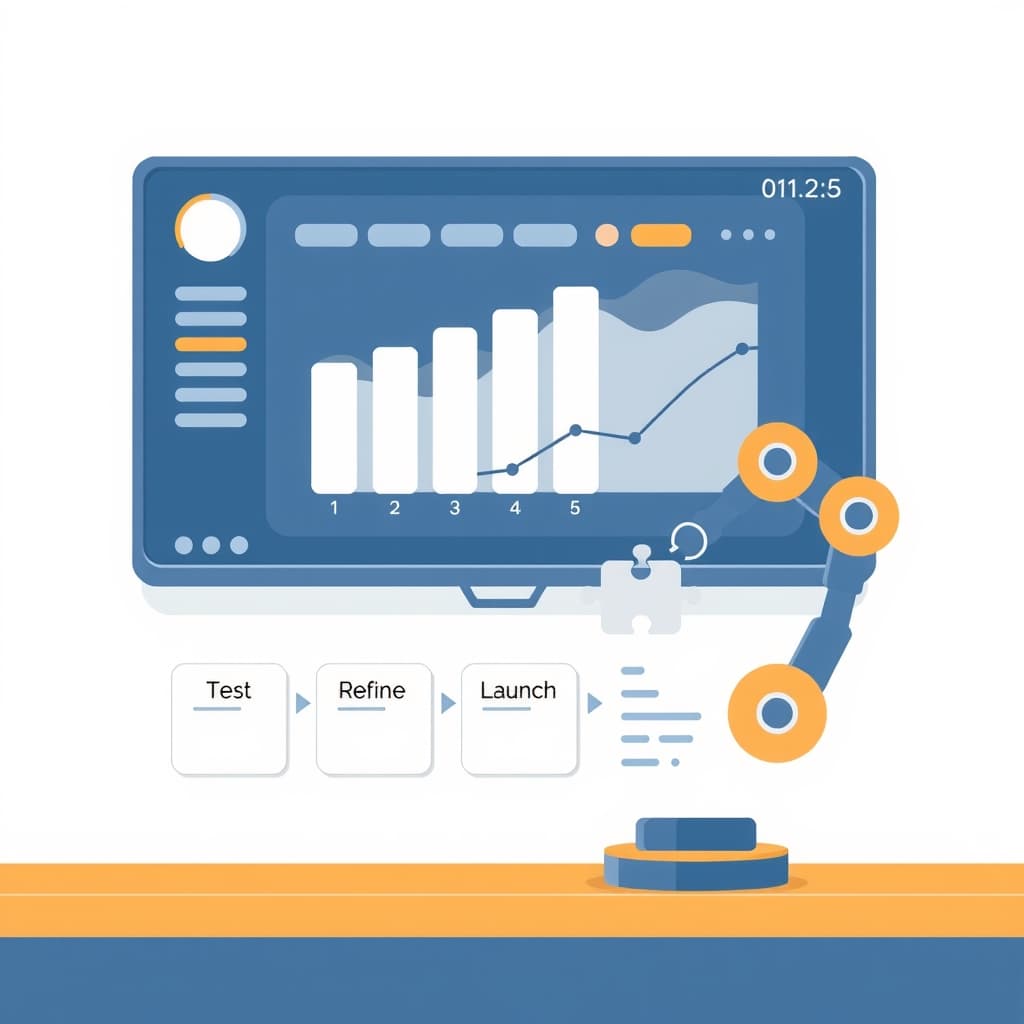
Combine the quantitative results from metrics, A/B testing, and cost analysis into a decision matrix. If accuracy meets the target, latency stays under the threshold, cost aligns with budget, and the AI variant shows a statistically significant uplift in UX, you can ship. If one metric falls short but the others are strong, schedule a refinement sprint—perhaps collecting more data or tuning hyperparameters. When multiple criteria consistently miss the mark, it’s wiser to drop the feature and revisit the problem later. Document the decision rationale so future teams understand the trade‑offs.
Next Steps & CTA: Partner with Experts to Accelerate AI Feature Delivery
Effective AI feature evaluation is a cross‑functional effort that benefits from seasoned guidance. Our team has built end‑to‑end pipelines for dozens of SaaS products, from internal approval tools to large‑scale B2B portals. Review our portfolio of products to see real‑world outcomes, then schedule a discovery call to map out your evaluation roadmap. Ready to move faster without sacrificing reliability? Book a call with SiteFusion today and turn your AI ideas into validated, revenue‑generating features.