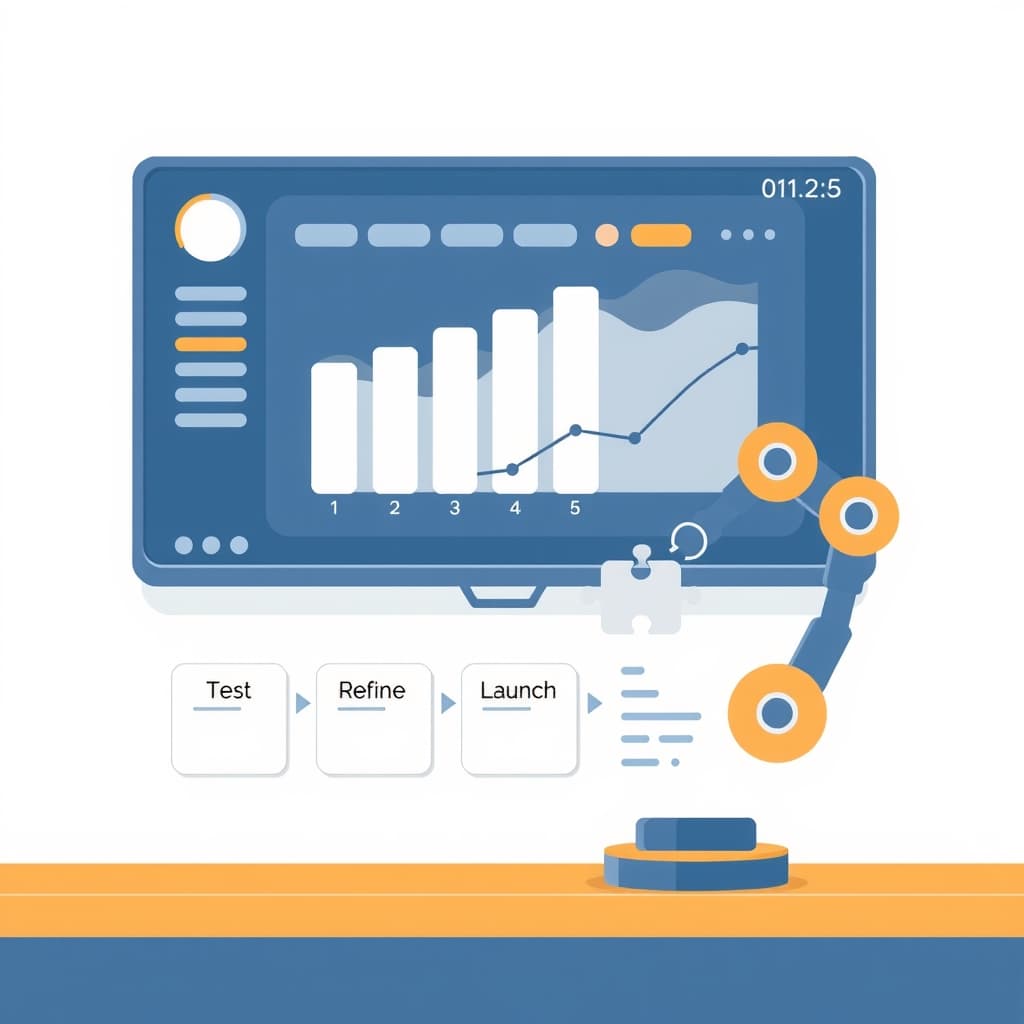
Why a Structured Evaluation Matters for AI Features AI feature evaluation
When you embed AI into a user‑facing product, the stakes are higher than with a typical UI tweak. A mis‑behaving model can erode trust, inflate costs, or even expose compliance risks. A structured evaluation framework gives you a repeatable process to surface those problems early, before they reach thousands of users. It also aligns cross‑functional teams—product, engineering, ops, and compliance—around a shared language of success and failure. By treating AI as a feature, not a black‑box, you can apply the same rigor you use for any release: hypothesis, experiment, measurement, and decision. This mindset reduces “move fast and break things” mentalities that often lead to costly rollbacks. In short, a disciplined AI feature evaluation approach protects brand reputation, controls spend, and creates a data‑driven feedback loop that fuels continuous improvement.
Defining Success Metrics Before You Build
Metrics are the compass for any AI initiative. Before a line of code touches the repository, decide what “success” looks like for both users and the business. Typical dimensions include:
- Business impact: revenue lift, churn reduction, or support ticket deflection.
- User experience: task completion time, satisfaction scores, or error tolerance.
- Technical health: model accuracy, latency, and cost per inference.
Prioritize a small set of leading indicators that are measurable from day one. For example, an AI‑driven recommendation engine might track click‑through rate (CTR) as the primary metric, while also monitoring latency to ensure the UI remains snappy. Tie each metric to a concrete target—e.g., “increase CTR by 8 % within 30 days” or “keep 95 % of responses under 200 ms.” Document these targets in a shared product spec so that engineers, data scientists, and ops can validate progress throughout the development cycle.
Choosing the Right Data Set for Ground‑Truth Testing
The fidelity of your evaluation hinges on the data you feed your models. Start with a representative sample of real user interactions, not just a curated benchmark. If you’re building a document‑processing AI, consider the AI‑Powered Document Workflow Automation: A Founder’s Playbook for guidance on assembling domain‑specific corpora. Key steps include:
- Identify core use‑cases and collect raw logs that capture edge cases.
- Label a balanced subset with human reviewers to create ground truth.
- Partition the data into training, validation, and hold‑out test sets, preserving temporal order where relevant.
- Audit for bias, privacy, and compliance—especially if you handle PII.
A well‑curated data set lets you surface performance gaps early and provides a defensible baseline for A/B or canary experiments later in the pipeline.
Designing a Controlled Pilot: A/B vs. Canary Rollouts
Once you have a model that meets internal benchmarks, move to a controlled pilot. Two common patterns are:
- A/B testing: Split traffic 50/50 between the existing logic (control) and the AI‑enhanced version (variant). This yields statistically robust comparisons of key metrics but requires a full feature toggle.
- Canary rollout: Gradually increase exposure—from 1 % to 10 % to 25 %—while monitoring health signals. This approach is safer for high‑impact changes where a sudden drop in performance could affect many users.
Choose the method that matches your risk tolerance and metric stability. For latency‑sensitive features, a canary lets you catch infrastructure bottlenecks before they affect the entire user base. For conversion‑oriented experiments, an A/B test provides clearer causal evidence.
Measuring Accuracy, Latency, and Cost in Real‑World Use
During the pilot, track three operational pillars:
- Accuracy: Compare model predictions against the ground‑truth labels collected in production. Use precision, recall, or F1 as appropriate, and watch for drift over time.
- Latency: Instrument end‑to‑end response times, not just model inference. Include network, queue, and rendering delays. Set Service Level Objectives (SLOs) such as “95 % of responses under 250 ms.”
- Cost: Monitor compute spend per thousand inferences. Cloud providers often charge per GPU/CPU second; a modest latency increase can dramatically raise cost at scale.
Visualize these metrics in a dashboard and set automated alerts for threshold breaches. This real‑time visibility ensures you can act before a small anomaly escalates into a customer‑visible outage.
Iterating on Feedback: When to Refine vs. Pivot
Post‑pilot data will tell you whether the AI feature is on track. If accuracy is within 5 % of the target but latency exceeds the SLO, focus on engineering optimizations—model quantization, caching, or edge deployment. If accuracy consistently falls short despite engineering tweaks, consider a more fundamental pivot: retrain with additional data, switch model families, or even revert to a rule‑based fallback.
Establish decision gates:
- Refine: Minor metric gaps (<10 %) that can be closed with incremental work.
- Pivot: Major gaps (>20 %) or emerging regulatory concerns that demand a different approach.
Document the rationale behind each decision to keep stakeholders aligned and to build institutional knowledge for future AI initiatives.
Checklist for a Production‑Ready AI Feature Launch
Before you flip the final switch, run through this concise checklist:
- ✅ Success metrics defined and targets approved.
- ✅ Ground‑truth data validated for bias and compliance.
- ✅ Model versioned, reproducible, and stored in a secure registry.
- ✅ Monitoring pipelines for accuracy, latency, and cost are live.
- ✅ Automated rollback or fallback mechanisms in place.
- ✅ Security and privacy reviews completed (see our Privacy Compliance Roadmap).
- ✅ Post‑launch support contract established (post‑launch support).
- ✅ Communication plan for internal teams and customers.
Cross‑check each item with the product, engineering, and ops leads. A single missed step can turn a well‑intended AI feature into a costly incident.
Next Steps: Embedding the Framework into Your Product Roadmap
To make AI feature evaluation a habit rather than a one‑off project, embed the framework into your quarterly planning cycles. Allocate dedicated “AI sprint” capacity for data collection, model training, and pilot execution. Pair each AI epic with a non‑AI counterpart to ensure balanced resource allocation. Document learnings in a shared knowledge base and feed them back into the next iteration’s hypothesis. Over time, the framework becomes a living process that scales with your product portfolio, allowing you to launch AI responsibly across multiple customer‑facing experiences.
Ready to put this framework into practice? Our team can help you design, build, and monitor AI features that align with your growth goals. Book a call with SiteFusion today and turn responsible AI into a competitive advantage.