Launching a multi-tenant SaaS onboarding flow that delivers value in the first week is the single most effective lever against early churn. For founders and product leaders, the difference between a user who signs up and a user who upgrades often hinges on how quickly they see tangible results. In this blueprint we walk through the technical and product decisions that keep the onboarding friction low, the data model clean, and the revenue pipeline humming from day one.
multi-tenant SaaS onboarding: The Core Challenge
In a multi‑tenant architecture each new customer arrives on a shared codebase but expects an isolated experience. The onboarding engine must provision data, permissions, and billing without slowing down the rest of the platform. That means designing for concurrency, idempotency, and observability from the first API call. When you treat onboarding as a first‑class product feature rather than an afterthought, you reduce the risk of “ghost” tenants, duplicate records, and the support tickets that drive first‑week churn.
Why First‑Week Onboarding Matters for Multi‑Tenant SaaS
The first seven days set the mental model a user builds around your product. If they encounter broken links, missing data, or confusing UI, the perceived value drops sharply and the likelihood of cancellation spikes. Multi‑tenant SaaS adds a layer of complexity: each tenant’s data must be isolated, yet the onboarding process must scale to dozens of sign‑ups per hour. By front‑loading value—whether it’s a report, an integration, or a workflow— you create a “quick win” that justifies the subscription cost and fuels word‑of‑mouth referrals. Studies of SaaS churn consistently show that users who achieve a “time‑to‑value” under 48 hours are 2‑3× more likely to become long‑term customers.
Mapping the Customer Journey: From Signup to First Value
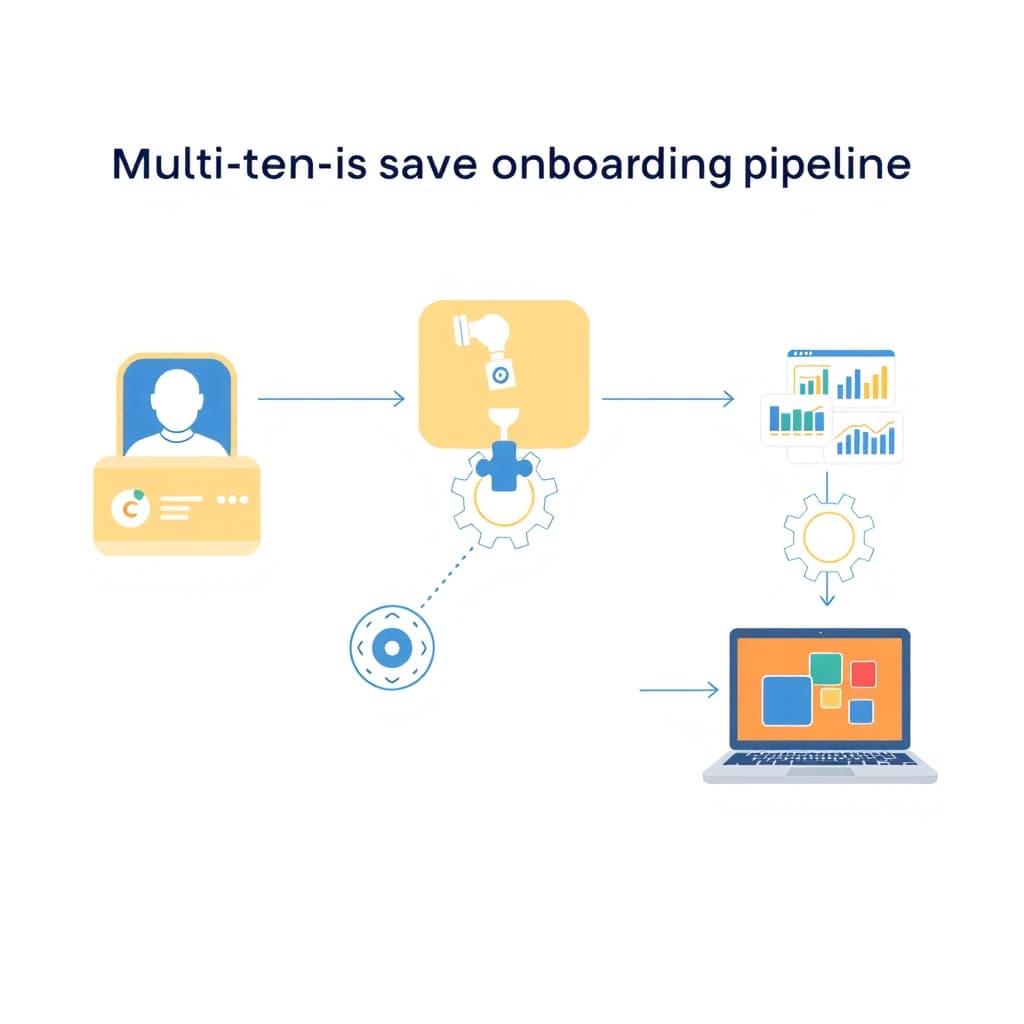
Start with a high‑level flowchart that captures every touchpoint: email verification, tenant provisioning, role assignment, trial activation, and the first actionable insight. Break the journey into three micro‑stages—Acquire, Activate, Realize. In the Acquire stage, a single‑click signup (OAuth or magic link) reduces friction. During Activate, spin up a sandbox tenant, preload sample data, and surface a guided tour that highlights the core workflow. Finally, in Realize, deliver a concrete outcome—like a generated report or an automated email—that the user can share with their team. Mapping these steps helps you identify hand‑off points where automation or a short video can replace a manual support interaction.
Designing a Scalable Multi‑Tenant Data Model for New Users
A clean data model starts with a tenant identifier that is appended to every table, row, or document. Use a “soft‑partition” approach (tenant_id column) for relational databases, and a dedicated namespace for NoSQL stores. Provisioning should be transactional: create the tenant record, allocate storage quotas, and seed default configuration in a single saga. Leverage database‑level row‑level security (PostgreSQL RLS) or tenant‑aware ORM middleware to enforce isolation automatically. When you separate tenant‑specific settings from global defaults, you can roll out feature flags without risking cross‑tenant leakage. This design also simplifies the transition from no‑code prototypes to custom software as you scale.
Implementing Role‑Based Access Control Early in the Flow
RBAC should be baked into the onboarding wizard, not bolted on later. Define three baseline roles—Owner, Admin, and User—each with a clear permission matrix. As soon as the tenant is created, assign the signing‑up founder the Owner role and generate a one‑time invitation link for additional members. Store role assignments in a dedicated access table keyed by tenant_id and user_id, and enforce checks at the API gateway level. Early RBAC prevents privilege creep and reduces the support burden when a new team member joins. For larger enterprises, consider attribute‑based access control (ABAC) extensions that tie permissions to subscription tier or compliance requirements.
Automating Billing & Trial Activation with Minimal Friction
Integrate your payment processor (Stripe, Paddle, etc.) via webhook‑driven events. When the signup form is submitted, create a trial subscription in “pending” state, then immediately provision the tenant. Once the tenant is ready, activate the trial and send a confirmation email that includes a “Start Now” button linking directly to the first‑value page. Use idempotent webhook handlers to avoid duplicate charges if the user refreshes the page. Offer a seamless upgrade path: a single click that swaps the trial plan for a paid plan while preserving the tenant’s data. This flow reduces the “checkout abandonment” metric and aligns billing with the moment the user experiences value.
Measuring Success: Metrics and A/B Tests to Track Early Churn
Define a core KPI suite: Time‑to‑First‑Value (TTFV), Activation Rate (signup → trial activation), and First‑Week Retention. Instrument each step of the onboarding funnel with event tracking (e.g., “tenant_created”, “role_assigned”, “first_report_generated”). Run A/B tests on variations such as a video tour vs. interactive walkthrough, or a single‑page onboarding vs. multi‑step wizard. Use statistical significance thresholds (95% confidence) before rolling out changes. Pair quantitative data with qualitative feedback collected via in‑app surveys to uncover hidden friction points. Over time, a dashboard that surfaces these metrics becomes a leading indicator of revenue health.
Iterating the Onboarding Experience Without Disrupting Existing Tenants
Feature flags are your safest tool for rolling out onboarding changes. Wrap new UI components, data seeding scripts, or billing flows in a flag that can be toggled per tenant. This lets you pilot a new experience with a small cohort while the majority continue on the stable path. When a change proves successful, gradually expand the flag, monitoring for regression in the core metrics defined above. Keep backward compatibility in your API contracts; deprecate old endpoints only after a full migration window. This approach respects the operational stability of existing customers and aligns with the Post‑Launch Reliability Checklist we recommend.
Common Pitfalls and How to Avoid Them
Pitfall 1: Over‑customizing the tenant schema. Adding tenant‑specific columns early leads to schema drift. Stick to a core set of shared tables and store extensions in JSON blobs or separate micro‑services. Pitfall 2: Manual billing steps. Any human‑in‑the‑loop step introduces delay and error; automate with webhooks. Pitfall 3: Ignoring compliance from day one. Embed GDPR‑ready consent flows and data‑retention policies during onboarding; retrofitting later is costly. Pitfall 4: One‑size‑fits‑all onboarding. Segment users by industry or team size and tailor the guided tour accordingly. Addressing these traps early saves weeks of re‑engineering and keeps churn low.
Conclusion & Next Steps: Partner with an Expert Development Team
Building a frictionless multi-tenant SaaS onboarding experience demands a blend of product strategy, robust architecture, and relentless measurement. By mapping the journey, automating provisioning, and iterating behind feature flags, you can shave days off time‑to‑value and dramatically reduce first‑week churn. If you’re ready to turn this blueprint into production‑grade code, our team offers end‑to‑end development, from custom full‑stack Next.js/React builds to ongoing post‑launch support. Explore our custom SaaS pillar guide for a deeper dive, then book a call to discuss how SiteFusion can accelerate your onboarding velocity.