An LLM is one of the strangest tools we've ever built: a brain that knows almost everything about humanity and nothing about you. It has read the internet, but it has never seen your customers, your codebase, your inbox, or the way your business actually runs. Left on its own, it will happily answer questions with confidence and randomness in equal measure.
Turning that raw intelligence into a system you can trust comes down to four ideas that have gone viral in the AI-agent world lately: agent harness, loop engineering, LLMOps, and eval. They sound like heavy jargon, but each one is genuinely simple — and the reason they matter is that simple building blocks are exactly what let you assemble large, reliable, intelligent-feeling systems. This guide walks through all four, step by step, whether or not you write code.
This article is based on Sean Chen's excellent 20-minute explainer, "You Can Learn AI Agent Harness & Loop Engineering In 19 Min". We've cleaned up, restructured, and expanded the ideas into a written reference.
Start with a single agent run
Everything begins with one "agent run." A run takes an input — a user prompt — and produces a response. You ask ChatGPT or DeepSeek, "When was Sam Altman fired from OpenAI?" and the model works through the request until it returns an answer.
Here's the crucial detail: a bare agent run is ephemeral. There is no memory in it at all. What actually gets sent to the model is your current question plus whatever chat history is in the window — for example, an earlier instruction like "talk to me the way Elon Musk would grill Sam Altman." Those pieces are loaded into a short-term working memory (think of it as the model's context RAM), a language model acts as the question-and-answer engine, and you get a reply.
The problem is obvious the moment you try to build something real: that working memory is far too short-term. Serious agents need more than the current conversation.
The memory system: procedural, semantic, episodic
To go beyond a single throwaway exchange, agents rely on three kinds of longer-lived memory.
- Procedural memory — how the agent should behave. This is the set of instructions and skills that tell the agent how to act. In practice it's often just text: a system prompt, or the markdown files people now call "skills."
- Semantic memory — durable facts the agent should know. Who you are, what you've built, the specifics of your business. If you're not famous, the base model was never trained on this, so you have to supply it. (If you are famous, the model may already know, and you can skip it.)
- Episodic memory — past events. A time-series of previous conversations and triggers that aren't in the current window. "When did I last prepare a job application?" is answered by retrieving from episodic memory.
All three exist for one reason: a language model is a powerful general brain that knows the world but doesn't know you or the software running it. Memory is how you close that gap.
What "harness" really means
This is where the first buzzword clicks into place. A harness is literally the set of tools you use to control a horse. Picture the LLM as a powerful horse: it can run fast and far, but without a good harness it might throw you, or gallop off in a random direction. In a high-stakes setting, that's the last thing you want.
An agent harness is the framework you build around a language model so it behaves the way you intend. There's a deeper reason control matters: a language model works by predicting the probability of the next word. Probability means randomness, and when you're solving real problems you often want less randomness, not more. The harness is how you rein that in and get the model working at its full potential.
You don't have to build it from scratch. Frameworks like LangGraph, LangChain, and Pydantic (among many others) already handle a lot of the plumbing.
Storing and updating memory
Memory doesn't appear from nowhere — it has to be stored and constantly updated, which means databases. Whenever you see a "memory" in an agent diagram, imagine a database behind it that the run can read from and write to.
- Procedural memory is usually just files and text — the "skills" you feed the agent, like markdown instructions handed to a tool such as Claude Code. Simple, but on its own not enough for a serious system.
- Episodic memory is stored by tracking every event as it happens, producing a long, timestamped list of everything that occurred.
- Semantic memory can be entered by hand, or — better — allowed to evolve on its own by consolidating conversations into durable facts.
That last point is where good harness design shows. Imagine a direct-to-consumer brand whose support agents have answered "how do I get a refund if this doesn't work?" a million times. You don't want to keep all million raw conversations forever — it's expensive and slow. Instead you consolidate: after, say, every 2,000 conversations, you feed the batch into a summarizer agent — itself another LLM harness with its own system prompt — and distill the exchanges into a clean fact stored in semantic memory. That summarizer can even run on a cheaper, open-source model, since it's chewing through large volumes of text where a premium model isn't worth the cost.
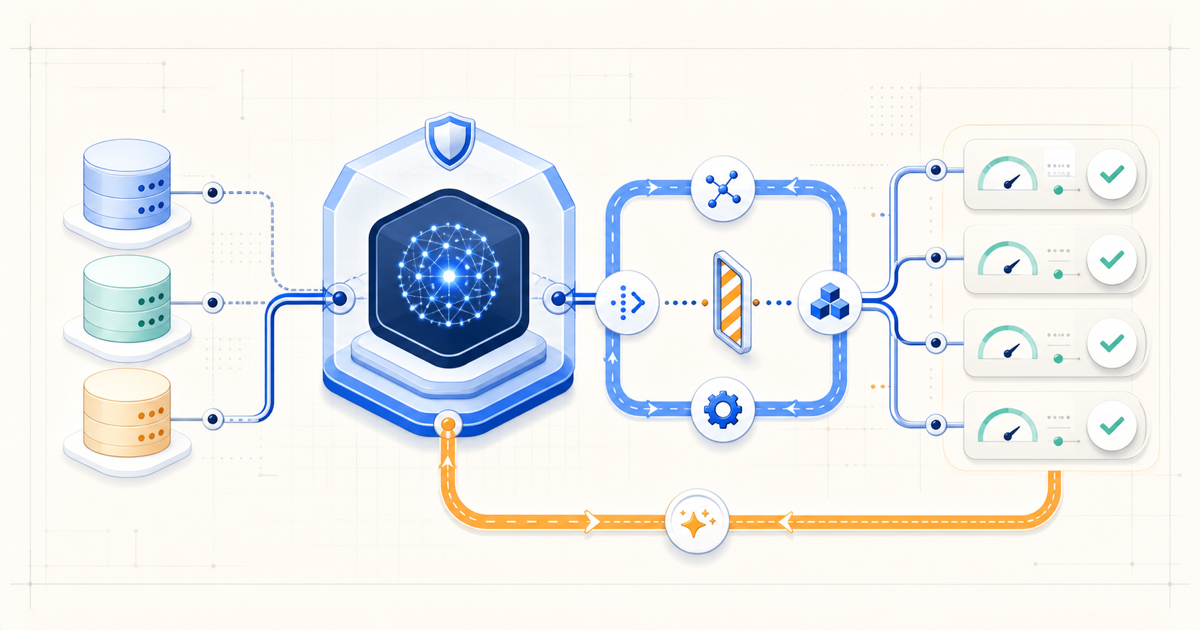
Put together, the loop looks like this: a user sends a prompt; the run assembles working memory from the system prompt, chat history, and relevant memories; the model answers; the exchange is written back to the database; and periodically that database is consolidated into distilled semantic facts so future retrieval stays fast.
Retrieval: RAG, SQL, and semantic search
Retrieval is its own famous buzzword: RAG, or retrieval-augmented generation. But not all memory is retrieved the same way.
Semantic memory is mostly plain RAG — these are facts and text, so you match on meaning. Episodic memory is trickier because it's a time-series. Consider two support questions:
- "What were the last 10 conversations with this specific US customer?" — this is basically a SQL query over recent, dated rows.
- "Which of my last 20 conversations had customers complaining about product quality that our agent failed to resolve?" — now you need SQL to pull the dated events and semantic search to find the ones that actually match the meaning of "unresolved quality complaint."
That's the point of RAG here: out of 2,000 messages, you don't want all of them — you want the 20 that are genuinely relevant, matched by semantic meaning, loaded into working memory so the model answers with the right context.
Tool calling and why agents loop
An agent doesn't only read memory — it acts. It calls tools: schedule a meeting, read or write CRM data, fetch a payment from Stripe or Alipay. And it rarely calls just one tool once; a real task can require many calls in sequence.
Which raises a danger. If you give the horse full power with no limits, it might loop forever, or never figure out the right moment to stop, or keep making tool calls long after the answer is good enough. That's the problem loop engineering solves.
Loop engineering and end-loop guardrails
A loop is part of the harness — another mechanism for keeping the technology running the way you want. Here's a concrete task: "Find out what customers are complaining about, suggest follow-ups to win them back, and if they asked for a refund, check whether we've issued it — and if not, do it."
Dumped into an agent, that becomes a sequence: the model decides which tools help, reads from a CRM like Salesforce, HubSpot, or AutoManus, and discovers 30 complaints in the last two months — 12 refunded, 8 not. It reasons about the next step, schedules meetings with the 8 who weren't refunded, and, if you've wired it up that way, even triggers the Stripe or Alipay refund directly. Each step feeds the next. That is the loop — it keeps going until the task is finished.
The essential ingredient is knowing when to stop, and that's what end-loop guardrails provide. A guardrail can be as simple as "the task is done." Often the best guardrail is a moment of confirmation during planning: the agent asks, "Should I refund these 8 people, or just tell you who they are so you can follow up?" Your answer defines the ending condition for the loop. There's no one-size-fits-all here — the right loop depends entirely on your task and how you build the system.
A everyday example: when you code with Claude Code, it constantly pops up permission prompts. Good loop engineering is setting up a hook that sends a notification to your laptop whenever the agent is waiting on your approval. Without it, you might come back 30 minutes later to find the agent stalled on a permission it hit 25 minutes ago — pure wasted time. The hook tells you the loop has paused and needs input.
Step back and you've now got a complete agent harness: an agent run, wrapped in a memory system, wrapped in a loop with a clear trigger to end and reply.
Why you need eval and LLMOps
There's one problem the harness alone can't solve: you don't know how well it's performing. You need a feedback loop to answer "Is this agent actually doing a good job for my use case?" and "Can I keep getting feedback, diagnose issues, and fix them myself?"
"Fixing" usually means iterating on the knobs you control: a better system prompt, better model configuration, a smarter retrieval strategy. But to iterate with confidence you need a disciplined way to evaluate the system, diagnose problems, and solve them until it's healthy. That discipline is LLMOps — large language model operations.
Tracing every run
Come back to the definition of an agent run: a user question goes in, a reply comes out — one run, no matter how many tool calls happen in between. LLMOps starts by tracing each run as a tree of events, using tools like Langfuse or LangSmith.
A trace captures what actually happened inside the run:
- what the user really asked;
- which retrievals the model performed;
- how many times it called tools, and how those calls went;
- response time and latency across the whole run;
- how many tokens were consumed.
Tracing is step one: collect the data. Everything downstream depends on it.
Evaluation: the LLM as a judge
That trace data answers two questions: Was this a good run? and Was it a healthy run? — which together make up your evaluation system. A common technique is to use an LLM as a judge that scores how well the run performed.
Concretely, if the task was to schedule a meeting: did the meeting actually get created? How long did the agent take to reply — 20 seconds, or 2 milliseconds? How many tokens did it burn? You can implement these checks as deterministic code or as an AI evaluator; either way, it's the step that tells you whether the system is both good (correct outcome) and healthy (fast and efficient).
Diagnosing what broke
When a run fails an eval, you diagnose where and why. The meeting never got scheduled — why not? You can hand the trace to a coding agent to dig in. Latency spiked to 20 seconds instead of milliseconds — maybe one tool call is slow, or the working memory got so large that retrieval bogged down.
That last case points to a common inefficiency: not every question needs a full retrieval. "When was my birthday?" or "When was OpenAI founded?" are things the model already knows — running a heavy search over a giant memory store just wastes time. A good LLMOps dashboard surfaces exactly these metrics so you can see what's going wrong and act on it.
The gate: ship the fix, or fix the bug
Diagnosis leads to a gate, and you define the rules for it:
- If the evaluation passes, you ship a simple fix — a new prompt version, an updated model configuration, a tweak to a tool or retrieval parameter. LLMOps feeds that improved prompt and config straight back into the agent run, and one operations loop is complete.
- If something is deeply broken, you don't just ship a new prompt. You fix the underlying bug, rerun the agent, resend the question, re-trace the events, and re-run evaluation — closing the LLMOps loop the hard way.
Zooming out: the full system
Put every piece on one canvas and the whole architecture comes into view:
- An agent run takes a prompt and returns a reply.
- A memory system — procedural, semantic, episodic — gives it context, kept fresh by databases and a summarizer agent.
- Retrieval (RAG, plus SQL for time-series) loads only the relevant context into working memory.
- A loop lets the agent call tools repeatedly to finish a task, with end-loop guardrails telling it when to stop.
- Together those form the harness — the tools steering the LLM "horse" in the right direction.
- Alongside it, LLMOps traces every run, evaluates whether it was good and healthy, diagnoses failures, and ships fixes back into the system.
The result is a system that observes itself, corrects itself, and improves over time — one that self-evolves and grows rather than staying frozen at version one. None of the individual pieces are complicated. That's the whole point: master these simple building blocks — harness, loop engineering, LLMOps, and eval — and you can prompt your way to building genuinely intelligent, trustworthy agent systems.
Based on "You Can Learn AI Agent Harness & Loop Engineering In 19 Min | LLM Ops, Eval, Tracing, RAG" by Sean Chen. Reworked and expanded by the SiteFusion team.