When you need near‑real‑time data sync but can’t tolerate the brittleness of a pure webhook fire‑and‑forget model, the hybrid webhook batch pattern offers a pragmatic middle ground. By pairing event‑driven pushes with periodic batch pulls, you keep latency low while gaining the safety net of eventual consistency. This approach is especially valuable for B2B SaaS products where downstream systems range from modern APIs to legacy ERPs that can’t handle spikes. In the sections below we’ll unpack why this pattern works, how to build it reliably in a Next.js/Node stack, and when you should consider moving to a dedicated integration layer.
Why a Hybrid Approach Beats Pure Webhooks or Pure Batching
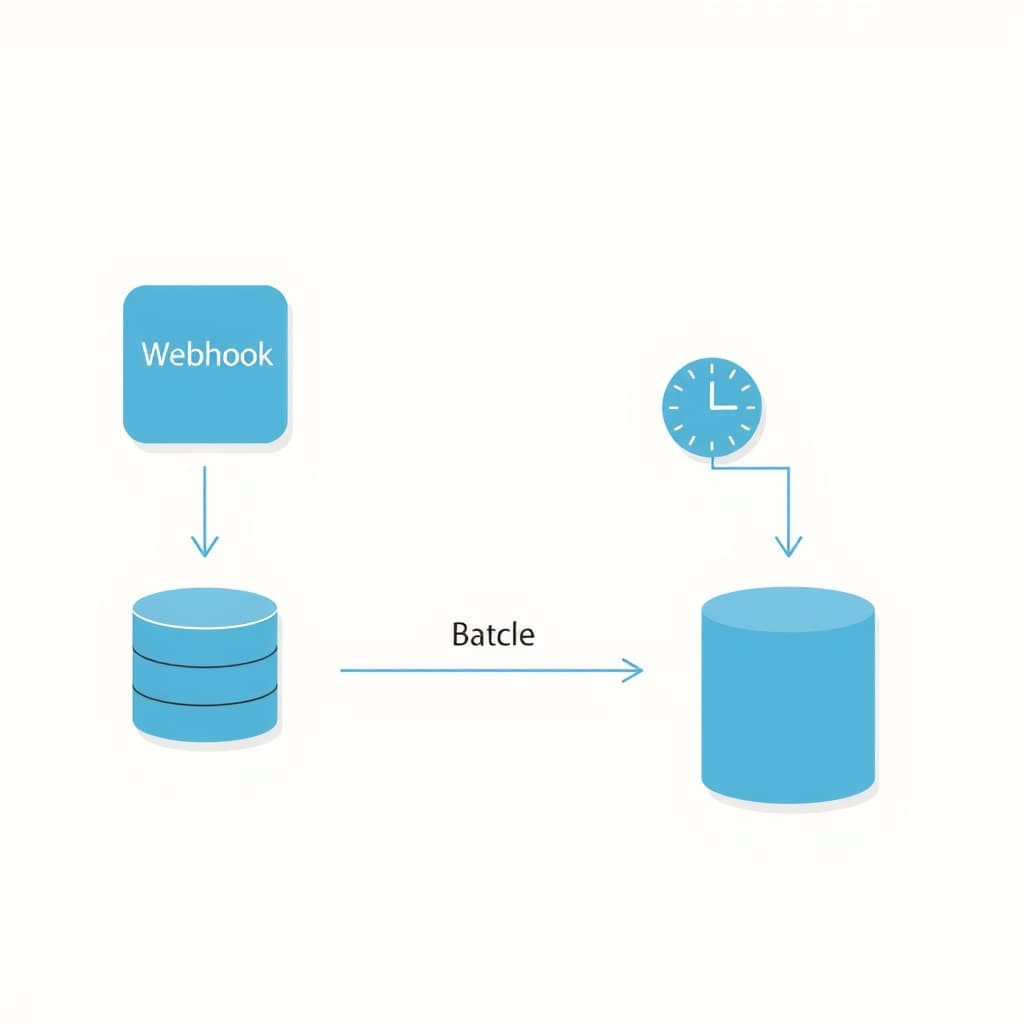
Pure webhooks excel at delivering changes instantly, but they assume the receiver is always available, idempotent, and able to process bursts. In reality, network hiccups, rate limits, and schema mismatches cause silent failures that cascade into data drift. Pure batching, on the other hand, guarantees eventual consistency but introduces latency that can frustrate users waiting for order confirmations or inventory updates. The hybrid webhook batch pattern captures the best of both worlds: it pushes critical events as soon as they happen, while a background job periodically reconciles any gaps, re‑processes failed messages, and aligns state across systems. This dual path reduces the “single point of failure” risk inherent in webhook‑only designs and avoids the “stale data” problem of batch‑only pipelines. For growing SaaS teams, the trade‑off translates into fewer support tickets, smoother onboarding of new partners, and a more predictable operational cost model.
Understanding the Core Components of the Hybrid Pattern
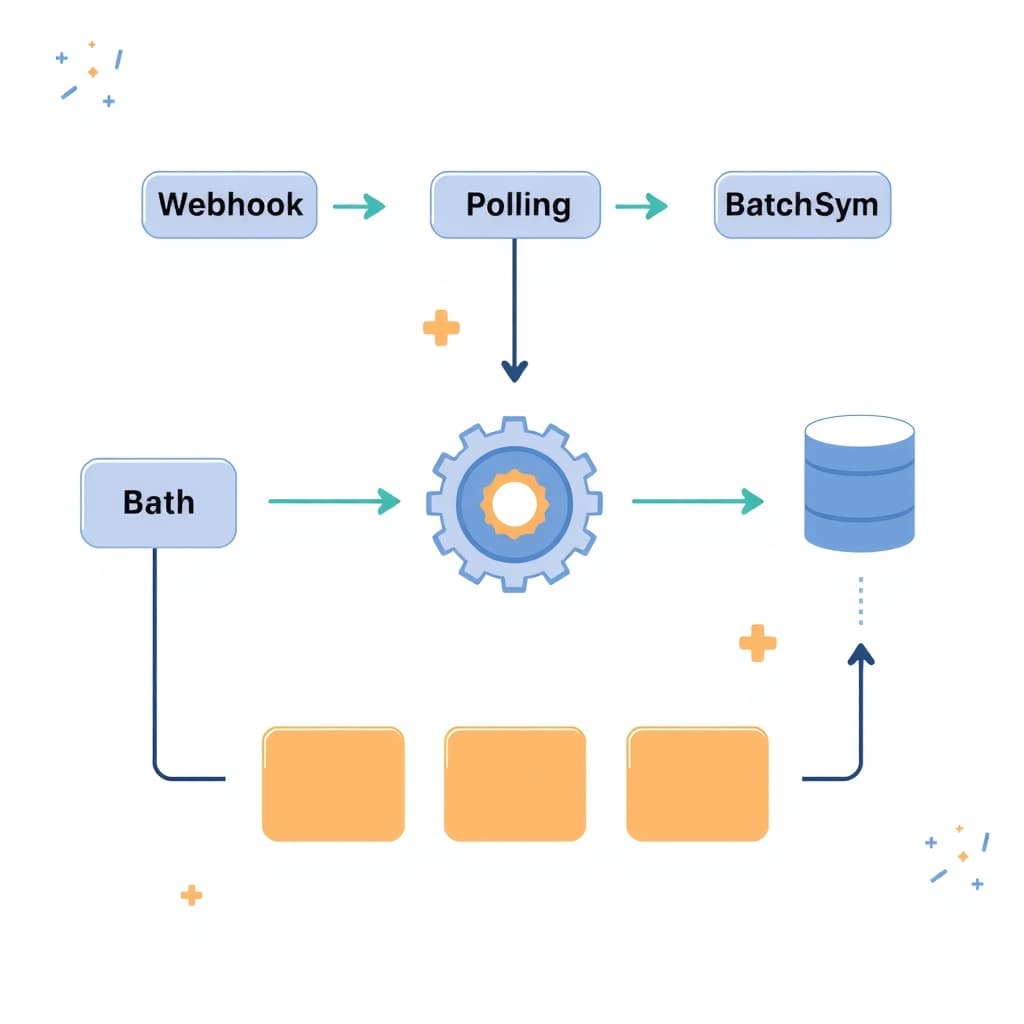
The pattern consists of four moving parts: (1) an event emitter that fires webhooks on source‑system changes, (2) a durable queue (e.g., AWS SQS or RabbitMQ) that buffers events for retry, (3) a batch processor that runs on a configurable schedule to pull missing records, and (4) a reconciliation service that compares source and target states and resolves discrepancies. Each component should be loosely coupled so you can swap technologies without rewriting business logic. The emitter must include a correlation ID and a version stamp; the queue provides at‑least‑once delivery guarantees; the batch job uses pagination or change‑data‑capture (CDC) to fetch deltas; and the reconciler writes to an audit log for traceability. By visualizing these pieces as a feedback loop, teams can spot bottlenecks early and apply targeted safeguards such as dead‑letter queues or throttling rules.
Designing Idempotent Endpoints for Safe Retries
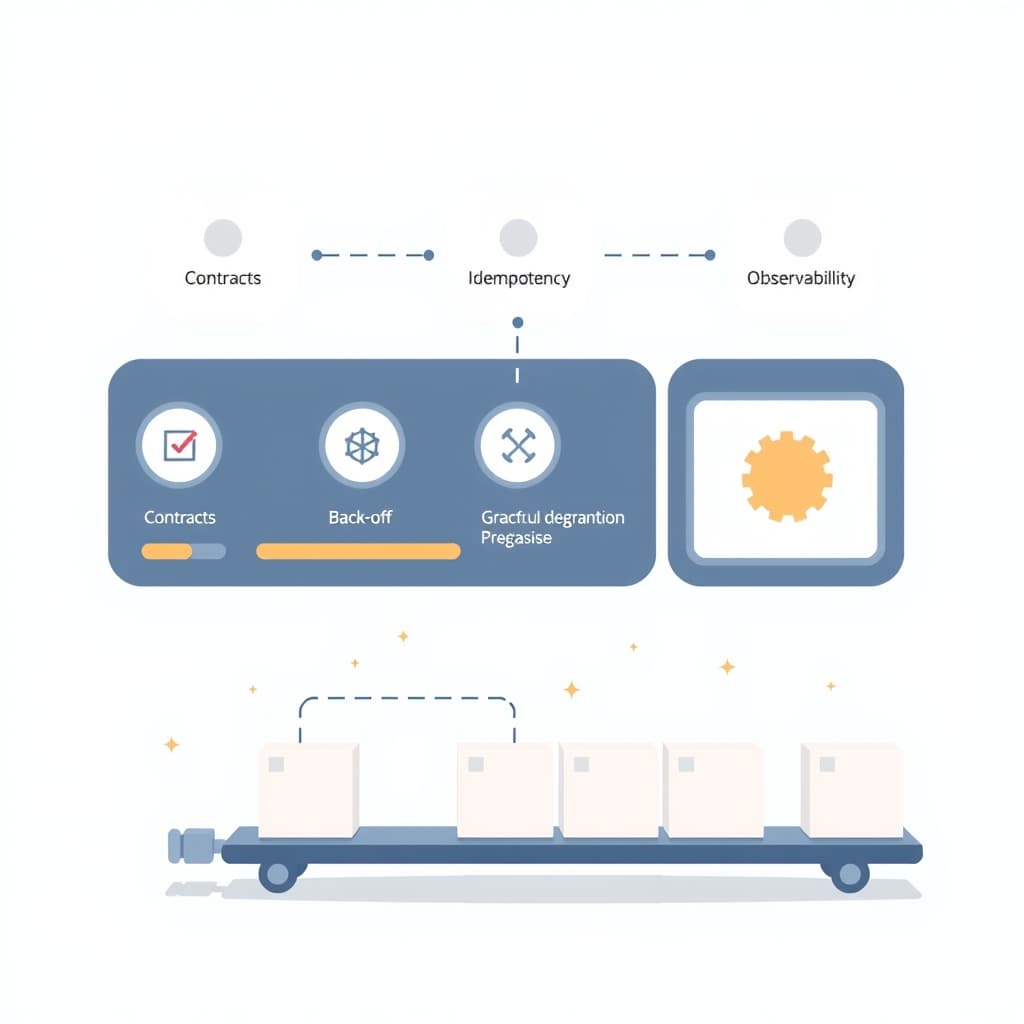
Idempotency is the cornerstone of any reliable integration. Your webhook consumer should accept the same payload multiple times without creating duplicate records or side effects. The simplest technique is to treat the incoming correlation ID as a primary key in a deduplication table; if the ID already exists, the endpoint returns a 200 OK without re‑executing business rules. For more complex workflows, store a hash of the payload and compare it on each retry. Additionally, make your downstream writes “upserts” rather than blind inserts—most ORMs and query builders support an “ON CONFLICT DO UPDATE” clause that safely merges changes. Document the idempotent contract in your API spec so partner teams know what to expect. When you combine idempotent endpoints with the batch reconciler, you eliminate the need for manual clean‑up scripts and keep the data model tidy.
Implementing Adaptive Back‑off and Circuit‑Breaker Logic
Even with durable queues, uncontrolled retries can overwhelm a downstream system. Adaptive back‑off gradually increases the wait time between attempts based on the number of failures, typically using an exponential formula with jitter to avoid thundering‑herd effects. Pair this with a circuit‑breaker that monitors error rates; once a threshold (e.g., 5 % failures over a minute) is crossed, the breaker opens and pauses further deliveries, allowing the target service to recover. In a Node environment you can leverage libraries like opossum or write a thin wrapper around fetch that respects retry‑after headers. The circuit‑breaker should also emit metrics so your monitoring dashboard can alert ops teams before the situation escalates. By combining back‑off and circuit‑breaker patterns, you protect both your own infrastructure and the systems you integrate with, keeping latency predictable and costs under control.
Choosing the Right Data Store for Eventual Consistency
The reconciliation layer needs a store that can efficiently query “what has not been processed yet?” and support atomic updates. Relational databases excel at complex joins and transactional guarantees, making them a solid choice when you already have a Postgres instance for core business data. However, for high‑throughput event streams a purpose‑built log store like Apache Kafka or a NoSQL option such as DynamoDB can reduce latency and simplify scaling. The key criteria are: (1) write durability—no event should be lost, (2) queryability—ability to fetch unprocessed IDs by timestamp or status, and (3) cost predictability. Many teams start with a single table in their primary DB and migrate to a dedicated event store once throughput exceeds a few thousand events per minute. Whichever store you pick, ensure it integrates with your monitoring stack so you can spot backlog growth early.
Monitoring, Alerting, and Failure Recovery Strategies
Visibility is non‑negotiable. Instrument each stage of the hybrid pipeline with metrics such as webhook latency, queue depth, batch job duration, and reconciliation error rate. Tools like Prometheus + Grafana or hosted solutions such as Datadog can surface these signals in real time. Set alerts on thresholds that matter: queue size exceeding a 30‑minute window, batch job failures > 5 % of records, or circuit‑breaker open events persisting beyond 10 minutes. When an alert fires, automated runbooks should trigger a retry of the failed batch and, if necessary, open a ticket in your incident management system. Don’t forget to log the correlation ID at every hop; this makes root‑cause analysis a matter of searching a single field. For teams that need extra safety, consider a post‑launch support contract that includes 24/7 log review and on‑call escalation.
Step‑by‑Step Blueprint: Building the Pattern in a Next.js/Node Stack
1. Define the event schema. Include id, type, timestamp, and a version hash.
2. Implement the webhook emitter. In your Next.js API route, publish the payload to an SQS queue and return 202.
3. Set up a worker. Use a Node worker (e.g., BullMQ) that reads from the queue, calls the consumer endpoint, and records success/failure in Postgres.
4. Build the batch job. Create a scheduled Next.js API route (or a serverless cron) that queries the source system for changes since the last successful batch, then pushes those events through the same worker pipeline.
5. Write the reconciler. After each batch, compare source and target records; insert missing rows and flag mismatches for manual review.
6. Add back‑off and circuit‑breaker. Wrap the consumer call with an exponential back‑off library and a circuit‑breaker that monitors HTTP 5xx responses.
7. Instrument metrics. Export Prometheus counters for webhook attempts, successes, retries, and batch runtimes.
8. Deploy and test. Simulate network failures and rate limits to verify that retries, dead‑letter handling, and batch reconciliation work end‑to‑end.
When to Move to a Dedicated Integration Layer or iPaaS
The hybrid pattern shines for most mid‑size SaaS products, but there are tipping points. If you find yourself maintaining more than ten external connectors, each with custom transformation logic, the operational overhead can eclipse the benefits of a home‑grown solution. Likewise, when partner SLAs demand sub‑second latency across continents, a managed iPaaS (e.g., MuleSoft, Workato) offers built‑in global routing, data mapping, and compliance certifications. Another signal is rapid growth in event volume that outpaces your queue’s throughput or your batch window’s ability to close gaps. At that stage, a dedicated integration layer—perhaps built on Apache Kafka Streams or a cloud‑native event hub—provides horizontal scalability and stronger durability guarantees. Assess the cost of engineering effort versus the subscription fee of an iPaaS, and involve product leadership early to avoid surprise technical debt.
Conclusion & CTA: Get a Custom Integration Audit from SiteFusion
The hybrid webhook batch pattern gives you the agility of real‑time pushes without sacrificing the reliability of periodic reconciliation. By designing idempotent endpoints, applying adaptive back‑off, choosing the right store, and wiring robust monitoring, you can keep data in sync across heterogeneous systems while staying within budget. If you’re ready to evaluate how this pattern fits your product roadmap—or you see signs that a custom integration layer is overdue—our team can run a free audit and recommend the optimal architecture. Book a call with SiteFusion today and let us turn integration pain into a competitive advantage.