Building a robust B2B customer portal security checklist is non‑negotiable for any growing company that lets partners, vendors, or clients log in to access sensitive data. A breach not only jeopardizes revenue but can erode trust built over years. This guide walks founders, product leaders, ops managers, and PMs through the essential controls you need to embed from day one, while staying aligned with business velocity.
Why Security Matters for B2B Customer Portals
External‑facing portals sit at the intersection of your business processes and third‑party data. Unlike internal tools, they are exposed to a broader attack surface: credential stuffing, API abuse, and supply‑chain exploits are common vectors. A single compromised account can cascade into data leakage, financial fraud, or regulatory penalties. Moreover, B2B buyers expect their partners to meet industry‑standard safeguards; failure to deliver can cost you contracts before they’re signed. Security therefore becomes a competitive differentiator, not a cost center. By treating portal security as a core product feature, you reduce long‑term support overhead and create a foundation for scalable growth.
Assessing Your Risk Profile Before Building
Before you write a line of code, map out the data flows and stakeholder exposure. Identify the most valuable assets—payment information, proprietary analytics, or personal identifiers—and rank them by confidentiality, integrity, and availability requirements. Conduct a threat modeling session with product, ops, and engineering leads to surface likely attack scenarios, such as compromised admin credentials or third‑party integration failures. Use the resulting risk matrix to prioritize controls; high‑impact, high‑likelihood risks demand immediate mitigation, while lower‑tier items can be deferred to later releases. This disciplined approach aligns security investment with business risk, ensuring you don’t over‑engineer low‑value safeguards.
Core Authentication & Authorization Controls
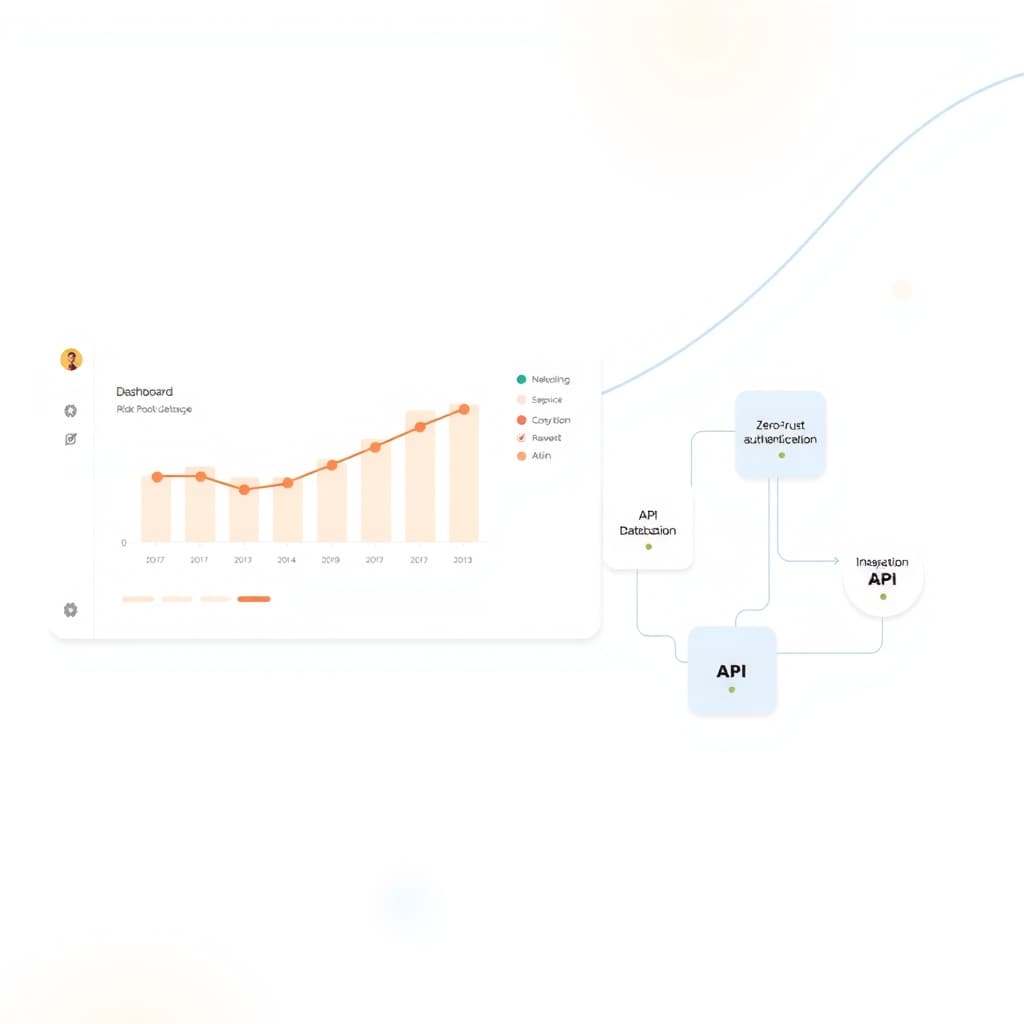
Strong identity management is the first line of defense. Adopt a zero‑trust model: verify every request, never assume a user inside the network is trustworthy. Implement multi‑factor authentication (MFA) for all privileged roles and consider adaptive MFA for high‑risk logins. Use role‑based access control (RBAC) to grant the least privilege needed for each function, and enforce session timeouts that reflect the sensitivity of the data accessed. For federated customers, support SAML or OpenID Connect to let enterprises leverage their existing identity providers. Regularly rotate secrets, de‑provision inactive accounts, and audit permission changes through a dedicated change‑log process.
Data Protection: Encryption at Rest and In Transit
Data must be encrypted both while moving across networks and when stored on disks. Enforce TLS 1.2 or higher for every HTTP request, and disable weak cipher suites. For data at rest, use platform‑managed encryption keys or bring your own keys (BYOK) if compliance demands it. Separate encryption scopes per tenant to prevent cross‑tenant leakage in multi‑tenant architectures. Additionally, apply field‑level encryption for especially sensitive columns such as SSNs or credit‑card numbers. Validate that backup storage follows the same encryption standards, and test key rotation procedures to avoid accidental data loss.
Secure API Integration Practices
Portals rarely operate in isolation; they consume internal services and third‑party APIs. Adopt a strict API gateway that enforces authentication, rate limiting, and schema validation. Use signed JWTs or mutual TLS for service‑to‑service calls, and avoid hard‑coding secrets in code repositories. Adopt the principle of least privilege for API scopes—grant only the endpoints a client truly needs. Regularly scan API contracts for injection vulnerabilities and enforce content‑type whitelisting. When integrating with external vendors, require them to adhere to your security baseline, and maintain a documented inventory of all external endpoints.
Monitoring, Logging, and Incident Response
Visibility is essential for detecting breaches early. Centralize logs from authentication services, API gateways, and database access into a tamper‑evident SIEM. Capture key events such as failed login attempts, privilege escalations, and data export actions. Set up real‑time alerts for anomalous patterns—multiple geo‑disparate logins or sudden spikes in API traffic. Develop an incident‑response playbook that defines roles, communication channels, and containment steps. Conduct tabletop exercises quarterly to keep the team sharp. Post‑incident, perform a root‑cause analysis and feed lessons learned back into the security checklist.
Compliance Touchpoints (SOC 2, GDPR, ISO 27001)
Even if you’re not yet audited, aligning with major frameworks reduces future compliance friction. SOC 2’s Security and Confidentiality criteria map directly to strong access controls and encryption practices. GDPR mandates data‑subject rights and strict breach notification timelines—design your portal to support data export and erasure requests out of the box. ISO 27001 provides a risk‑management lifecycle that dovetails with the risk‑profile assessment described earlier. Document your controls, maintain evidence of implementation, and schedule periodic internal reviews. When the time comes for a formal audit, you’ll already have the artifacts in place.
Prioritizing Security Features for an MVP Release
Security doesn’t have to stall your MVP, but you must choose wisely. Core items—MFA, TLS, RBAC, and encrypted storage—should be baked in from day one. Less critical controls, such as advanced anomaly detection or granular audit trails, can be staged for later sprints. Use the MVP Scope Validation Checklist for Founder Success as a companion tool to ensure you’re not sacrificing essential safeguards for speed. Communicate the security baseline to early adopters; their confidence can become a differentiator while you iterate on higher‑order protections.
Next Steps: Partnering with a Trusted Development Team
Implementing a comprehensive B2B customer portal security checklist requires deep expertise across architecture, DevSecOps, and compliance. A seasoned partner can accelerate delivery, embed security into CI/CD pipelines, and provide ongoing post‑launch support. Review our portfolio of secure portal projects to see how we’ve helped companies similar to yours meet rigorous standards without derailing product timelines. When you’re ready to move from checklist to implementation, book a discovery call so we can tailor a security‑first roadmap to your unique risk profile.
Secure your portal, protect your customers, and keep growth on track. Get in touch today to start building a safer B2B experience.
For the complete picture, read our guide to B2B Web Apps & Customer Portals.