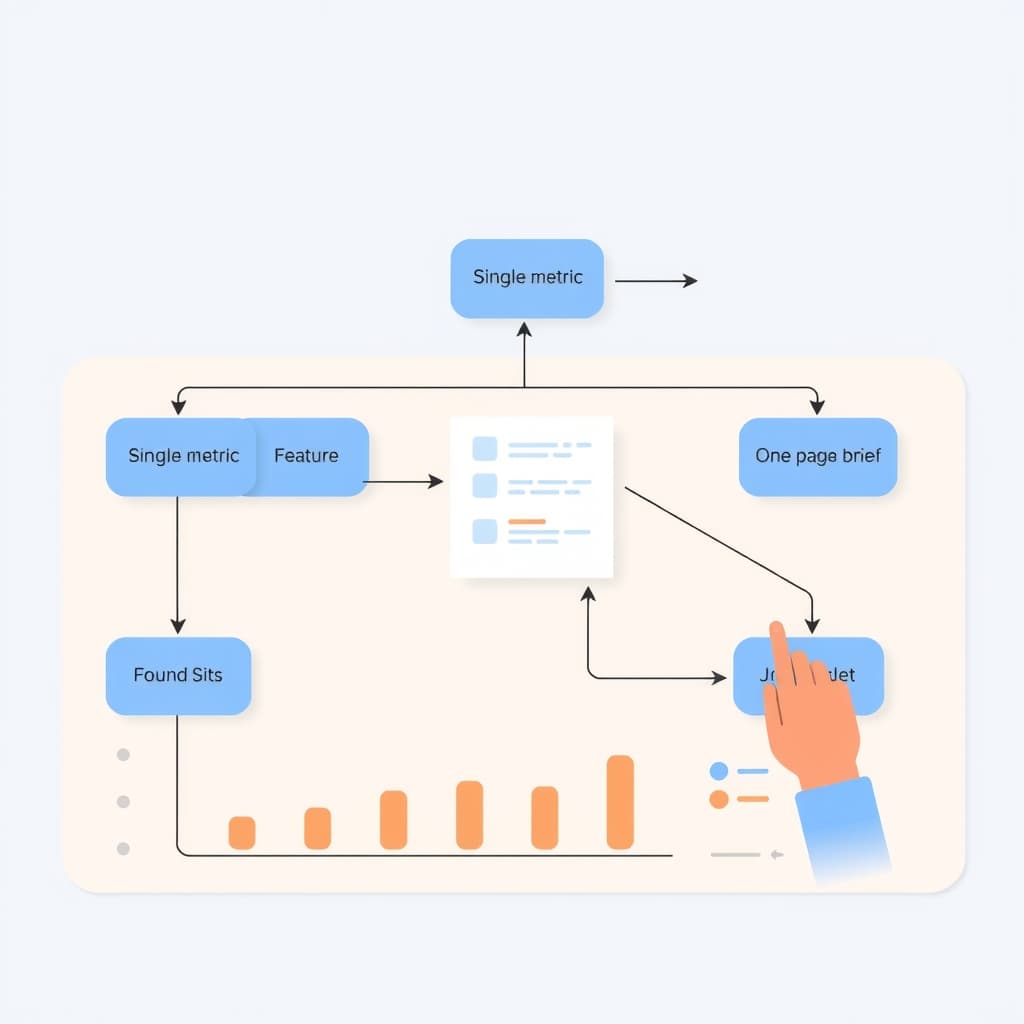
Before you hand a spec to a dev partner, run through a solid MVP Scope Validation Checklist. It forces you to surface assumptions, align stakeholders, and ensure the first build delivers measurable value rather than a collection of nice‑to‑have features.
Why a validation‑first MVP Scope Validation Checklist beats guesswork
Guesswork is the fastest route to scope creep and wasted budget. A validation‑first checklist flips the process: you start with the problem, then test hypotheses before any line of code is written. This approach surfaces hidden dependencies, clarifies the target user segment, and forces you to articulate the business outcome you expect. When you can point to a concrete hypothesis that has been vetted with real users, you gain confidence to say “yes” to the right features and “no” to the rest. Moreover, a checklist creates a shared artifact that product leaders, ops, and external agencies can reference, reducing miscommunication that typically leads to rework. In practice, teams that adopt a validation checklist see faster time‑to‑market and higher early‑stage adoption because they are building what the market actually needs, not what they assume it needs.
Defining the core problem your MVP must solve
The first step is to write a single‑sentence problem statement that captures the pain point you are addressing. Avoid product‑centric language; focus on the user's unmet need. Ask: Who experiences this problem? How often does it occur? What are the financial or operational consequences? A well‑crafted problem definition becomes the north star for every subsequent decision. It also helps you recruit the right early adopters for validation interviews. When you can quantify the impact—e.g., “operations teams spend 10 hours per week reconciling data”—you create a baseline against which you can measure improvement. Keep the statement tight, and revisit it after each validation sprint to ensure the problem remains relevant as market dynamics evolve.
Mapping user outcomes to measurable success metrics
Outcomes are the actions users take that indicate they have solved the problem. Translate each outcome into a metric you can track. For a B2B SaaS, typical metrics include activation rate, time‑to‑value, or reduction in manual effort. For example, if your MVP promises to automate invoice reconciliation, the success metric might be “percentage of invoices processed without manual intervention within 24 hours.” Pair each metric with a target that reflects a meaningful improvement over the baseline you identified earlier. Document these in a simple table so the entire team can see the link between feature, outcome, and metric. When you later evaluate the MVP, you’ll have clear evidence of whether the product delivered the promised value, which is essential for the next funding round or internal buy‑in.
Prioritizing features: the 1‑Metric‑That‑Matters framework
The 1‑Metric‑That‑Matters (1MTM) framework forces you to choose a single leading indicator that best reflects success for the MVP. Identify the metric from the previous section that, if moved, will have the greatest impact on the core problem. Then rank every potential feature by how directly it drives that metric. Features that have a high impact and low implementation effort rise to the top; low‑impact, high‑effort ideas fall off the list. Use a two‑column table: Impact on 1MTM and Implementation effort. This visual prioritization makes trade‑offs explicit and gives developers a clear, outcome‑driven backlog. It also simplifies conversations with agencies, because you can say “we need features that move X metric by Y% within the first quarter.”
Building a lean scope: what to include and what to cut
With the 1MTM prioritized list in hand, draw a line around the minimum set of features that can move the metric enough to validate the hypothesis. Anything that does not directly influence the metric should be deferred. Common culprits to cut include: extensive admin panels, custom branding options, and deep analytics dashboards. Instead, opt for a simple “good‑enough” UI that lets users complete the core workflow. Remember that the goal of the MVP is not perfection; it is proof that the solution works and users will pay for it. By keeping the scope lean, you reduce development time, lower risk, and free up resources for rapid iteration based on real feedback. If you later discover additional needs, you can add them in a second phase without jeopardizing the initial launch.
How to draft a one‑page brief that agencies can quote accurately
A one‑page brief should contain: (1) problem statement, (2) target user persona, (3) the 1MTM and its target value, (4) prioritized feature list with acceptance criteria, and (5) non‑functional requirements such as security or compliance. Keep language concrete—avoid vague terms like “responsive design” and instead specify “mobile layout that supports portrait mode on iPhone 12 and above.” Include any integration constraints, for example “must connect to existing Salesforce API v52.” Linking to our service overview gives agencies context on the technology stack you prefer, such as full‑stack Next.js/React. A clear brief reduces the likelihood of scope creep and enables agencies to provide a fixed‑price quote, which is especially valuable for early‑stage founders managing cash flow.
Running a rapid validation sprint before any code is written
Allocate one to two weeks to test assumptions with prototypes, surveys, or concierge‑style manual workflows. Start with low‑fidelity wireframes that illustrate the core user flow, then recruit a handful of target users for a quick usability test. Capture qualitative feedback and quantitative data on the success metric you defined. If the metric moves in the right direction, you have validation to proceed; if not, iterate on the problem definition or hypothesis before any development begins. This sprint also surfaces hidden technical constraints—such as data latency issues—that you can address in the design phase. For teams exploring AI features, see our post on LLM Cost Control: How SaaS Products Keep AI Affordable for budgeting tips during validation.
Putting it all together: next steps, handoff to dev partners, and a CTA to schedule a free scoping session
When the validation sprint confirms your hypothesis, package the one‑page brief, the success metric target, and any user feedback into a handoff document. Share this with your chosen development partner, along with a clear timeline and acceptance criteria. Schedule a kickoff meeting to align on the 1MTM focus, sprint cadence, and reporting cadence for the metric. Throughout the build, maintain a lightweight dashboard that tracks the metric in real time—this mirrors the approach in our guide on How to Design an Internal Ops Dashboard That Pays for Itself. Finally, if you’re ready to move from checklist to code, book a free scoping session with SiteFusion. We’ll review your MVP Scope Validation Checklist, refine the brief, and match you with the right engineering team. Schedule your call now and turn validated ideas into a launch‑ready product.