Before you hand a developer a ticket, you need MVP scope validation. It’s the disciplined process of confirming that the features you plan to ship actually test the riskiest assumptions and deliver measurable value. Skipping this step often leads to bloated builds, wasted budget, and delayed time‑to‑market. In this guide we walk founders, product leaders, ops managers, and PMs through a repeatable framework that turns vague ideas into a razor‑thin, quote‑ready brief that any development partner can rally behind.
Why MVP Scope Validation Matters Before You Write Code
Launching an MVP without proper scope validation is like building a bridge without checking the load‑bearing calculations. You may end up with a product that looks complete but fails to prove the core hypothesis, forcing costly pivots after launch. Validation forces you to articulate the problem, the target user, and the success criteria up front, which in turn sharpens stakeholder alignment and protects the budget. It also gives agencies a concrete set of deliverables, speeding up the quoting process and reducing the risk of scope creep. In short, a disciplined MVP scope validation step turns speculation into a testable experiment, ensuring every line of code is purposeful.
Defining the Core Problem Your Product Must Solve
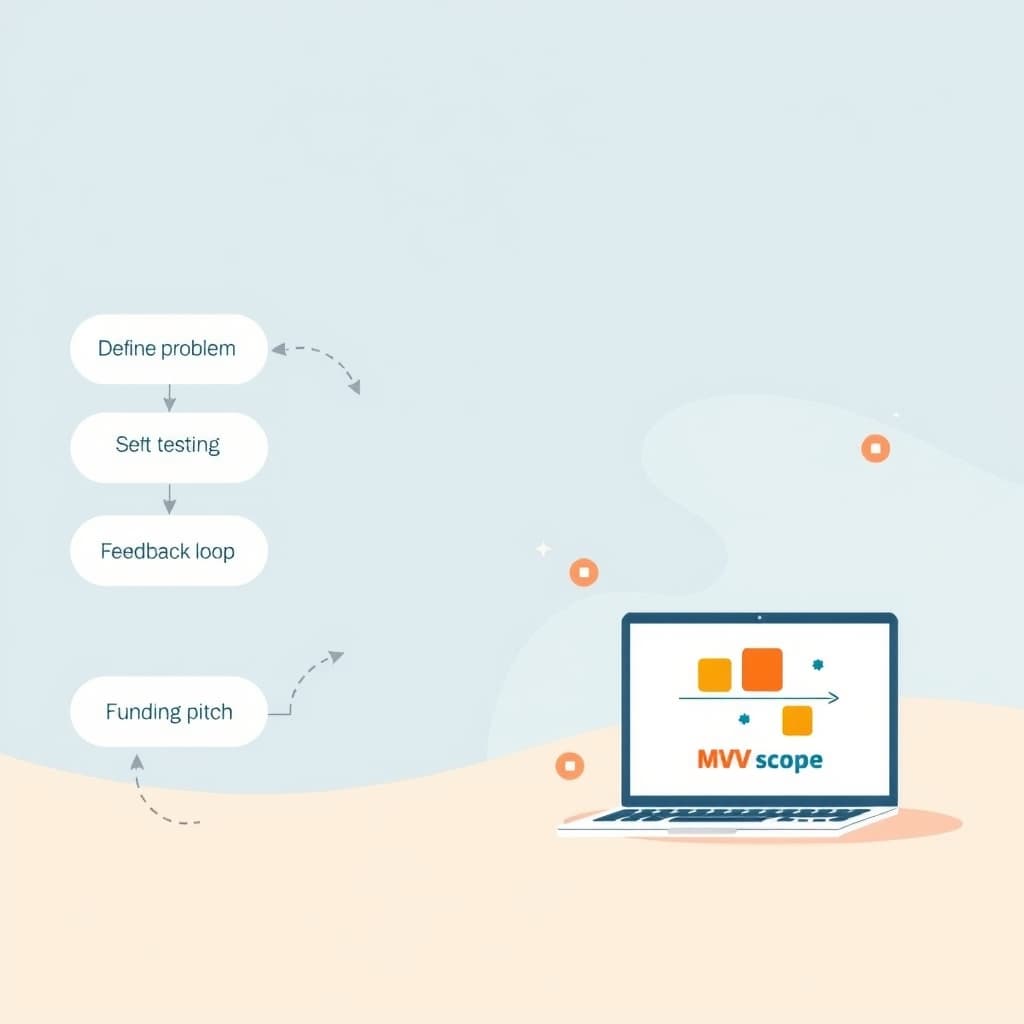
The first step is to distill the business need into a single, testable problem statement. Ask: What pain point are we eliminating? Who feels it most acutely? Use the “Jobs‑to‑Be‑Done” lens to frame the problem from the user’s perspective, not the feature’s. Document the problem in one sentence, then list the assumptions that must hold for the solution to be valuable. For example, a logistics SaaS might assume that “operations managers need real‑time carrier cost visibility to reduce freight spend by 10%.” This clarity guides every downstream decision and makes it easy to reference later when you compare feature ideas against the core problem.
Mapping Stakeholder Goals to Measurable Success Metrics
Stakeholders—founders, investors, ops leads—often have different expectations. Align them by translating each goal into a quantitative metric. Revenue impact, churn reduction, time‑to‑process, or compliance score are typical. Create a simple table that pairs each stakeholder goal with a KPI, the target value, and the measurement window. For instance, “Ops lead wants a 20% reduction in manual entry time within 90 days; KPI = average minutes per ticket.” When you later evaluate features, you can ask: “Will this feature move the needle on any of these metrics?” This mapping keeps the conversation outcome‑focused and prevents feature bloat driven by vague aspirations.
The Feature‑Scoring Framework: Value vs. Effort Matrix
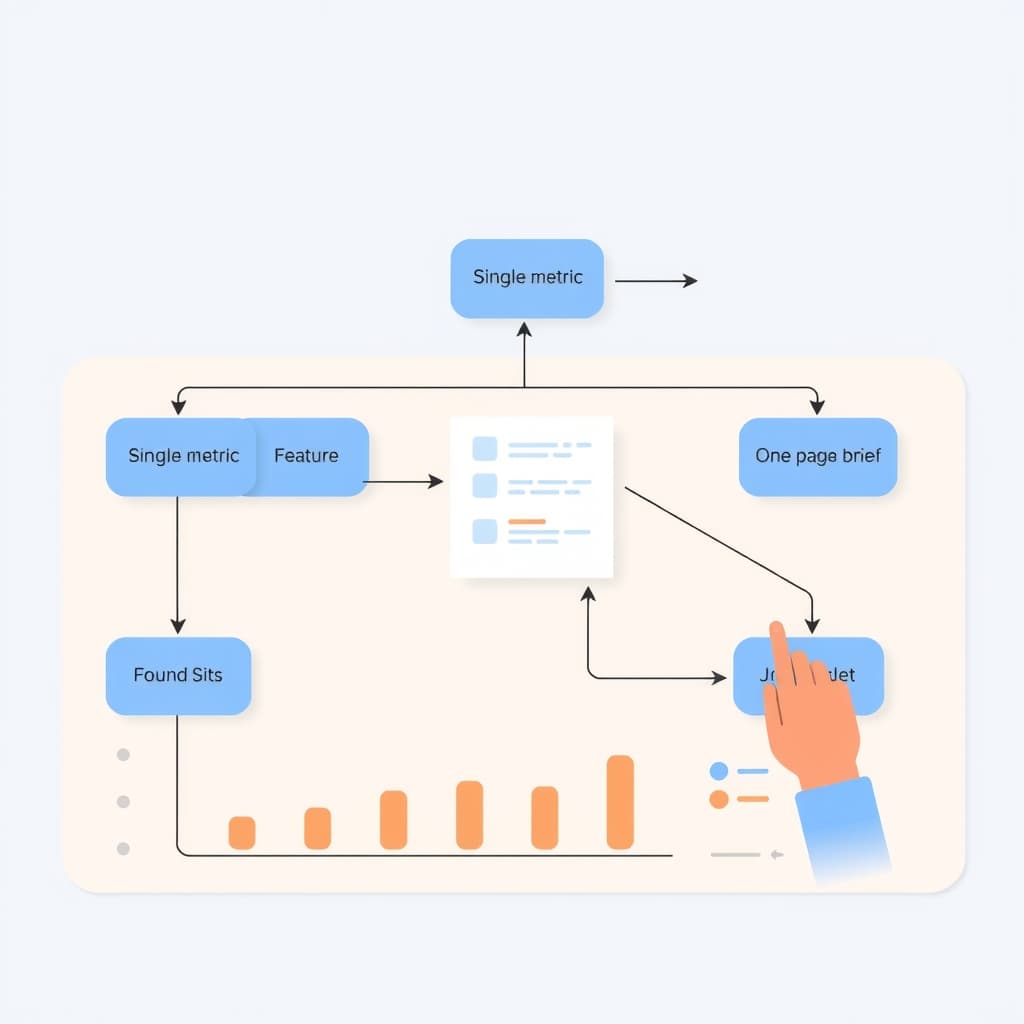
With a list of potential features, plot each on a two‑axis matrix: Value (impact on success metrics) versus Effort (engineering weeks, integration complexity, or third‑party cost). Assign a score of 1‑5 for each axis, then calculate a simple ratio (Value ÷ Effort). Prioritize items with the highest ratio—they deliver the most bang for the buck. Low‑effort, high‑value features become quick wins that validate assumptions early. High‑effort, low‑value items are candidates for removal or deferment. This transparent scoring method is a practical tool you can share with agencies during the quoting phase.
Building a One‑Page MVP Brief That Agencies Can Quote From
Condense the validation work into a single‑page brief. Include: problem statement, success metrics, prioritized feature list with value/effort scores, and any non‑functional requirements (security, compliance, performance). Keep the language concise and avoid technical jargon; agencies need to understand the business intent, not the implementation details. Attach a short “what‑not‑to‑build” section that lists features explicitly excluded from the MVP. This brief becomes the reference document for every stakeholder and dramatically reduces back‑and‑forth during the scoping stage. For an example of a clear brief, see our portfolio of products where each case study starts with a crisp scope definition.
Validating Assumptions with Low‑Cost Experiments and User Tests
Before any code is written, run lightweight experiments to test the riskiest assumptions. Options include landing‑page A/B tests, clickable prototypes, or manual workflow simulations. Capture qualitative feedback and quantitative signals (e.g., sign‑up rate, task completion time). If an assumption fails, you either pivot the problem definition or discard the related feature. This approach mirrors the How to Prove Internal Ops Dashboard ROI playbook, where early validation saved weeks of engineering effort. The key is to keep experiments cheap, fast, and focused on the metrics you defined earlier.
Prioritizing the First Release: Cutting the Fat Without Losing Impact
When the matrix and experiments are complete, slice the feature list to the smallest set that still validates the core hypothesis. Ask: “If we ship only these items, will we have enough data to confirm or reject the problem statement?” Remove anything that doesn’t directly affect a success metric, even if it looks nice. This disciplined cut often surprises teams—features like “custom branding” or “advanced reporting” feel essential but can be deferred to later releases. By launching a lean MVP, you accelerate feedback loops, reduce risk, and free up budget for the next iteration.
Common Pitfalls: Scope Creep Triggers and How to Stop Them Early
Even with a solid brief, scope creep can sneak in through stakeholder pressure, “nice‑to‑have” requests, or ambiguous requirements. Guard against it by: (1) enforcing a change‑request process that re‑scores any new feature against the value/effort matrix; (2) keeping the success metrics visible on the project board; and (3) scheduling regular “scope health” check‑ins with the product owner and engineering lead. If a request threatens to dilute the MVP’s focus, push it to the backlog and revisit after the initial launch. Early detection and a transparent scoring system keep the team aligned and the budget intact.
Next Steps & CTA: Use This Checklist to Align Your Team and Kick‑Off Development
Download our MVP scope validation checklist, run the matrix, and draft a one‑page brief. Then schedule a discovery call with SiteFusion to review your brief and get a precise quote from a team that specializes in full‑stack Next.js/React development, AI automation, and post‑launch support. Our post‑launch support ensures the MVP evolves into a scalable product without surprise technical debt. Ready to turn validated scope into shipped code? Book a call with us today and let’s get your MVP off the ground.