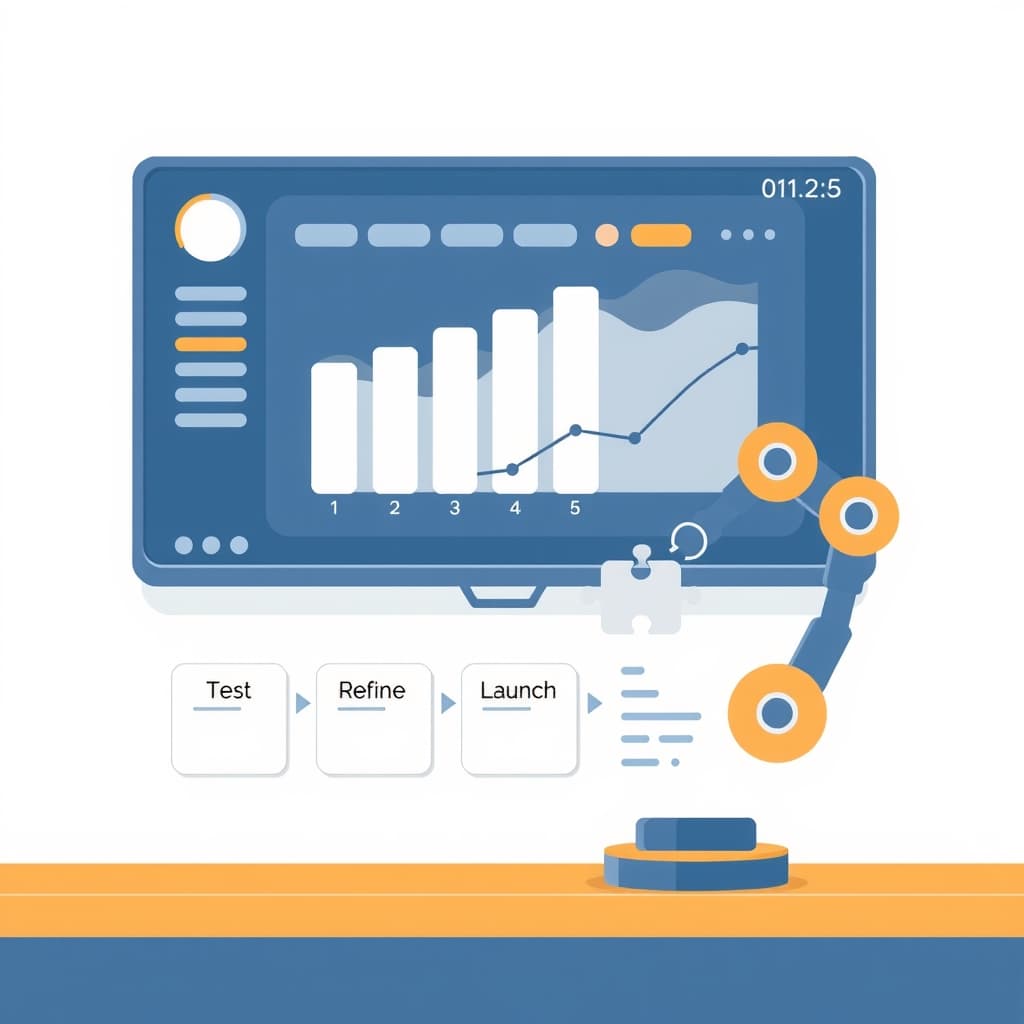
Adding AI‑driven capabilities can turn a good SaaS product into a great one, but without disciplined AI feature cost control the expense can outpace revenue growth. Founders and product leaders who treat LLM usage like any other line‑item—tracking spend, optimizing consumption, and aligning cost with value—stay agile and keep margins healthy. Below we walk through the levers you can pull today to keep quality high while trimming the bill.
Why AI Feature Cost Control Matters for Growing SaaS Products
In the early stages of scaling, every dollar counts. AI APIs charge per token, and a single mis‑configured endpoint can balloon costs faster than a traffic spike. Beyond the balance sheet, uncontrolled spend erodes stakeholder confidence and can force premature feature roll‑backs. Effective cost control also signals to investors that your engineering team can deliver sustainable value, not just flash‑in‑the‑pan experiments. Moreover, disciplined budgeting forces teams to ask the right questions—are we solving a real pain point, and can we do it with the minimal viable model? The answer guides product roadmaps, prioritizes high‑ROI use cases, and keeps the engineering focus on outcomes rather than raw compute.
Understanding the Real Cost Drivers of LLM‑Powered Features
LLM spend breaks down into three primary drivers: model size, token volume, and request frequency. Larger models (e.g., 175 B parameters) deliver higher quality but cost several times more per 1,000 tokens than a distilled 6 B variant. Token volume includes both input (prompt) and output (completion) tokens; verbose prompts or overly long responses quickly add up. Finally, request frequency amplifies the first two factors—high‑traffic endpoints multiply token costs. Hidden costs also arise from retry loops, logging, and data preprocessing that generate extra tokens. Mapping these drivers in a simple spreadsheet lets you spot the biggest levers for reduction before you touch code.
Choosing the Right Model Size for Your Use Case
Not every feature needs the most powerful model. Start by defining the performance threshold—accuracy, latency, or hallucination tolerance—that your users expect. For internal tools or batch processing, a smaller, cheaper model often meets the bar. For customer‑facing chat that influences conversion, a higher‑tier model may be justified. Conduct a quick A/B test: run the same prompt against two model sizes, compare key metrics, and calculate cost per successful outcome. The sweet spot is the smallest model that still meets the business KPI. Remember to revisit this decision as the model landscape evolves; newer, more efficient models can replace older, costlier ones without code changes.
Implementing Retrieval‑Augmented Generation to Reduce Token Usage
Retrieval‑Augmented Generation (RAG) pulls relevant context from a vector store and feeds it into the prompt, allowing the LLM to answer with fewer generated tokens. By anchoring the model to factual snippets, you also reduce hallucinations, which in turn cuts the need for post‑processing validation. Set up a lightweight embedding pipeline—often an open‑source model suffices—and index your knowledge base (FAQs, product docs, support tickets). At runtime, retrieve the top‑k passages, embed them in a concise prompt, and let the LLM generate a short answer. This approach can slash token consumption by 30‑50 % for knowledge‑heavy queries. For a deeper dive on AI‑driven document pipelines, see our AI Document Processing Automation: Founder’s Guide.
Smart Prompt Engineering: Getting More Output from Fewer Tokens
Prompt design is an art of economy. Use system messages to set behavior once, then keep user prompts short and focused. Employ bullet‑point lists, explicit length constraints (e.g., “Answer in 2 sentences”), and reusable templates stored server‑side. Where possible, move static context to a pre‑prompt that’s cached across calls, reducing repeated token transmission. Leverage few‑shot examples sparingly—each example adds tokens, so include only the most illustrative ones. Finally, test variations with a token‑aware debugger: log input and output token counts, then iterate until you achieve the desired quality at the lowest token budget.
Monitoring, Alerting, and Auto‑Scaling LLM Calls in Production
Visibility is the foundation of control. Instrument every LLM call with metrics for request count, input tokens, output tokens, latency, and error rate. Feed these into a monitoring platform (e.g., Datadog, Prometheus) and set alerts when spend exceeds a daily threshold or when token usage spikes unexpectedly. Auto‑scaling rules can throttle or queue requests during cost‑overrun events, preserving budget while maintaining service continuity. Pair alerts with automated tickets that trigger a review of recent prompts, ensuring that a sudden change in user behavior—or a buggy rollout—doesn’t silently drain the budget. For post‑launch reliability, see our Build a Post‑Launch Incident Response Plan to Keep SaaS Stable guide.
Balancing Cost Savings with User Experience: A/B Testing Strategies
Cost reductions must not degrade the core experience. Design A/B experiments that compare a cost‑optimized variant (smaller model, shorter prompts, RAG) against the baseline. Track both financial metrics (cost per session) and UX metrics (completion rate, satisfaction scores, time to answer). Use statistical significance thresholds to ensure you’re not sacrificing quality for marginal savings. If the cheaper variant meets or exceeds the baseline on key outcomes, roll it out globally. If not, iterate—perhaps a hybrid approach works, serving the cheaper model for low‑complexity queries and reserving the premium model for high‑value interactions.
Practical Checklist for Ongoing AI Cost Governance
- Catalog every LLM endpoint with model, token limits, and business purpose.
- Set up automated logging of token counts and associate costs with product features.
- Review model selection quarterly; downgrade when newer, cheaper models meet requirements.
- Implement RAG or caching for knowledge‑intensive prompts.
- Standardize prompt templates and enforce length constraints.
- Configure alerts for daily spend thresholds and abnormal token spikes.
- Run regular A/B tests to validate cost‑saving changes against user experience.
- Document a cost‑ownership charter—assign a product owner to monitor AI spend.
Conclusion & Next Steps: Partner with an AI‑Savvy Development Team
Effective AI feature cost control is a continuous discipline that blends model selection, prompt engineering, monitoring, and data‑driven testing. When done right, you deliver high‑value AI experiences without eroding margins. If you’d rather focus on strategy and let experts handle the technical intricacies, SiteFusion’s team offers end‑to‑end AI integration, ongoing post‑launch support, and a proven track record of scaling custom SaaS platforms. Book a call today to discuss how we can embed cost‑aware AI into your product roadmap.