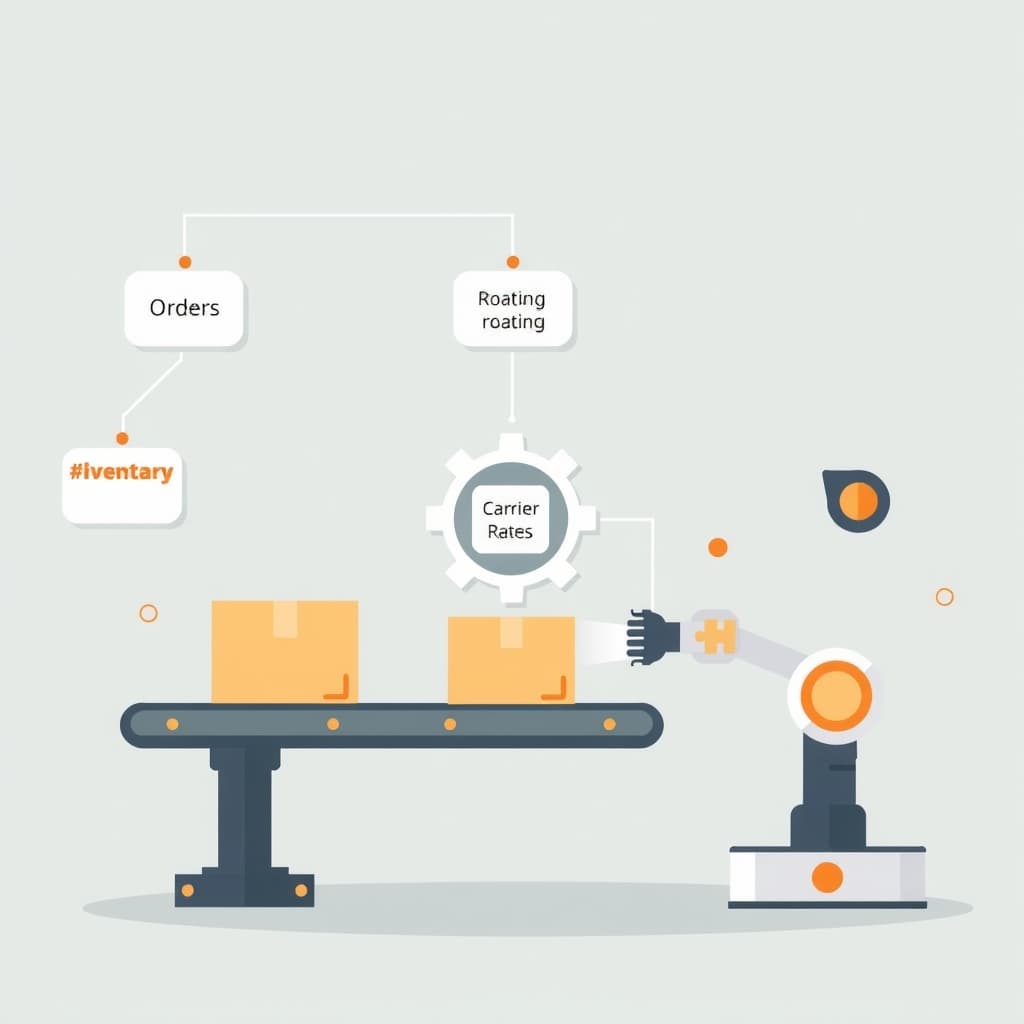
Growing e‑commerce brands quickly outgrow off‑the‑shelf fulfillment tools. The moment order volume spikes, inventory spreads across multiple warehouses, and carrier rates change, you need custom software that adapts to your unique processes. A purpose‑built fulfillment engine can orchestrate pick‑pack‑ship cycles, sync inventory in real time, and surface the data you need to make split‑second decisions without drowning in spreadsheets.
Why E‑commerce Fulfillment Needs Custom Software
Standard ERP or marketplace plugins assume a one‑size‑fits‑all workflow, which rarely matches the nuances of a fast‑growing brand. Custom software lets you embed business rules—such as zone‑based routing, dynamic packaging, or subscription‑specific handling—directly into the order lifecycle. This eliminates manual overrides, reduces error rates, and shortens cycle time from order receipt to delivery. Moreover, a bespoke solution can scale horizontally, handling seasonal spikes without costly infrastructure over‑provisioning. The payoff is measurable: higher order accuracy, lower labor costs, and a better customer experience that fuels repeat purchases.
Assessing Your Current Fulfillment Stack: Gaps and Pain Points
Start with a truth inventory of every tool in the fulfillment chain: order management, warehouse management, carrier APIs, and reporting dashboards. Map the data flow and flag where handoffs require manual CSV imports or email confirmations. Common gaps include delayed inventory sync, lack of real‑time carrier tracking, and fragmented exception handling. Quantify the pain: minutes spent per exception, error rates, and the cost of overtime caused by bottlenecks. This audit creates a baseline that justifies investment in custom software and guides the feature prioritisation that follows.
Core Modules Every Scalable Fulfillment System Should Have
A robust fulfillment platform is built on interchangeable modules that can evolve independently. Key components are:
- Order Orchestration Engine – validates, enriches, and routes orders based on business rules.
- Inventory Allocation Layer – maintains a single source of truth across warehouses, dropship partners, and third‑party logistics.
- Pick‑Pack Automation – generates optimized pick lists, supports barcode scanning, and integrates with robotics where applicable.
- Shipping & Carrier Integration – creates label batches, tracks shipments, and negotiates rates programmatically.
- Exception Management Dashboard – surfaces out‑of‑stock, address validation, and customs alerts for rapid resolution.
Design these modules with clean APIs so you can replace or upgrade parts without disrupting the whole system.
Prioritising Automation: The First Three High‑Impact Features to Build
When resources are limited, focus on automation that cuts the most manual effort:
- Dynamic Order Routing – automatically assign orders to the nearest fulfillment center based on inventory levels and shipping cost thresholds.
- Real‑Time Inventory Sync – push stock changes instantly to all sales channels, preventing oversell scenarios.
- Carrier Rate Shopping & Label Generation – query multiple carriers in parallel, select the cheapest service that meets delivery promises, and print labels without human intervention.
These three features typically deliver a 20‑30% reduction in processing time and a noticeable drop in order errors, creating early wins that justify further investment.
Integrating with Marketplaces, Carriers, and ERP Systems
Seamless integration is the backbone of any fulfillment strategy. Use RESTful APIs or webhook‑driven events to keep order, inventory, and shipment data consistent across Shopify, Amazon, eBay, and your ERP. For carriers, adopt industry standards like UPS XML or FedEx Web Services, and wrap them in a reliability layer that retries failed calls and logs anomalies. The API Integration Reliability: Build Fail‑Safe Connections guide offers a practical checklist. When you design these connectors, treat them as contracts—version them, document error codes, and monitor latency—to avoid downstream cascade failures.
Data‑Driven Ops: Building Real‑Time Dashboards and Alerts
Visibility transforms operations from reactive to proactive. Pull key metrics—order latency, pick‑rate, carrier SLA compliance, and inventory health—into a unified dashboard built with a modern front‑end stack like Next.js. Enable threshold‑based alerts (e.g., inventory < 5% or carrier delay > 2 hours) that push to Slack or email, so teams can intervene before customers notice. A well‑designed dashboard not only surfaces problems but also highlights optimization opportunities, supporting the continuous improvement loop described in Proving Internal Ops Dashboard ROI. Pair visualizations with drill‑down capabilities so ops leaders can trace an alert back to the originating transaction.
Managing Change: Rollout, Training, and Adoption Strategies
Even the best‑engineered custom software fails if users resist it. Adopt a phased rollout: start with a pilot warehouse, collect feedback, and iterate before a full‑scale launch. Create role‑based training modules—pickers need a streamlined UI, managers need analytics, and support staff need exception handling guides. Celebrate quick wins (e.g., 15% faster pick time) to build momentum. Establish a post‑launch incident response plan similar to the one in Build a Post‑Launch Incident Response Plan to Keep SaaS Stable, ensuring that any bugs are triaged swiftly and communication stays transparent.
Measuring ROI: Metrics to Track Success After Launch
Quantify the impact of your fulfillment platform with a balanced scorecard:
- Order Cycle Time – average minutes from order receipt to shipment.
- Pick Accuracy – percentage of orders packed without error.
- Labor Cost per Order – total fulfillment labor divided by order count.
- Carrier Cost Savings – difference between negotiated rates and baseline rates.
- Customer Satisfaction (NPS/CSAT) – tied to delivery speed and accuracy.
Track these metrics for at least 90 days post‑launch to smooth out seasonal variance. A sustained improvement of 10‑15% across these KPIs typically justifies the development investment within a year.
Next Steps: Partnering with a Development Team and Getting Started
Building a scalable fulfillment engine requires deep domain expertise, modern tech stacks, and disciplined product management. At SiteFusion we specialize in end‑to‑end custom software delivery—from discovery workshops to post‑launch support (post‑launch support) and ongoing iteration. Review our portfolio of products to see how we’ve helped brands like yours cut fulfillment latency by half. The first conversation should focus on your current stack audit, priority features, and success metrics. From there we’ll draft a scoped roadmap, estimate effort, and outline a partnership contract that protects both parties.
Ready to future‑proof your fulfillment operations? Book a call with SiteFusion today and start turning bottlenecks into competitive advantage.