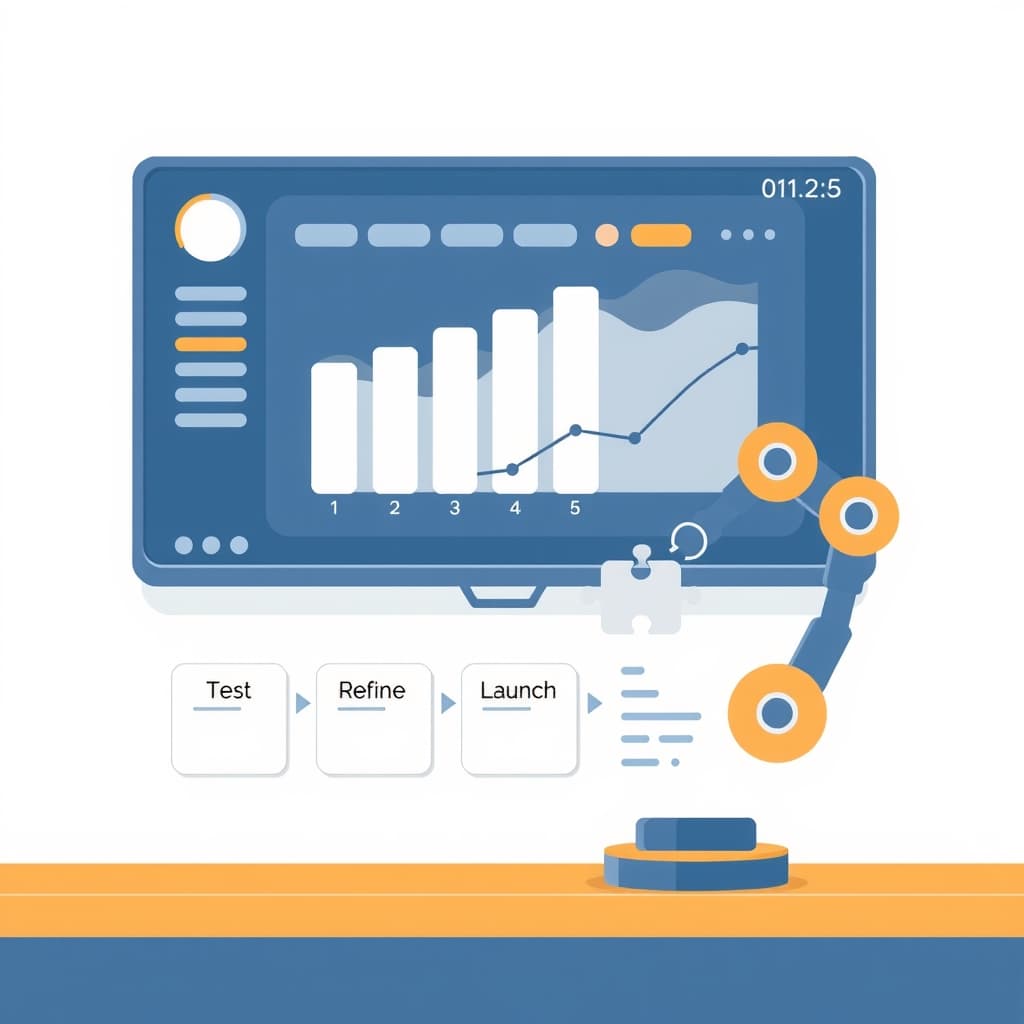
Launching an AI‑driven feature in a SaaS product is tempting, but without a disciplined approach you risk surprise costs, degraded user experience, and regulatory headaches. This AI feature rollout checklist walks founders, product managers, and ops leaders through the essential steps to validate value, control spend, and scale responsibly. By treating the rollout like any other critical product launch—complete with metrics, feedback loops, and risk mitigations—you turn a speculative experiment into a predictable revenue driver.
Why a Structured Rollout Matters for User‑Facing AI
AI models behave differently in production than in sandbox tests. Latency spikes, hallucinations, and cost overruns can erode trust faster than a broken UI. A structured rollout forces you to surface these risks early, align stakeholders on measurable outcomes, and embed safeguards before the feature reaches thousands of users. Moreover, a repeatable process builds institutional knowledge, making future AI initiatives faster and cheaper. Think of it as the Post‑Launch Reliability Checklist for AI: you plan, you monitor, you iterate. Without that discipline, a single buggy response can generate support tickets, churn, and negative PR—outweighing any upside the model might deliver.
Step 1 – Define the Real Problem the AI Feature Solves
Start with a problem statement that is quantifiable and user‑centric. Ask: what friction does the AI eliminate, and how will we measure that reduction? For example, an AI‑powered ticket triage tool should aim to cut average handling time by a specific percentage, not just “make agents happier.” Involve customer‑facing teams early to validate the pain point and capture baseline metrics. This clarity prevents scope creep and ensures that every subsequent decision—model size, data collection, UI design—ties back to a concrete business outcome. When the problem is well‑defined, you can also build a simple ROI model that will guide budgeting and stakeholder buy‑in.
Step 2 – Choose the Right Model Size and Architecture
Model selection is a trade‑off between capability, latency, and cost. Large language models excel at nuanced generation but consume more tokens and GPU time, while distilled or fine‑tuned smaller models may meet the functional requirement at a fraction of the price. Evaluate candidates against three criteria: (1) performance on a representative validation set, (2) inference latency under realistic load, and (3) estimated token cost per request. Architecture matters too—consider hybrid approaches like a rule‑based filter in front of the model to prune low‑value calls. Document the rationale so future teams can revisit the decision when usage patterns evolve.
Step 3 – Build a Rapid Evaluation Loop (A/B, synthetic tests, and human review)
Before a full release, set up an evaluation pipeline that combines automated metrics with human judgment. Run A/B tests against a baseline (e.g., rule‑based logic) to capture conversion lift, error rates, and user satisfaction. Complement this with synthetic test suites that probe edge cases—prompt injection, ambiguous inputs, and domain‑specific jargon. Finally, schedule regular human review sessions where subject‑matter experts rate model outputs for relevance and safety. Capture findings in a shared dashboard so the team can iterate quickly. This loop reduces the risk of “silent failures” that only surface after scale.
Step 4 – Implement Cost‑Control Mechanisms (token budgeting, caching, fallback logic)
AI inference costs can balloon unnoticed if each user interaction triggers a fresh model call. Implement token budgeting at the request level: cap the maximum tokens per response and reject or truncate overly long prompts. Use caching for repeat queries—store the model’s output for identical inputs for a short TTL to avoid redundant computation. Design fallback logic that routes low‑confidence or high‑cost requests to a deterministic alternative, such as a lookup table or rule‑based engine. Monitoring these controls in real time lets you adjust thresholds before the bill spikes, keeping the project financially sustainable.
Step 5 – Design an AI‑First UX that Sets Correct Expectations
User perception of AI hinges on transparency and feedback. Clearly indicate when a response is AI‑generated and provide a confidence indicator or “Was this helpful?” prompt. Offer an easy way to override or request human assistance, which not only improves satisfaction but also generates valuable training data. Align the UI with the problem definition from Step 1—if the goal is to speed up data entry, the interface should surface suggestions inline, not in a separate modal. Consistent micro‑copy and visual cues help users trust the system and reduce friction.
Step 6 – Monitor Performance, Accuracy, and Drift After Launch
Post‑launch monitoring must go beyond uptime. Track latency, token consumption, and error rates in real time. Set up alerts for accuracy drift by periodically re‑evaluating a hold‑out set of real user inputs against the model’s predictions. Use statistical process control charts to spot gradual degradation that may signal data drift or model aging. Pair these metrics with business KPIs—conversion, churn, support volume—to assess whether the AI feature continues to deliver the promised value. A disciplined monitoring regime enables timely retraining or model swaps before user experience suffers.
Step 7 – Iterate, Scale, and Communicate Value to Stakeholders
With data in hand, prioritize improvements that have the highest impact on the original problem statement. Iterate on prompts, fine‑tune the model, or expand the caching layer based on observed usage patterns. When scaling, consider regional model deployment to reduce latency and comply with data residency requirements. Communicate results regularly to executives and investors: share KPI shifts, cost savings, and user feedback. A transparent rollout narrative builds confidence and unlocks budget for the next AI initiative, turning the checklist into a repeatable growth engine.
Conclusion & CTA: Partner with SiteFusion to Accelerate Your AI Feature Delivery
Executing an AI feature responsibly demands the same rigor you apply to any core product component. By following this AI feature rollout checklist, you validate impact, keep costs in check, and lay the groundwork for sustainable scaling. If you need a seasoned technical partner to design, build, and monitor your AI‑first product—while handling post‑launch support and compliance—explore our post‑launch support services or review our portfolio for similar successes. Ready to move from prototype to production without surprise surprises? Book a call with SiteFusion today and let us turn your AI vision into a reliable revenue stream.