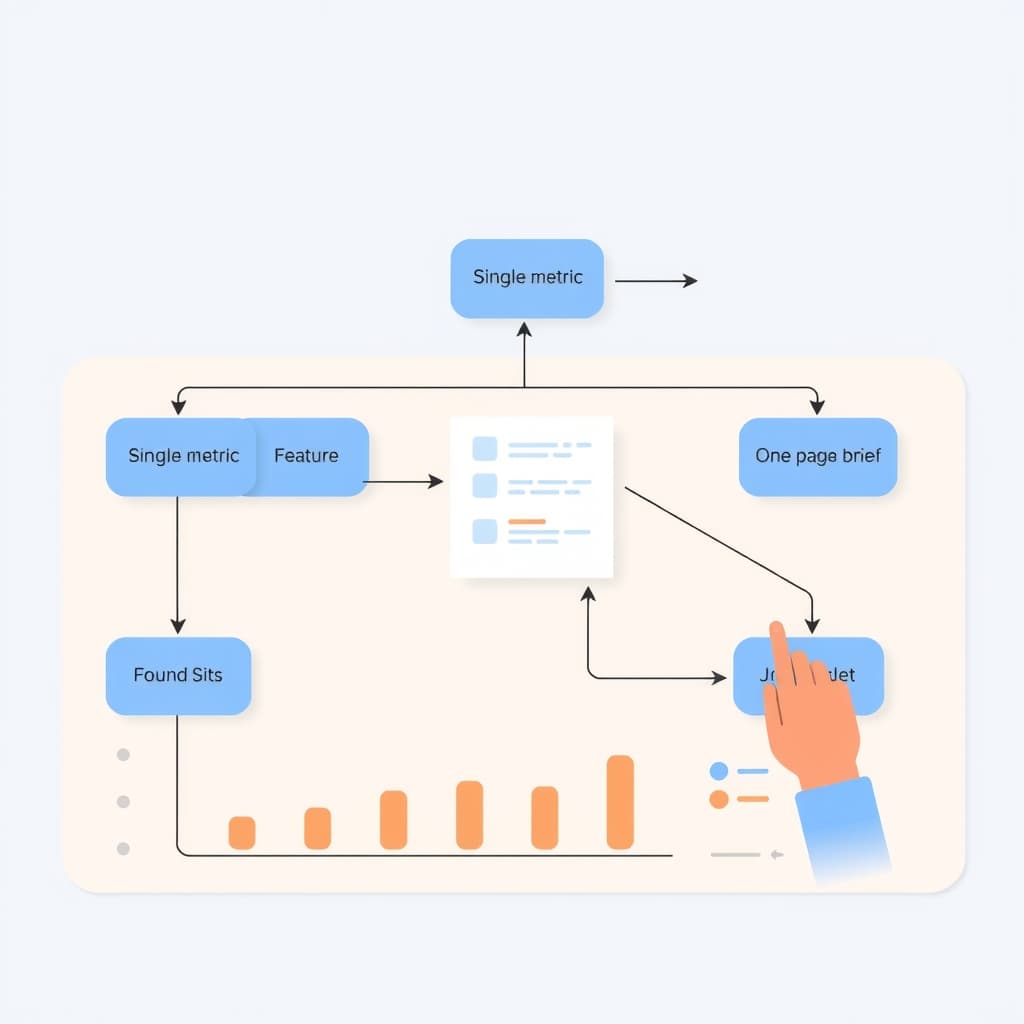
Launching a product without a clear roadmap is a costly gamble. An MVP scoping checklist gives founders a disciplined way to translate vision into a lean, testable version of the product that delivers real value fast. In this post we walk through a step‑by‑step checklist that removes guesswork, aligns stakeholders, and sets the stage for disciplined growth.
Why a Structured MVP Scoping Checklist Beats Guesswork
Guesswork thrives in environments where assumptions go unchecked and resources are allocated on intuition alone. A structured MVP scoping checklist forces you to surface those assumptions early, quantify success criteria, and prioritize ruthlessly. The result is a tighter scope, faster feedback loops, and a clearer handoff to development partners. When you can articulate the problem, the metric, and the must‑have features on a single page, you reduce the risk of endless revisions and scope creep. Moreover, a checklist serves as a common language between founders, product leaders, and external agencies, ensuring everyone evaluates the same trade‑offs. This disciplined approach is especially valuable for growing companies that must balance speed with sustainability.
Step 1: Define the Core Problem You’re Solving
The first line of any MVP scoping checklist is a crisp problem statement. Ask yourself: what pain point are you alleviating, for whom, and why does it matter now? Avoid broad market descriptions; focus on a specific user persona and a concrete friction point. Write the problem in one sentence, then expand with three supporting data points—customer interviews, support tickets, or market research. This clarity prevents feature bloat later, because every subsequent decision is measured against the core problem. If the problem definition feels vague, revisit your discovery work before moving forward.
Step 2: Identify the Single Success Metric That Matters
Every MVP needs a north‑star metric that tells you whether you’ve solved the problem. Choose one leading indicator—such as “% of users who complete onboarding in under 5 minutes” or “average time to resolve a support ticket.” The metric must be quantifiable, directly tied to the core problem, and actionable. Document the target (e.g., 70% adoption) and the measurement method. By anchoring the MVP to a single success metric, you keep the team focused and make post‑launch evaluation straightforward. Remember, secondary metrics are useful for context but should never drive scope decisions at this stage.
Step 3: Map Must‑Have vs Nice‑To‑Have Features
Take the list of potential features and plot them on a two‑axis matrix: must‑have (directly impacts the success metric) versus nice‑to‑have (enhances experience but isn’t critical). Limit the must‑have column to three to five items; anything beyond that risks diluting the MVP. For each nice‑to‑have, note the future release it could belong to. This exercise creates a visual “feature fence” that protects the scope during development. When stakeholders push for additional functionality, refer back to the matrix and the success metric to keep discussions grounded.
Step 4: Build a One‑Page Brief That Agencies Can Quote From
With problem, metric, and feature map in hand, condense everything onto a single‑page brief. Include: problem statement, success metric, prioritized must‑have features, user personas, and any technical constraints (e.g., platform, compliance). This brief becomes the reference point for any external development partner and dramatically reduces back‑and‑forth clarification. Agencies can provide accurate quotes, timelines, and risk assessments because they see the full scope at a glance. For founders who prefer to keep work in‑house, the brief still serves as a contract between product, design, and engineering teams. Need help turning the brief into a formal proposal? Our service catalog outlines how we collaborate on scoped MVPs.
Step 5: Validate Assumptions Before Any Code Is Written
Before a single line of code, test the riskiest assumptions with the cheapest experiments—landing pages, mockups, or concierge prototypes. If the assumption relates to user demand, run a targeted ad campaign and measure click‑throughs against your success metric. If it’s a technical feasibility question, build a quick proof‑of‑concept using low‑code tools. Document the results and decide whether to proceed, pivot, or discard the idea. This validation loop mirrors the approach in our AI Feature Rollout Checklist, where we emphasize cost‑controlled experiments before scaling.
Step 6: Guard Against Scope Creep in the First Build
Even with a solid checklist, scope creep can sneak in during sprint planning. Establish a change‑control gate: any new request must be evaluated against the success metric and the must‑have matrix. If it fails either test, log it for a future phase. Use a lightweight issue tracker to flag “out‑of‑scope” items and communicate decisions transparently to stakeholders. Regularly revisit the one‑page brief in stand‑ups to remind the team of the original intent. This disciplined gating preserves the MVP’s lean nature and keeps timelines realistic.
Step 7: Turn the Checklist Into a Roadmap for Phase‑2 Growth
Once the MVP launches and the success metric is measured, the checklist evolves into a phased roadmap. Review which nice‑to‑have features delivered the highest impact and prioritize them for Phase 2. Align each new feature with a secondary metric that supports the primary success metric—e.g., increasing user retention after onboarding. Document dependencies, resource estimates, and any new compliance considerations (such as GDPR for B2B SaaS). This roadmap provides a clear handoff to product ops and ensures that subsequent builds are as disciplined as the MVP. For ongoing stability, pair the roadmap with our post‑launch support to monitor performance and address issues quickly.
Conclusion: Apply the Checklist Today and Request a Quote
The MVP scoping checklist is not a one‑time document; it’s a living framework that guides you from problem definition to post‑launch iteration. By following the seven steps—defining the problem, locking a success metric, prioritizing features, creating a concise brief, validating assumptions, protecting scope, and planning growth—you’ll launch faster, spend less, and learn more. Ready to turn your scoped MVP into a production‑grade product? Book a call with SiteFusion today and let our experts help you execute the checklist with confidence.