When a B2B SaaS product starts to acquire hundreds of customers, the sheer volume of inbound and outbound data makes API integration reliability a non‑negotiable pillar of growth. A single flaky third‑party endpoint can cascade into delayed invoices, broken workflows, or lost data—issues that erode trust faster than any feature rollout. For founders and product leaders, the goal isn’t just to connect systems; it’s to guarantee that those connections behave predictably under load, during outages, and across version upgrades. This article walks you through the patterns and practices that turn fragile point‑to‑point links into a resilient integration fabric you can scale with confidence.
Why API Integration Reliability Matters for Scaling SaaS
At scale, every transaction becomes a data point in a larger reliability graph. An unreliable integration can inflate support tickets, increase churn, and inflate operational costs as teams scramble to manually reconcile mismatches. Moreover, investors and auditors increasingly scrutinize the robustness of data pipelines, especially when compliance frameworks like SOC 2 are in play. Reliable APIs also enable smoother product iterations; when you can trust that downstream systems will honor contract changes, you spend less time on defensive coding and more on delivering value. In short, reliability is the foundation that lets you focus on differentiation rather than firefighting.
Assessing Your Current Integration Health: Quick Diagnostic Checklist
Before you can improve, you need to know where you stand. Use this checklist to get a rapid health snapshot:
- Do you have explicit SLA documentation for each external API?
- Are error rates logged and visualized in a central dashboard?
- Is there a retry or back‑off policy applied consistently?
- Do you version your integration contracts and deprecate old versions cleanly?
- Are you monitoring latency spikes and timeout thresholds?
If you answer “no” to more than two items, prioritize those gaps. A systematic audit often reveals low‑hanging fixes—like tightening timeout settings—that dramatically boost overall reliability.
Choosing the Right Communication Pattern: Webhooks, Polling, or Batch Sync
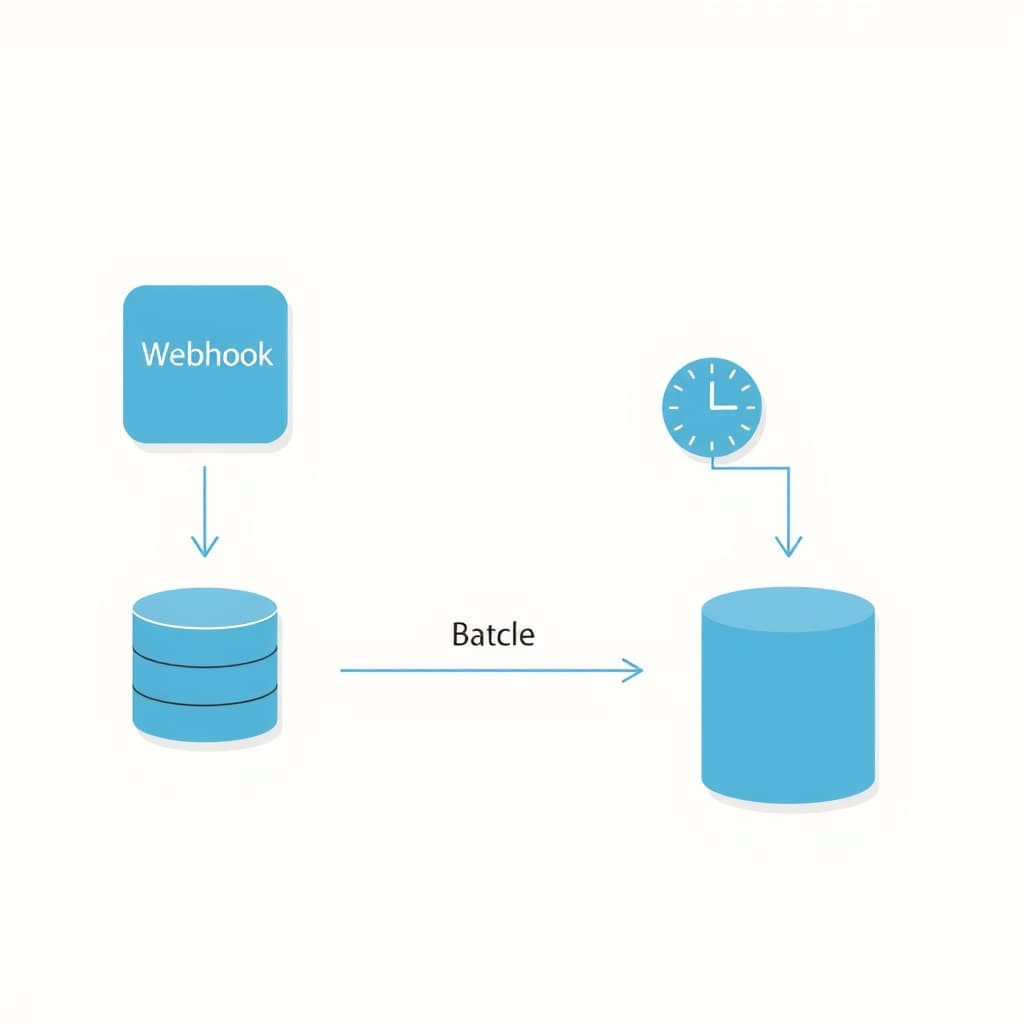
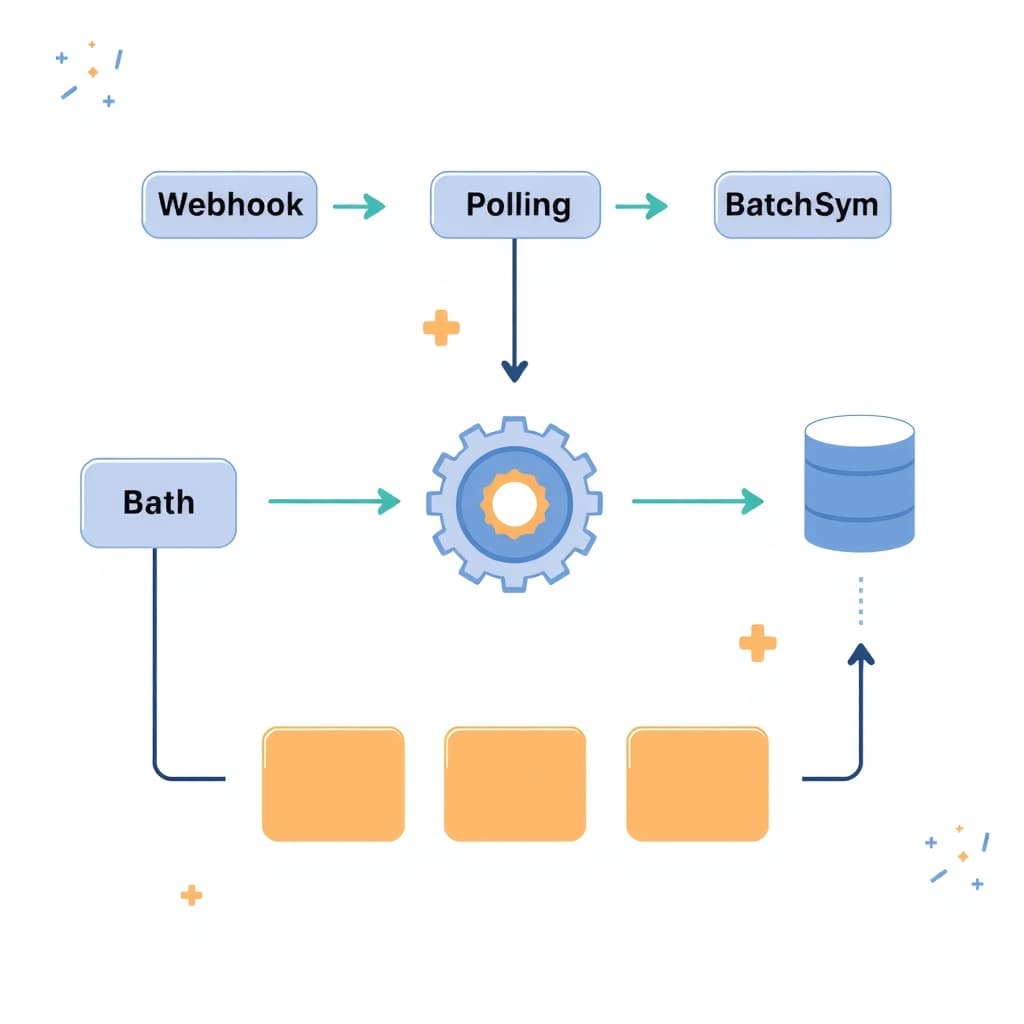
The communication pattern you pick dictates how failures surface and how you recover. Webhooks push events in near‑real time, but they require idempotent handling and robust verification (e.g., HMAC signatures). Polling offers simplicity and control over request frequency, yet it can waste resources and introduce latency. Batch sync—typically nightly or hourly—reduces API call volume and is ideal for non‑critical data, but it demands careful reconciliation logic. Evaluate each integration against three criteria: data freshness requirements, volume, and tolerance for missed events. For a payment processor, a webhook with retry logic is essential; for a nightly analytics dump, a batch job with checksum verification may be sufficient.
Designing Idempotent Endpoints to Prevent Duplicate Data
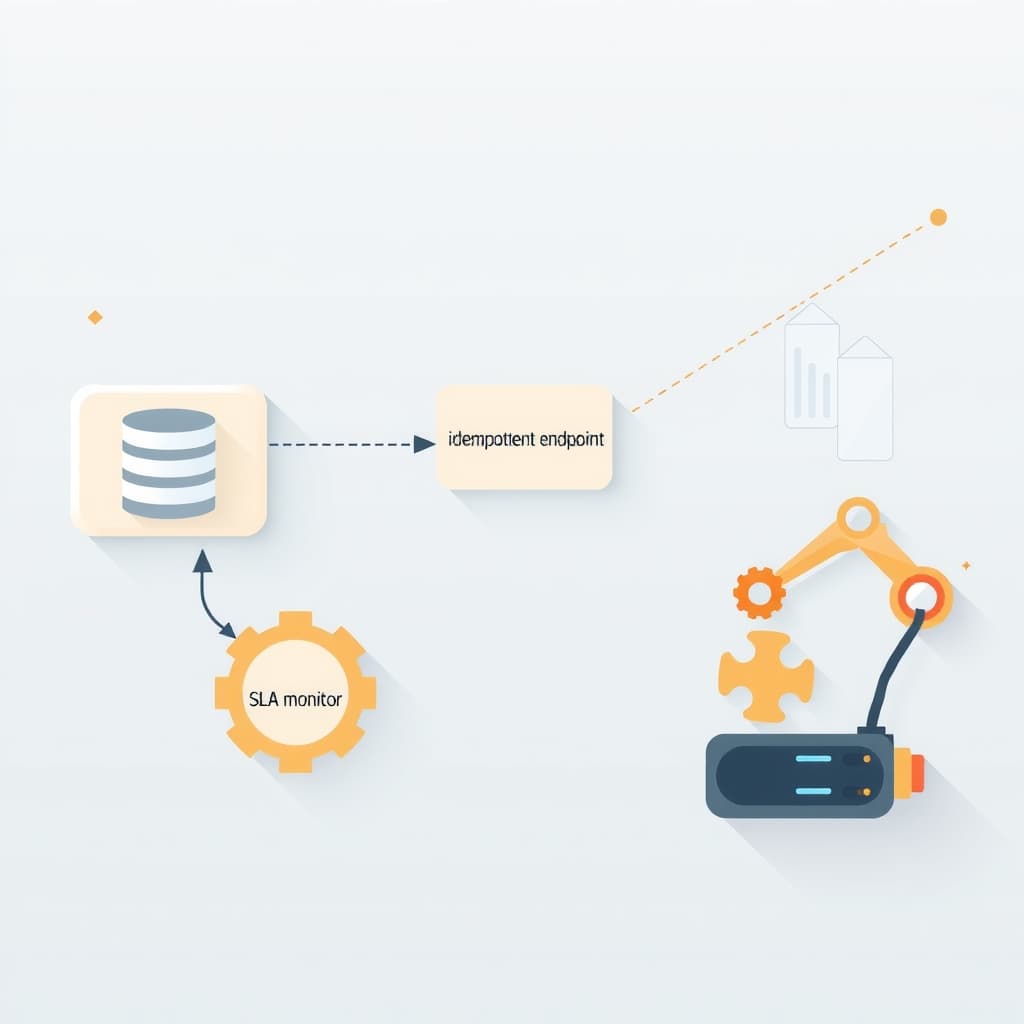
Idempotency ensures that repeating the same request yields the same result without side effects—a critical safeguard when retries are automatic. Implement it by accepting a client‑generated idempotency key (e.g., a UUID) and storing it alongside a hash of the request payload. On subsequent calls with the same key, return the original response instead of re‑processing. This pattern works for both POST (create) and PATCH (update) operations. Additionally, make your data model tolerant of duplicate timestamps by using upserts or “last‑write‑wins” strategies. When every external system respects idempotent contracts, you eliminate a whole class of duplicate‑record bugs.
Implementing Retries, Circuit Breakers, and Back‑off Strategies
Transient failures are inevitable; the key is to handle them gracefully. A retry policy should be limited (e.g., three attempts) and combined with exponential back‑off to avoid thundering‑herd effects. Circuit breakers monitor failure rates; once a threshold is crossed, they open the circuit, short‑circuiting further calls and returning a fallback response. After a cool‑down period, the breaker attempts a “probe” request to see if the service has recovered. Pair these mechanisms with detailed logging so you can distinguish between a flaky third‑party and a systemic issue in your own code. The result is a self‑regulating system that protects both your users and downstream services.
Monitoring, Alerting, and Observability for Real‑Time Failure Detection
Observability starts with structured logs that capture request IDs, latency, and error codes. Export these metrics to a centralized platform (e.g., Prometheus, Datadog) and create alerts on error‑rate thresholds, latency spikes, or circuit‑breaker state changes. Dashboards should surface SLA compliance per integration, enabling product leaders to spot degradation before customers do. For a deeper view, implement distributed tracing to follow a request across service boundaries; this reveals where latency accumulates. A well‑tuned alerting system reduces mean‑time‑to‑detect (MTTD) and, when paired with runbooks, also shrinks mean‑time‑to‑resolve (MTTR).
Testing for Resilience: Chaos Engineering and Contract Tests
Static unit tests prove code correctness, but they don’t guarantee behavior under failure. Introduce chaos engineering experiments—such as network latency injection, timeout simulation, or forced API error responses—to validate that your retry and circuit‑breaker logic works in production‑like conditions. Complement this with contract tests (e.g., Pact) that verify both request and response schemas against third‑party specifications. Run these suites in CI pipelines and schedule periodic chaos runs in staging environments. The feedback loop ensures that any change to an integration contract immediately surfaces as a failing test, preventing regression.
Building a Central Integration Layer vs. Point‑to‑Point Glue
Many growing SaaS teams start with ad‑hoc point‑to‑point scripts, which quickly become a maintenance nightmare. A central integration layer abstracts external APIs behind a unified internal interface, handling retries, logging, and transformation in one place. This reduces duplicated code, enforces consistent security (OAuth token rotation, rate‑limit handling), and makes onboarding new developers faster. However, a monolithic layer can become a bottleneck if not designed for scalability; consider a micro‑service approach for high‑throughput domains. Investing in a well‑architected integration platform pays off in lower operational overhead and higher reliability across the board.
Conclusion & Next Steps: How SiteFusion Can Help You Harden Your Integrations
Achieving rock‑solid API integration reliability is a journey that blends architecture, observability, and disciplined testing. By applying the patterns outlined above—idempotent endpoints, smart retry logic, centralized monitoring, and chaos validation—you’ll reduce downtime, protect revenue, and free your team to focus on product innovation. SiteFusion specializes in building custom integration layers, implementing robust retry and circuit‑breaker frameworks, and setting up end‑to‑end observability pipelines. Ready to turn fragile point‑to‑point glue into a resilient backbone? Book a call with us today and let’s future‑proof your SaaS platform.
Related reading: Design System for SaaS Teams: Consistency Without Overhead.