Why resilience matters: the hidden cost of flaky integrations
When a SaaS product relies on dozens of third‑party APIs, a single timeout can cascade into lost revenue, angry customers, and wasted engineering cycles. Resilient API integrations aren’t a nice‑to‑have; they are the backbone of predictable growth. A flaky webhook that drops 5 % of events may look harmless, but over a month that translates into thousands of incomplete orders or missed billing cycles. The hidden cost shows up as extra support tickets, manual data clean‑up, and ultimately churn. Building resilience early prevents you from retrofitting patches after an outage. For a practical view on how integration failures can affect onboarding, see our Multi‑Tenant SaaS Onboarding Blueprint. The goal is to make every external call behave like a reliable internal component, so your product can scale without the integration layer becoming a bottleneck.
Choosing the right integration pattern: webhooks, polling, or batch sync
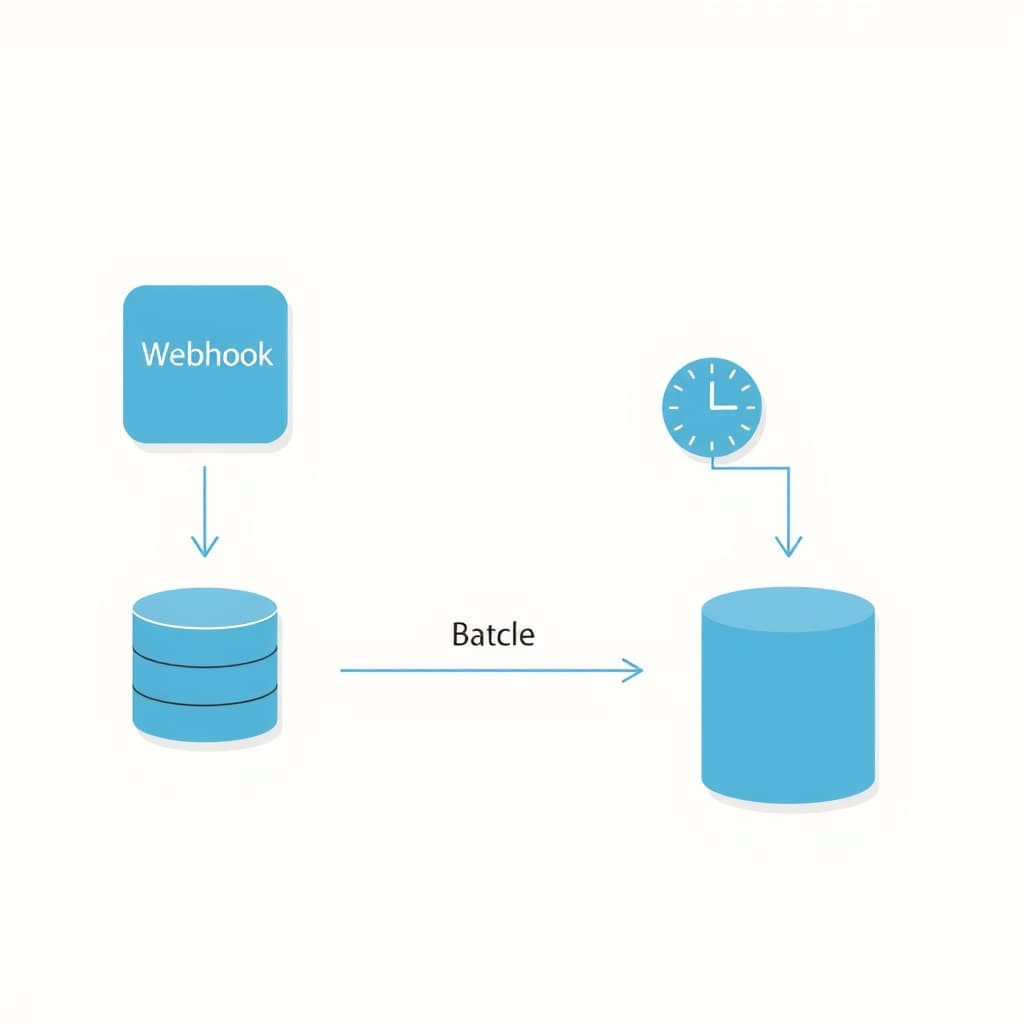
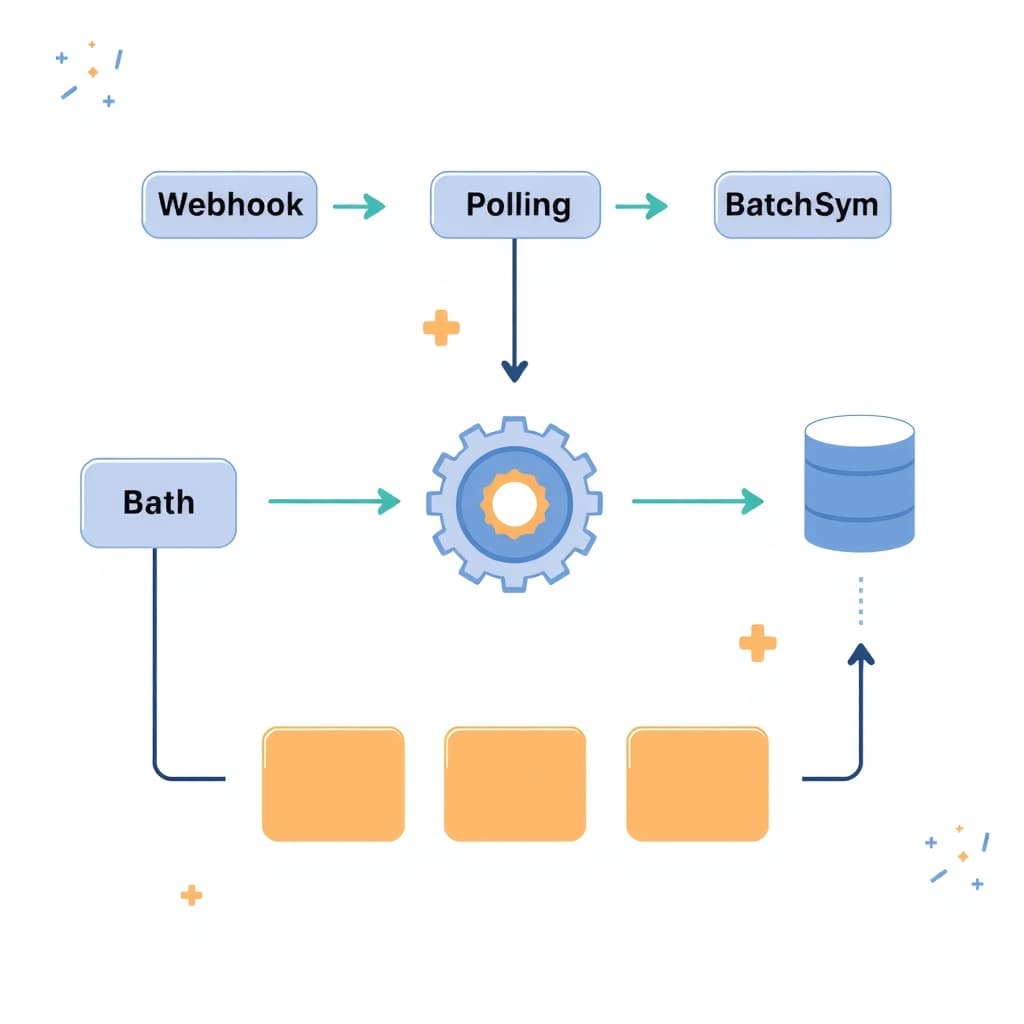
Each integration pattern trades latency for control. Webhooks push data in real time, but they require robust verification and replay logic because delivery is at‑will. Polling gives you predictable request rates and can be throttled to respect rate limits, yet it adds latency and unnecessary load when data changes rarely. Batch sync—typically a nightly or hourly bulk export—reduces API chatter and is ideal for large data sets that don’t need instant consistency. The right choice depends on three factors: data freshness requirements, volume, and the third‑party’s reliability guarantees. For high‑value, time‑sensitive events like payment confirmations, combine a webhook with a fallback poll that verifies receipt. For analytics dashboards, a nightly batch may be sufficient. Align the pattern with your service‑level expectations, and you’ll avoid over‑engineering while keeping the integration resilient.
Designing idempotent endpoints to avoid duplicate data
Idempotency is the safety net that lets you retry without corrupting state. An endpoint that creates a record should accept a client‑generated idempotency key—often a UUID or a hash of the payload. The server stores the key with the result of the first request; subsequent calls with the same key return the original response instead of creating a duplicate. This pattern works for both POST and PATCH operations and is essential when combined with exponential backoff or circuit breakers. For read‑only endpoints, ensure that GET requests never cause side effects, adhering to REST principles. When designing your own APIs, document the idempotency contract clearly, and expose a status endpoint that lets callers verify the outcome of an asynchronous operation. By making every external interaction safely repeatable, you eliminate a common source of data drift in complex integration landscapes.
Implementing exponential backoff and circuit breakers for third‑party outages
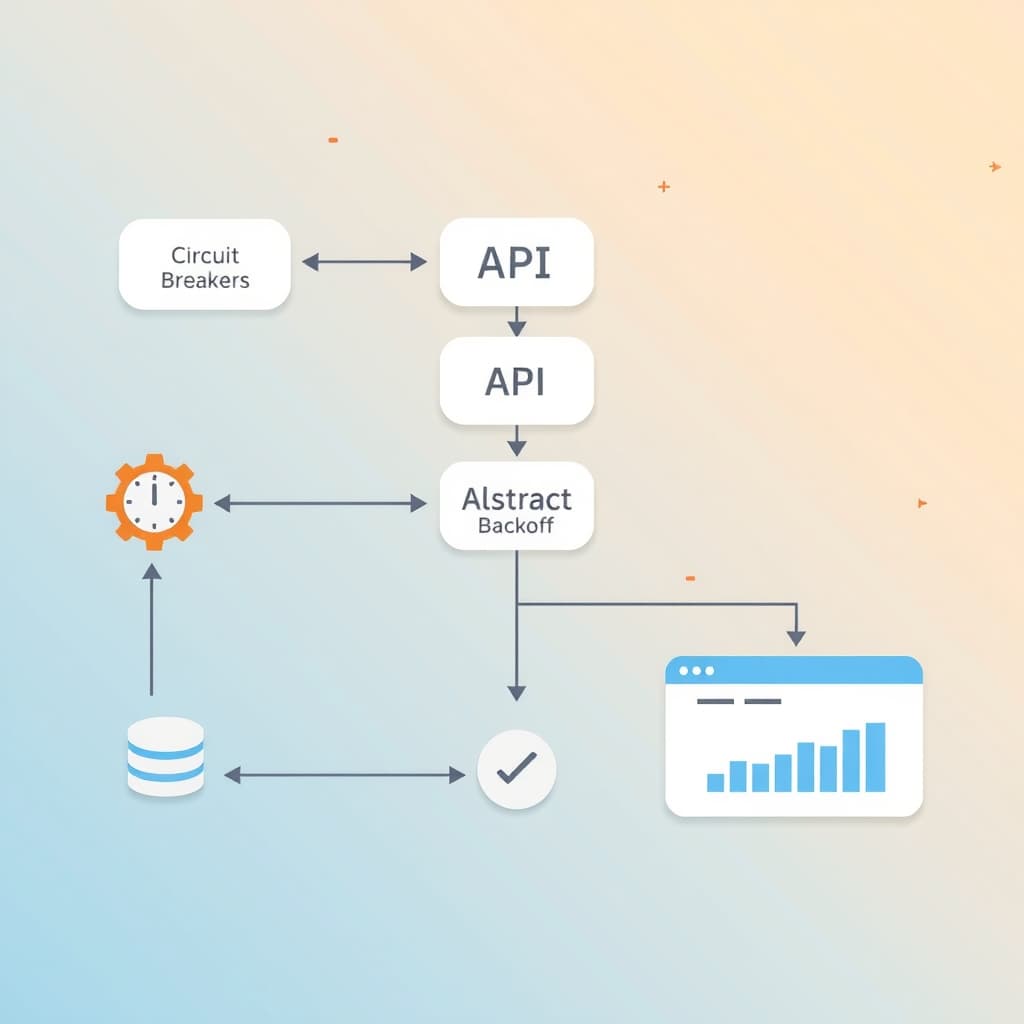
Transient failures—network hiccups, rate‑limit responses, or brief service degradations—are inevitable. Exponential backoff spaces retries increasingly farther apart (e.g., 1 s, 2 s, 4 s, 8 s) to give the remote system time to recover while preventing thundering‑herd traffic. Pair this with jitter to avoid synchronized retries across many instances. A circuit breaker adds a higher‑level guard: after a configurable number of consecutive failures, it “opens” and short‑circuits calls for a cool‑down period, returning a fallback response or error immediately. When the circuit “closes,” normal traffic resumes. Implement these patterns at the HTTP client layer, not in business logic, so they are reusable across services. Monitoring the breaker’s state is critical; it should surface in dashboards so ops teams can act before the outage impacts customers. This combination turns occasional glitches into graceful degradations rather than catastrophic failures.
Monitoring, alerting, and automated retry strategies
Visibility is the first line of defense for resilient API integrations. Instrument every outbound request with latency, status code, and error classification (timeout, 5xx, validation). Aggregate these metrics in a time‑series store and set alerts on error rate spikes or latency thresholds. Automated retry logic should be observable: each retry attempt increments a counter that feeds into your alerting thresholds. Use a dead‑letter queue for requests that exceed retry limits, and surface those entries in an ops dashboard for manual investigation. Correlate integration alerts with upstream service incidents to reduce noise. By coupling real‑time monitoring with self‑healing retries, you create a feedback loop that catches failures before they ripple into user‑facing issues.
Testing for reliability: contract tests, chaos engineering, and synthetic traffic
Reliability must be validated before it reaches production. Contract tests (e.g., Pact or OpenAPI validation) ensure that both sides of the integration agree on request/response schemas, catching breaking changes early. Chaos engineering takes a step further: inject latency, drop packets, or force HTTP 500 responses against a staging copy of the third‑party API to verify that backoff and circuit breakers behave as expected. Synthetic traffic—automated scripts that mimic real user flows—can run on a schedule to keep the integration warm and detect regressions. Store test results alongside deployment pipelines so failures block releases. This layered testing approach gives you confidence that resilience mechanisms survive code changes and external API upgrades.
Scaling your integration layer: when to move from point‑to‑point to a central hub
In early stages, direct point‑to‑point connections are quick to implement. As the number of partners grows, the maintenance burden rises exponentially: each new API adds its own auth, error handling, and data mapping. A central integration hub abstracts these concerns, exposing a uniform internal API while handling the heterogeneous external contracts behind the scenes. Benefits include reusable retry logic, centralized logging, and the ability to batch or route requests efficiently. Transition to a hub when you see more than three critical partners, when integration‑related incidents exceed a set threshold, or when you need to enforce consistent security policies (e.g., OAuth token rotation). The hub can be built as a lightweight microservice or a managed iPaaS, but the key is to keep the hub itself resilient—apply the same patterns you use for external calls.
Checklist: 8 steps to audit and harden your existing API connections
- Catalog every external API, noting authentication method, rate limits, and SLA.
- Verify that each endpoint supports idempotent operations or add an idempotency key.
- Implement exponential backoff with jitter for all retryable failures.
- Introduce circuit breakers with sensible thresholds and expose their state.
- Instrument request latency, error codes, and retry counts; feed them to a monitoring system.
- Set up alerts on error‑rate spikes and latency breaches.
- Run contract tests and schedule chaos experiments monthly.
- Document fallback procedures and ensure the ops team can manually replay dead‑lettered messages.
Completing this checklist will surface hidden fragilities and give you a roadmap to true resilience. If you need expert help executing any of these steps, our post‑launch support team can partner with you to close gaps quickly.
Next steps: partnering with a specialist development team to future‑proof your stack
Building resilient API integrations is a continuous investment. A specialist team brings deep experience in designing idempotent APIs, implementing robust retry patterns, and scaling integration hubs without reinventing the wheel. They can audit your current landscape, refactor brittle connections, and embed observability from day one. Moreover, they stay abreast of emerging standards—such as webhook signing and OAuth 2.1—so your stack remains compliant and secure. If you’re ready to eliminate integration‑related downtime and focus on delivering core product value, reach out to discuss a tailored engagement. Our portfolio showcases dozens of successful integrations that have enabled SaaS companies to scale confidently.
Ready to make your integrations truly resilient? Book a call with SiteFusion today and let us help you future‑proof your stack.