Why GDPR matters for SaaS startups – framing the risk and opportunity
European customers expect their data to be handled with the same rigor they apply to financial or health information. A solid GDPR compliance checklist is not just a legal shield; it is a market differentiator that can accelerate sales cycles and reduce churn. Non‑compliance can trigger fines of up to 4 % of global turnover, but the real cost often comes from lost trust, forced service interruptions, and the expense of retro‑fitting systems after a breach. Conversely, demonstrating GDPR‑aligned practices signals maturity to investors and partners, especially when you are scaling across the EU, UK, or Turkey. Embedding privacy into product design from day one also simplifies future feature work, because you avoid the “privacy‑by‑after‑the‑fact” scramble that plagues many fast‑moving SaaS teams.
Step 1: Map the data you collect and store – creating a clear data inventory
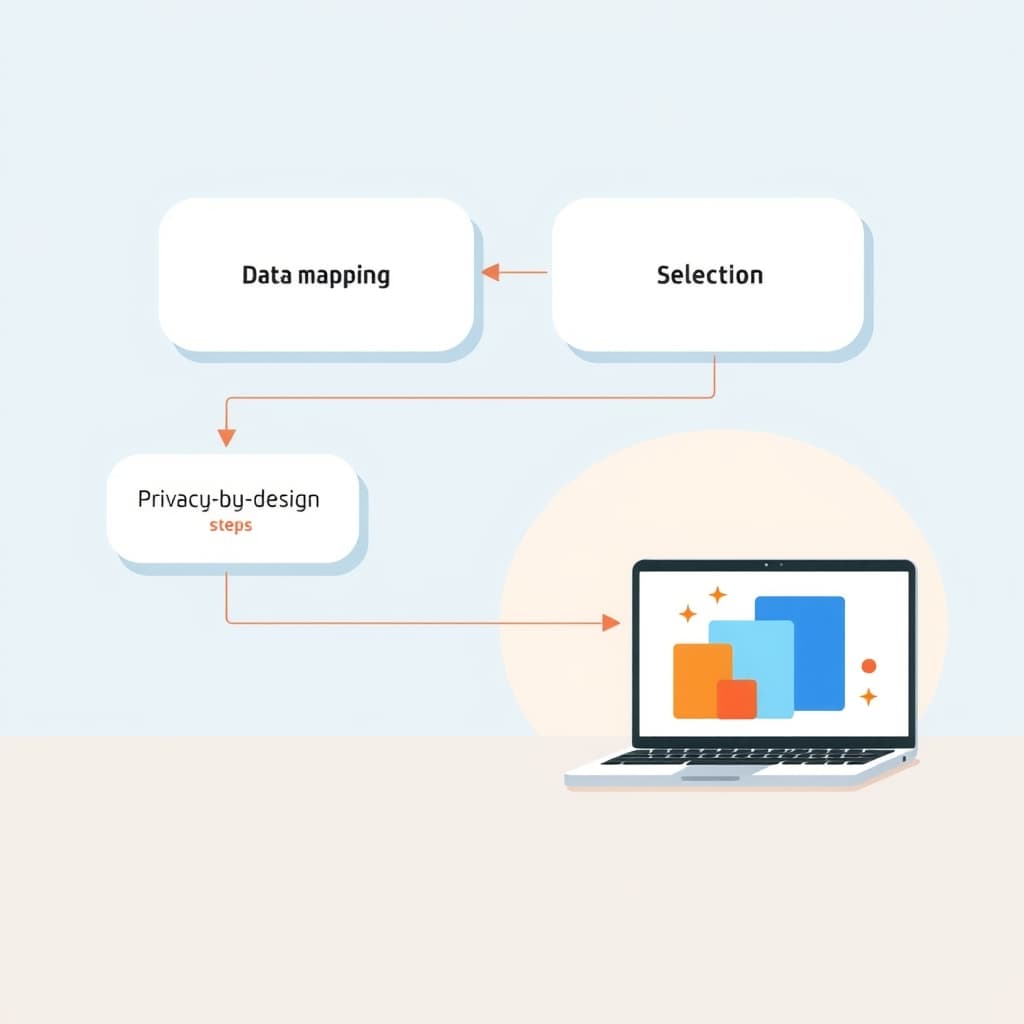
The first line of any GDPR compliance checklist is a data map that answers who, what, where, and why. Start by cataloguing every data source—user sign‑up forms, payment processors, third‑party analytics, and internal logs. For each data element, record its category (personal, special‑category, or anonymised), the legal basis for processing, and its storage location (cloud bucket, database, or backup). Visual tools such as flow diagrams or spreadsheet matrices help keep the inventory alive; tag fields that flow across micro‑services so you can trace them end‑to‑end. This inventory becomes the reference point for all subsequent steps, from consent design to breach reporting, and it satisfies the GDPR requirement for “record‑of‑processing‑activities” (Article 30).
Step 2: Define lawful bases and obtain valid consent for each data type
GDPR permits six lawful bases, but SaaS platforms most often rely on contract performance and legitimate interests. For marketing emails, behavioural analytics, or optional profile enrichment, you need explicit consent that meets the “freely given, specific, informed, and unambiguous” standard. Implement a consent management layer that records the timestamp, version of the privacy notice, and the exact scope of permission. Offer granular toggles—e.g., separate consent for newsletters, product updates, and third‑party sharing—so users can opt‑in or out without breaking core functionality. Remember to provide a clear withdrawal mechanism; a single click in the user dashboard should revoke consent and trigger downstream data‑deletion workflows.
Step 3: Build data‑subject rights workflows – access, rectification, erasure
Data subjects can demand access, correction, portability, or deletion of their records at any time. Design automated ticket flows that route requests to the appropriate engineering or support owner within a 30‑day SLA. For access, generate a machine‑readable JSON or CSV export that includes all data points tied to the user’s identifier. Rectification can be handled through self‑service profile edits, but for fields that are immutable (e.g., audit logs), provide a clear justification. Erasure is the most complex; you must purge data from primary stores, backups, and any third‑party processors, while retaining necessary logs for compliance (e.g., tax records). Document each step in your internal SOP so auditors can see that the process is repeatable and auditable.
Step 4: Implement technical safeguards – encryption, pseudonymisation, and secure defaults
Technical and organisational measures are the backbone of any GDPR compliance checklist. Encrypt data at rest using AES‑256 and enforce TLS 1.2+ for data in transit. Where possible, store only pseudonymised identifiers—replace email addresses with hashed tokens that can be reversed only with a secure key held offline. Adopt a “privacy‑by‑default” stance: default to the minimum data collection needed for a feature, and disable optional tracking unless the user explicitly opts in. Regularly rotate encryption keys and conduct penetration tests to validate that your security controls remain effective against evolving threats.
Step 5: Draft and publish transparent privacy notices and terms
Your privacy notice is the public face of the GDPR compliance checklist. It must explain in plain language what data you collect, why you collect it, how you process it, and who you share it with. Break the notice into digestible sections—Data Collection, Legal Basis, Retention Periods, International Transfers, and Rights of the Data Subject. Link directly to the notice from every sign‑up screen, login page, and API documentation. Keep version history so users can see what changed and when. If you use third‑party services (e.g., payment gateways or analytics), include their data‑processing agreements as annexes or hyperlinks.
Step 6: Set up a GDPR‑ready incident response plan and breach reporting
Even with strong safeguards, breaches can happen. Your incident response plan should define roles (Data Protection Officer, legal counsel, engineering lead), communication channels, and a timeline for containment, investigation, and notification. GDPR mandates that supervisory authorities be informed within 72 hours of becoming aware of a breach that is likely to result in risk to individuals’ rights. Prepare a breach notification template that includes the nature of the breach, categories of data affected, potential consequences, and remedial steps. Conduct tabletop exercises quarterly to keep the team sharp, and log every incident in a central register for future audits.
Step 7: Document everything for auditors – the living compliance register
Documentation is the final pillar of a robust GDPR compliance checklist. Maintain a living compliance register that captures the data inventory, lawful bases, consent records, rights‑request logs, technical safeguards, privacy notices, and incident reports. Store this register in a version‑controlled repository so changes are traceable. When an audit occurs, you can produce the register alongside supporting artefacts—e.g., encryption certificates, third‑party DPA copies, and SOPs. Regularly review and update the register whenever you launch a new feature, integrate a new API, or modify retention policies. This proactive approach turns compliance from a one‑off project into an ongoing operational habit.
Conclusion: Turning GDPR compliance into a trust‑building asset + next steps
When you treat GDPR as a strategic advantage rather than a checkbox, it becomes a catalyst for stronger customer relationships, smoother partnerships, and lower operational risk. Start by embedding the steps above into your product roadmap, and pair them with continuous monitoring—think of it as the Post‑Launch Monitoring Checklist for Growing SaaS. If you need hands‑on assistance, our team offers dedicated post‑launch support to keep your compliance program current as you scale. Ready to make privacy a competitive edge? Book a call with SiteFusion today and let us help you embed GDPR compliance into the DNA of your SaaS product.