Why a Solid Contract Is the Foundation of a Successful Dev Partnership
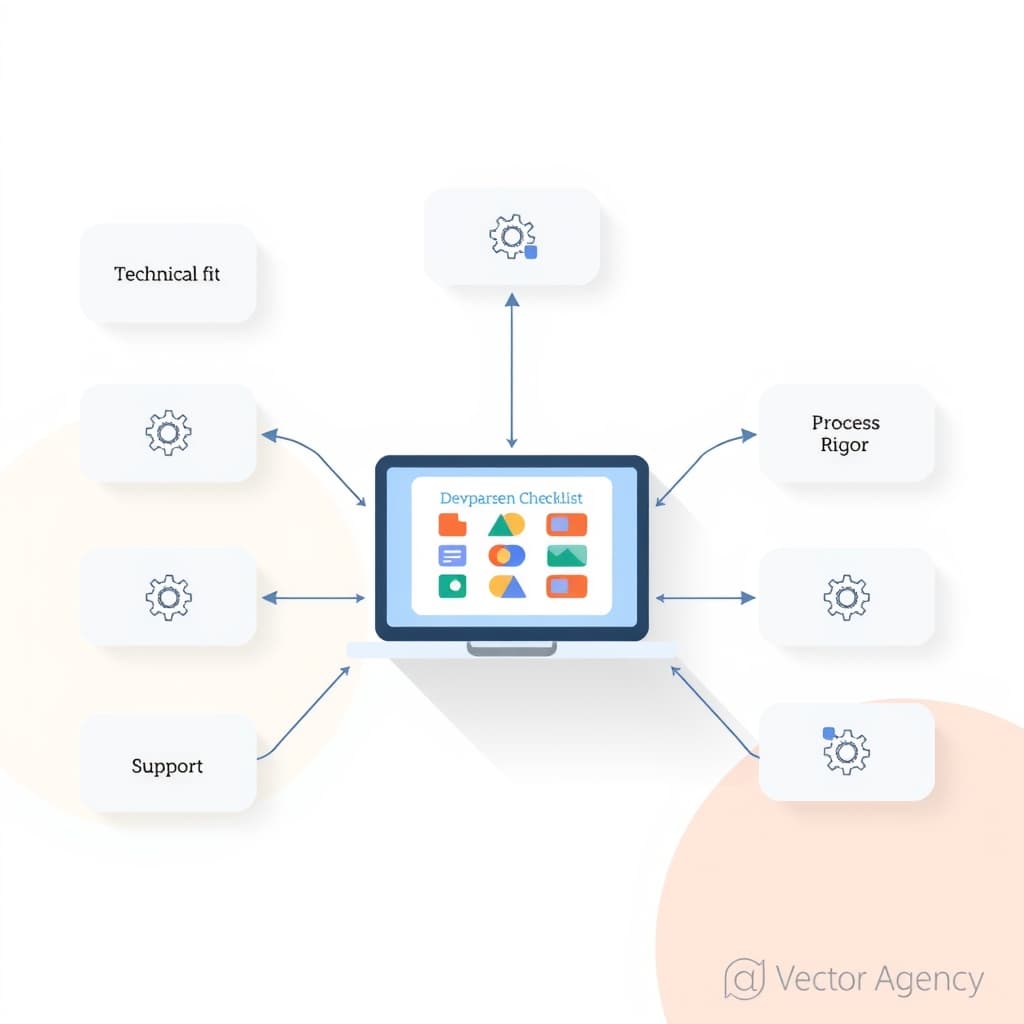
When founders move from an idea to a funded product, the dev partner contract checklist becomes the single most practical tool for protecting time, money, and vision. A well‑crafted agreement translates vague expectations into enforceable obligations, reducing the risk of scope creep, missed deadlines, and hidden costs. It also signals professionalism to the external team, encouraging them to treat your project as a strategic partnership rather than a one‑off job. In the early weeks, the contract sets the tone for communication cadence, decision‑making authority, and escalation paths—elements that directly affect delivery velocity. Without that foundation, even the most talented development shop can drift into misaligned priorities, leaving founders to chase “what‑we‑thought‑we‑agreed‑on.” Treat the contract as the blueprint for the relationship; it’s the only document that can be referenced when reality diverges from the original plan.
Key Legal Elements Every Dev Partner Contract Must Cover
A robust dev partner contract checklist starts with the basics: parties’ legal names, governing law, and a clear definition of the project’s purpose. Include a clause that outlines confidentiality obligations and the handling of proprietary information—especially important if you’re building a B2B portal or a fintech solution. The contract should also specify indemnification terms, limiting liability to direct damages and excluding consequential losses. For teams that rely heavily on third‑party APIs, reference our API Integration Reliability: Build Fail‑Safe Connections guide to reinforce the need for robust integration warranties. Finally, embed a “force‑majeure” provision that clarifies how unforeseen events (e.g., regulatory changes) affect timelines and payments, ensuring both sides have a clear path forward when the unexpected occurs.
Defining Scope, Deliverables, and Acceptance Criteria Up Front
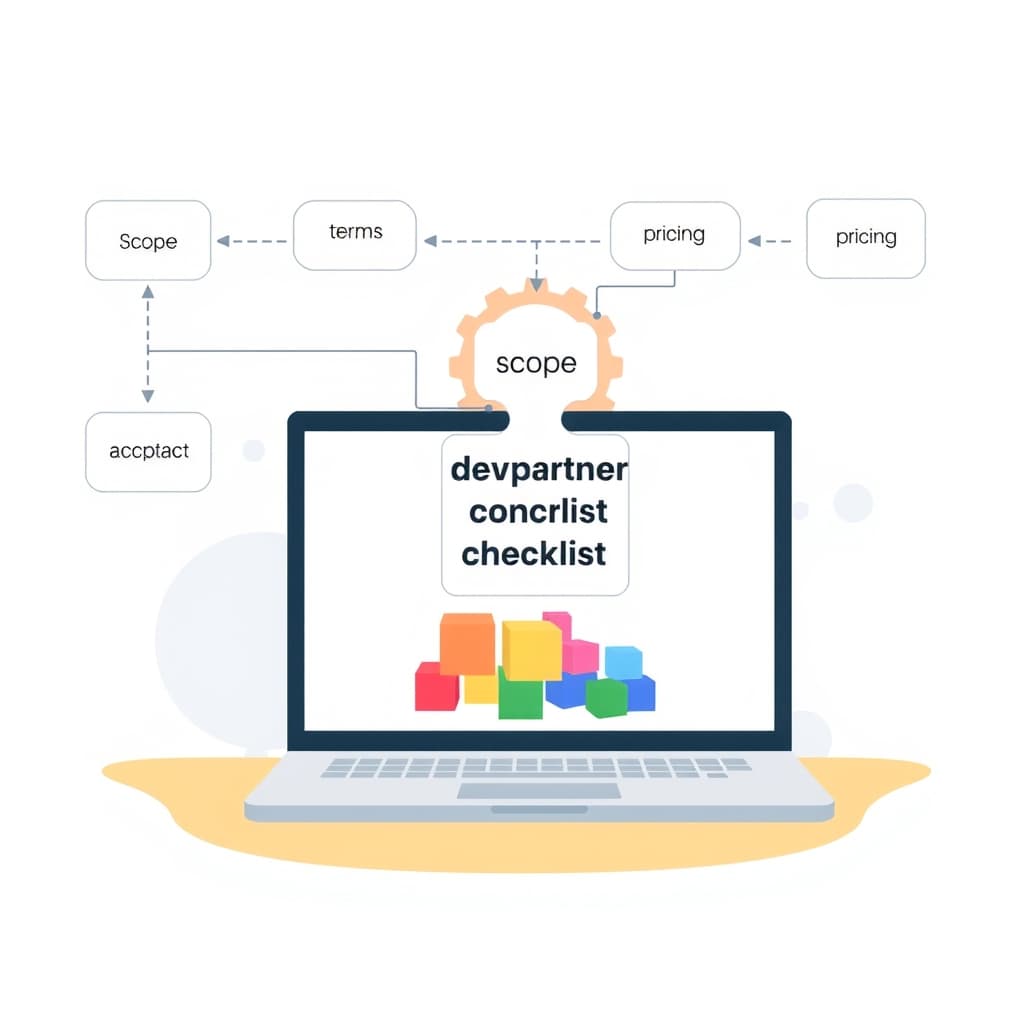
Scope ambiguity is the leading cause of budget overruns. Your checklist should require a detailed Scope of Work (SOW) that enumerates each feature, user story, or module, paired with measurable acceptance criteria. Use concrete language—e.g., “the payment gateway must process 1,000 transactions per minute with a 99.9% success rate”—to avoid subjective judgments later. Attach wireframes, design system specifications, or a Design System Handoff Checklist as exhibits, so the development partner knows exactly what “done” looks like. Include a change‑request process that defines how new requirements are documented, priced, and approved, protecting you from endless scope creep while giving the partner a fair mechanism to adjust effort estimates.
Pricing Models and Payment Terms: Fixed‑Bid vs T&M Clauses
Choosing the right pricing model hinges on project certainty and risk tolerance. Fixed‑bid contracts lock price upfront, which is ideal when the SOW is crystal clear and the technology stack is well‑understood. However, they often include a contingency buffer that can inflate costs. Time‑and‑materials (T&M) contracts align payment with actual effort, offering flexibility for evolving requirements but requiring diligent time‑tracking and regular budget reviews. Your checklist should mandate milestone‑based invoicing, with clear deliverable sign‑offs before each payment release. For hybrid approaches, consider a capped‑T&M clause that sets a maximum spend while preserving flexibility. Explicitly state late‑payment penalties and any discounts for early completion to keep cash flow predictable.
Intellectual Property, Data Ownership, and Confidentiality Provisions
IP ownership is non‑negotiable for founders who plan to scale or sell their product. The contract must state that all code, designs, and documentation created under the agreement are “work made for hire” and transfer fully to your company upon payment. If the partner will reuse open‑source components, require a list of licenses and a warranty that they do not infringe third‑party rights. Data ownership clauses should clarify who controls user data, analytics, and any proprietary datasets—critical for compliance‑heavy sectors like fintech. Confidentiality provisions must survive termination, typically for three years, and include a return‑or‑destruction clause for all physical and electronic copies of your confidential materials.
Exit Strategies, Termination Rights, and Dispute Resolution
Even with the best planning, partnerships may need to end early. Your checklist should outline termination for convenience (with a notice period and exit fee) and termination for cause (e.g., material breach). Include a “transition assistance” clause that obligates the partner to hand over source code, documentation, and any environment access within a defined timeframe. For dispute resolution, prefer a tiered approach: first, good‑faith negotiation; second, mediation; and finally, arbitration under a recognized body such as the ICC. This structure minimizes legal costs and keeps the focus on business continuity rather than courtroom battles.
Post‑Launch Support, Maintenance, and Knowledge‑Transfer Obligations
Delivery is only the beginning. Your contract must spell out post‑launch support windows, response time SLAs, and the scope of maintenance (bug fixes, security patches, minor enhancements). Link to our post‑launch support service page for a template of typical SLA tiers. Include a knowledge‑transfer schedule that ensures your internal team can assume ownership—code walkthroughs, architecture diagrams, and access to CI/CD pipelines are essential. If the partner will remain on‑call for a defined period, specify hourly rates or a retainer model to avoid surprise invoices.
Common Contract Pitfalls and How to Avoid Them
Founders often overlook the “small print” that later becomes a liability. One frequent error is omitting a clear change‑request process, which leads to endless, unpaid work. Another is vague IP language that leaves ownership ambiguous, especially when third‑party libraries are involved. Avoid these traps by using a detailed checklist that forces you to ask: What happens if the scope expands? Who owns the code if the partnership ends abruptly? How will confidential data be protected during a breach? Also, beware of “evergreen” clauses that automatically renew the agreement without a performance review. By ticking each item on the checklist, you turn potential pitfalls into proactive safeguards.
Next Steps: Using This Checklist to Secure a Win‑Win Agreement
Now that you have a comprehensive dev partner contract checklist, embed it into your vendor‑selection workflow. Start by reviewing the pillar guide on hiring a dev partner to align expectations with your product roadmap. Draft the contract using the checklist as a template, then run it past legal counsel familiar with software agreements. Conduct a walkthrough with the prospective partner to confirm mutual understanding before signatures. Finally, store the signed document in a shared repository and schedule quarterly reviews to ensure compliance and adapt to any scope changes. A disciplined approach turns a contractual formality into a strategic asset that protects your investment and accelerates delivery.
Ready to lock in a partnership that respects your vision and budget? Book a call with SiteFusion today and let our experts help you craft a contract that works for you.