Why B2B Customer Portal ROI Matters
When you invest in a B2B customer portal, the ultimate question is whether the effort translates into measurable returns. B2B customer portal ROI is the yardstick that justifies budget, guides prioritisation, and convinces stakeholders to keep funding iterative improvements. A portal that simply looks good but fails to reduce support tickets, accelerate order cycles, or unlock new revenue streams is a sunk cost. By anchoring every feature to a concrete outcome—whether it’s a 20 % drop in support calls or a 15 % uplift in cross‑sell conversions—you create a feedback loop that drives disciplined product decisions. This mindset also aligns product leaders, ops managers, and founders around a shared business objective, making it easier to secure executive buy‑in for future enhancements.
Set Clear Success Metrics Before Building
Before any line of code is written, define the metrics that will prove the portal’s value. Typical success indicators include:
- Average time to resolve a support request
- Self‑service adoption rate (percentage of transactions completed without agent help)
- Revenue per active user (upsell, cross‑sell, subscription upgrades)
- Operational cost per transaction
- Customer satisfaction (CSAT) or Net Promoter Score (NPS) specific to portal interactions
Map each metric to a target and a timeline. For example, aim for a 30 % reduction in support tickets within six months of launch. Document these goals in a concise brief—similar to the approach described in How to Write an MVP Brief That Gets Accurate Agency Quotes—so that every stakeholder can track progress against the same baseline.
Design for Self‑Service to Reduce Support Costs
Self‑service is the single most powerful lever for improving B2B customer portal ROI. When users can locate documentation, submit tickets, or update their own data without human intervention, support overhead drops dramatically. Start by analysing the top five support queries and building dedicated knowledge‑base articles, searchable FAQs, and guided wizards that address them directly. Use progressive disclosure: surface only the essential fields first, then reveal advanced options as needed. Incorporate inline validation and contextual help to prevent errors that would otherwise generate tickets. Finally, embed a feedback mechanism so you can continuously refine content based on real‑world usage patterns.
Prioritize Data Visibility and Decision‑Making Tools
Enterprise customers expect more than a static dashboard; they need actionable insights that drive business decisions. Integrate real‑time analytics, custom reporting, and export capabilities that let users slice data by product line, region, or time period. Offer visualisations—charts, heat maps, trend lines—that translate raw numbers into strategic signals. When users can instantly answer questions like “Which SKU performed best last quarter?” or “What is my churn risk score?” they become dependent on the portal, increasing stickiness and justifying the investment. Consider a modular architecture that lets you add new data sources via API without rebuilding the entire UI, a strategy explored in our API Integration Reliability Checklist.
Implement Tiered Access and Monetization Options
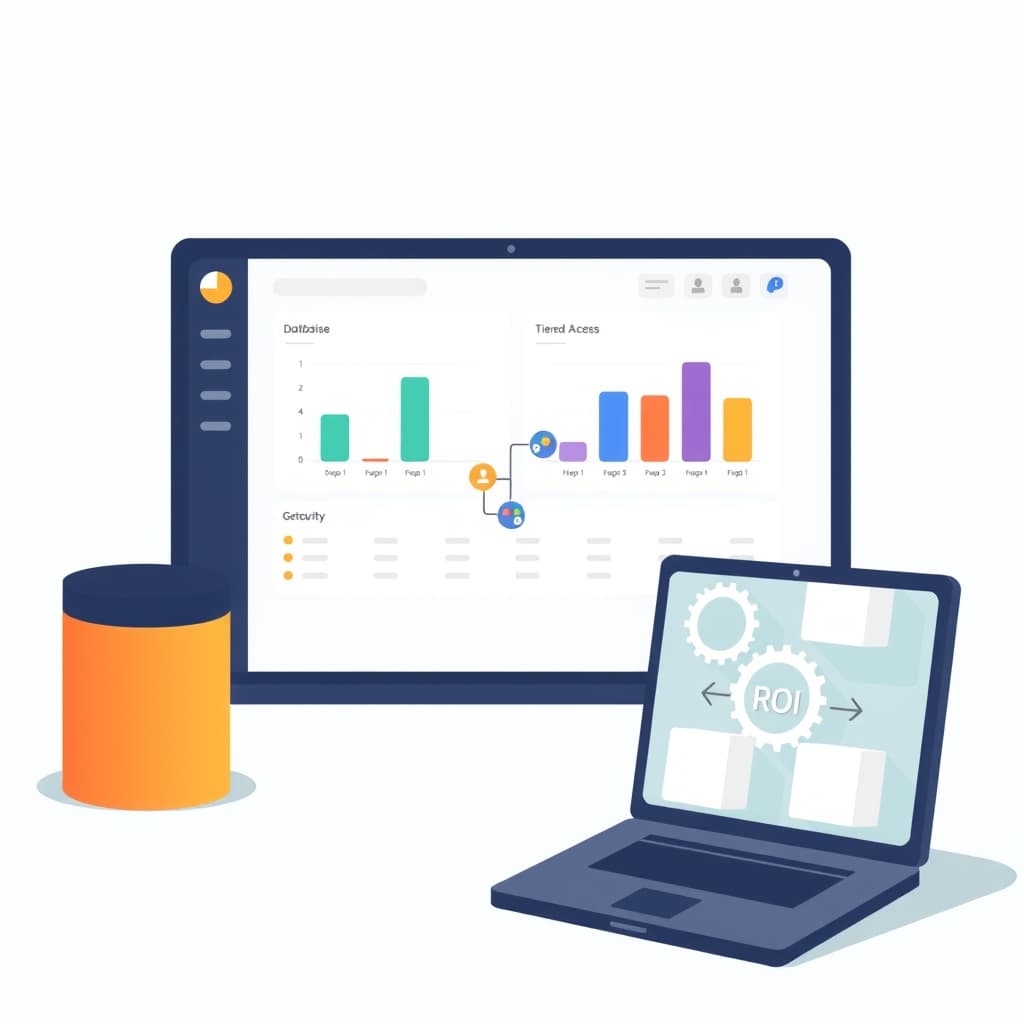
Not every client needs the same level of functionality. By segmenting access—basic, professional, enterprise—you can upsell premium features while keeping the core portal affordable. Tiered access also protects sensitive data, ensuring compliance with industry standards. Define clear value propositions for each tier: basic users get order history and ticket submission; professional users unlock advanced analytics; enterprise users receive API access, custom branding, and dedicated support. Pricing these tiers based on the incremental value they deliver creates a direct revenue line that feeds back into the ROI calculation.
Leverage Automation and AI for Faster Transactions
Automation accelerates every transaction, from order entry to invoice generation. Deploy rule‑based bots for routine tasks such as password resets, contract renewals, or inventory checks. For more complex interactions, embed AI‑driven assistants that can interpret natural‑language queries and suggest next steps, a practice highlighted in our AI Workflow Automation Roadmap. The result is a portal that processes requests in seconds rather than minutes, slashing labor costs and improving the customer experience—both critical components of a healthy ROI.
Measure, Iterate, and Communicate ROI Gains
Continuous measurement is essential to prove that the portal is delivering on its promises. Set up automated dashboards that pull the success metrics defined earlier and update them in real time. Conduct quarterly reviews with product, ops, and finance teams to compare actual performance against targets. When you spot gaps—say, self‑service adoption lagging behind expectations—prioritise quick fixes and retest. Communicate wins clearly: a 25 % reduction in support tickets translates to X dollars saved, which you can showcase in stakeholder meetings. Transparent reporting builds confidence and unlocks additional budget for future enhancements.
Common Pitfalls that Drain Portal ROI
Even well‑intentioned portals can erode ROI if certain traps are ignored:
- Feature creep: Adding non‑essential modules without clear business justification inflates development costs.
- Poor onboarding: Users who never receive guided tours or training will default to legacy channels, negating self‑service gains.
- Inadequate performance: Slow load times increase bounce rates and frustrate users, driving them back to phone support.
- Data silos: If the portal cannot pull or push data to existing ERP, CRM, or billing systems, manual workarounds reappear.
- Lack of post‑launch support: Without ongoing monitoring and bug fixes, small issues compound into major churn drivers.
Addressing these risks early—especially by partnering with a team that offers post‑launch support—preserves the financial upside you aimed for.
Next Steps: Partner with an Expert Development Team
Building a high‑impact B2B customer portal demands deep technical expertise, product strategy, and rigorous execution. Our portfolio showcases dozens of successful portals that have lifted client ROI by double‑digit percentages. By collaborating with SiteFusion, you gain access to seasoned full‑stack engineers, UI/UX specialists, and a proven process that aligns development work with the ROI metrics you care about. Ready to turn your portal vision into measurable profit? Book a call with us today and start quantifying the value of every feature you launch.
For the complete picture, read our guide to B2B Web Apps & Customer Portals.