Getting your SaaS product ready for a SOC 2 audit can feel like a massive project, but treating it as a structured SOC 2 Readiness Checklist turns the effort into a clear path toward trust and market advantage. In this guide we walk founders, product leaders, and ops managers through every step—from understanding the five Trust Service Criteria to keeping controls sharp after the audit.
Why SOC 2 Matters for Growing SaaS Products
Investors and enterprise customers increasingly demand proof that your service protects data, maintains availability, and processes requests securely. SOC 2 compliance is the industry‑standard audit that validates those guarantees. For a growth‑stage SaaS, achieving SOC 2 can unlock larger contracts, reduce churn, and differentiate you from competitors still relying on ad‑hoc security claims. Moreover, the audit forces you to codify processes that otherwise remain in tribal knowledge, making onboarding new engineers and scaling operations smoother. The ROI isn’t just in the contract value; it’s in the operational discipline that a SOC 2 framework brings. If you’re already juggling feature velocity, a well‑planned SOC 2 Readiness Checklist helps you allocate resources without derailing product roadmaps.
Understanding the Five Trust Service Criteria
SOC 2 evaluates controls against five Trust Service Criteria (TSC): Security, Availability, Processing Integrity, Confidentiality, and Privacy. Security is the baseline—protecting against unauthorized access. Availability ensures the system is up and running as promised. Processing Integrity checks that data is complete, accurate, and authorized. Confidentiality covers encryption and restricted access to sensitive information. Privacy focuses on how personal data is collected, used, and retained. Not every SaaS needs to certify all five; many start with Security and Availability, then expand. Mapping each criterion to your product’s architecture—whether you’re using Next.js front‑ends, serverless APIs, or multi‑tenant databases—helps you see where gaps hide. For a deeper dive on data isolation, see our post How to Implement Multi‑Tenant SaaS Data Isolation for Scale.
Mapping Your Current Controls to SOC 2 Requirements
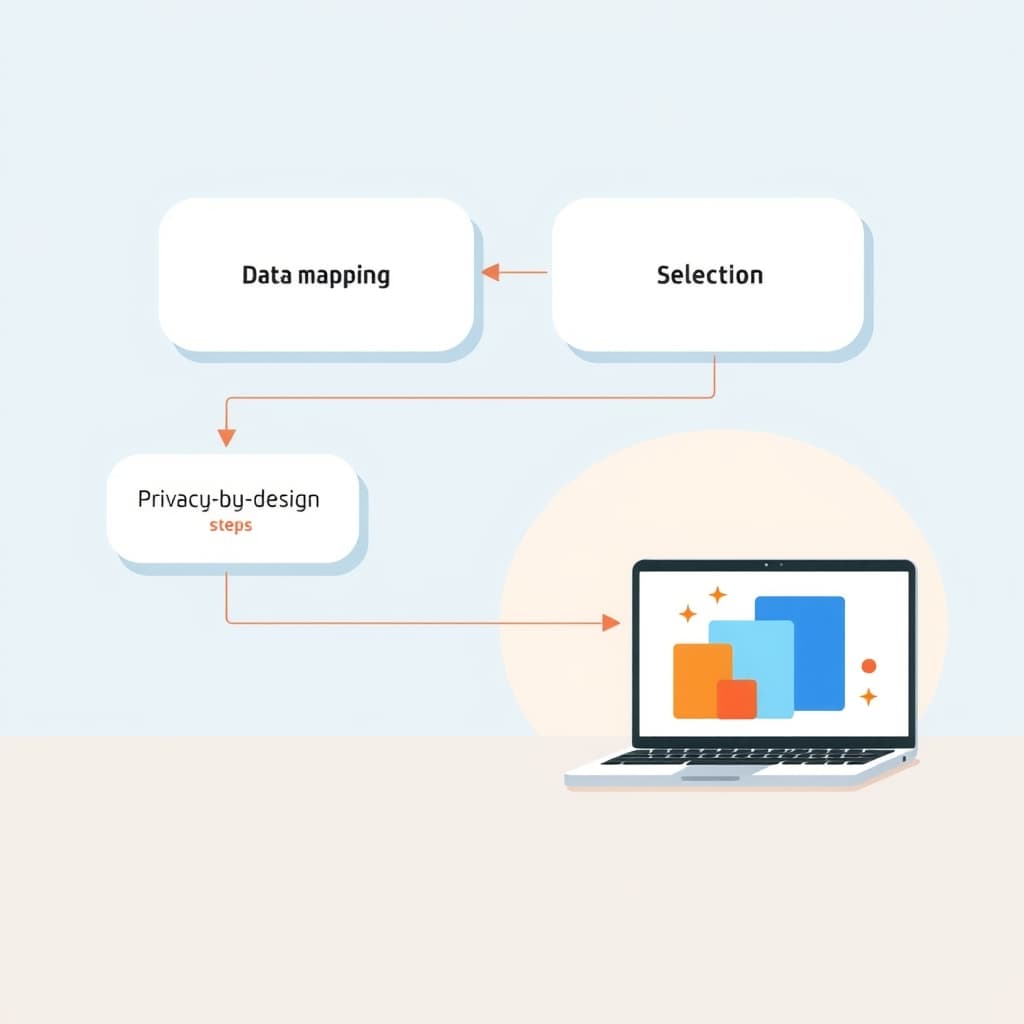
The first practical step is a control inventory. List every existing policy, tool, and process that touches the five TSCs. Typical controls include IAM role reviews, automated backup schedules, CI/CD pipeline security gates, and incident‑response runbooks. Use a simple two‑column table (you can keep it in a spreadsheet) to map each control to the relevant SOC 2 criterion. If a control already exists but lacks formal documentation, flag it for later. Pay special attention to third‑party services—cloud providers, payment processors, and analytics platforms—all of which must be covered by your vendor‑management policy. This mapping exercise often reveals “orphaned” controls that were never audited and “missing” controls that are essential for compliance. Treat the result as the baseline for your SOC 2 Readiness Checklist.
Prioritizing Gaps: Quick Wins vs. Long‑Term Investments
Not all gaps are created equal. Quick wins—such as enabling MFA on all admin accounts, setting up automated log retention, or adding a simple change‑management form—can be implemented in days and immediately reduce audit risk. Long‑term investments, like building a centralized audit‑log service or redesigning your data‑encryption key management, may require weeks of engineering effort and budget approval. Rank each gap by impact (risk reduction) and effort (person‑hours). A two‑by‑two matrix works well: high‑impact/low‑effort items become your first sprint, while high‑impact/high‑effort items get placed on the roadmap. Remember that some quick wins also lay the groundwork for larger projects—for example, establishing a policy for log retention simplifies later integration with a SIEM platform. If you need a broader perspective on balancing scope and cost, our guide Negotiating Scope & Price with a Dev Partner: Founder Guide offers practical tips.
Building the Documentation Trail: Policies, Procedures, and Evidence
SOC 2 auditors look for three things: a written policy, an operational procedure, and verifiable evidence that the procedure is followed. Start by drafting concise policies for each TSC—keep them under two pages, use bullet points, and reference the responsible owner. Next, translate policies into step‑by‑step procedures that can be executed by any team member. Finally, capture evidence: screenshots of configuration panels, logs exported from your CI pipeline, or signed off change‑request forms. Store everything in a central, version‑controlled repository (Git, Confluence, or a dedicated compliance tool). Tag each artifact with the corresponding SOC 2 criterion so auditors can trace the trail quickly. Regularly schedule a “document health check” to prune outdated files and ensure new controls are added as the product evolves.
Preparing for the Auditor: What to Expect and How to Respond
When the audit window opens, the auditor will request a kickoff meeting, a list of requested evidence, and a timeline for on‑site or remote testing. Be ready to share your control inventory, policy repository, and a high‑level architecture diagram that highlights data flows and trust boundaries. Expect questions that probe the “why” behind each control—don’t just hand over a document; be prepared to explain the rationale and show recent execution logs. Maintain a single point of contact (often the CISO or ops manager) to coordinate requests and avoid duplicated effort. If the auditor asks for additional evidence, respond within 24‑48 hours to keep the timeline on track. A well‑organized SOC 2 Readiness Checklist reduces the back‑and‑forth and demonstrates maturity to the auditor.
Post‑Audit: Maintaining Compliance and Scaling Controls
Compliance is a continuous state, not a one‑time checkbox. After the audit report is issued, integrate the auditor’s findings into your product backlog. For each recommendation, create a ticket with a clear owner, acceptance criteria, and a target release. Automate recurring controls where possible—use infrastructure‑as‑code to enforce network segmentation, schedule nightly backups, and rotate encryption keys. Periodic internal reviews (quarterly or semi‑annual) keep the control set aligned with new features or market changes. Leverage our post‑launch support to monitor compliance health, run mock audits, and adjust controls without pulling the product team away from feature delivery.
Conclusion & Next Steps: Turning the Checklist into a Competitive Advantage
By treating SOC 2 compliance as a strategic checklist rather than a regulatory burden, you embed trust into every layer of your SaaS. The process clarifies responsibilities, hardens security, and creates documentation that can be reused for future certifications or customer due‑diligence. Your next move is simple: finalize the control inventory, prioritize quick wins, and schedule a kickoff with a qualified auditor. Need a partner to accelerate the technical work or keep compliance alive as you scale? Book a call with SiteFusion and let our senior engineers and auditors turn your SOC 2 Readiness Checklist into a market differentiator.