For growing B2B SaaS companies, API integration reliability isn’t a nice‑to‑have—it’s the backbone of every data‑driven workflow. When a single endpoint falters, revenue pipelines stall, support tickets surge, and customer trust erodes. This post walks you through the practical steps to make your integrations fail‑safe, from design patterns to observability, so you can scale without fearing the next outage.
Why API Integration Reliability Matters for Scaling SaaS
As you add customers, partners, and internal services, the number of moving parts multiplies exponentially. A single flaky API can become a bottleneck that ripples across billing, reporting, and user experience. Reliable integrations keep latency low, guarantee data consistency, and protect SLAs that investors and enterprise buyers scrutinize. Moreover, dependable data flows reduce manual reconciliation effort, freeing ops teams to focus on growth initiatives instead of firefighting. In short, the reliability of your API connections directly correlates with the velocity of product development and the confidence of your stakeholders.
Common Failure Modes: Outages, Rate Limits, and Data Drift
Understanding where things go wrong is the first step to preventing them. Outages—whether from third‑party downtime or internal network glitches—can halt critical syncs for minutes or hours. Rate limits, often undocumented, cause intermittent failures that are hard to reproduce. Data drift occurs when schemas evolve independently, leading to mismatched fields and silent corruption. Each of these failure modes has distinct signatures in logs, yet they share a common symptom: unexpected gaps in the data pipeline. Mapping these patterns early lets you design safeguards before they impact customers.
Designing Idempotent Endpoints to Prevent Duplicate Actions
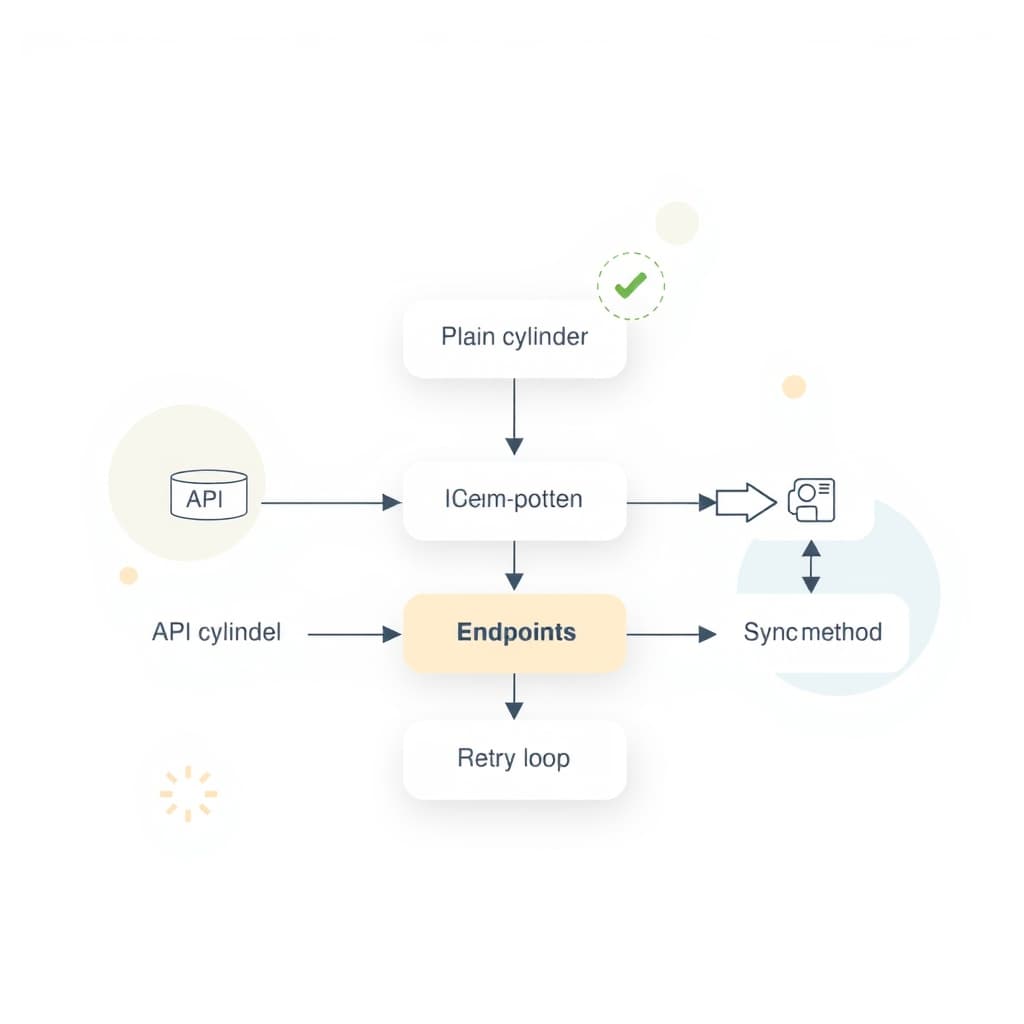
Idempotency means a request can be repeated without changing the result beyond the initial call. Implementing it at the API layer eliminates duplicate records when retries fire after a timeout. Use a deterministic request ID supplied by the caller, store it alongside a hash of the payload, and return the original response if the ID is seen again. This approach works for both RESTful POST actions and webhook callbacks, ensuring that accidental replays—common in network retries—don’t inflate counts or trigger downstream side effects. The extra storage cost is negligible compared to the operational risk of duplicate processing.
Implementing Retries and Circuit Breakers for Resilience
Automatic retries are a staple of resilient systems, but they must be bounded and intelligent. Exponential back‑off with jitter prevents thundering‑herd scenarios when a downstream service recovers. Pair retries with a circuit‑breaker pattern: after a configurable number of consecutive failures, the breaker opens, short‑circuiting calls and returning a fallback response. While open, a health‑check pings the downstream service; once it succeeds, the breaker resets. This combination protects your own service from cascading failures and gives you clear metrics on third‑party stability.
Choosing Between Webhooks, Polling, and Batch Sync
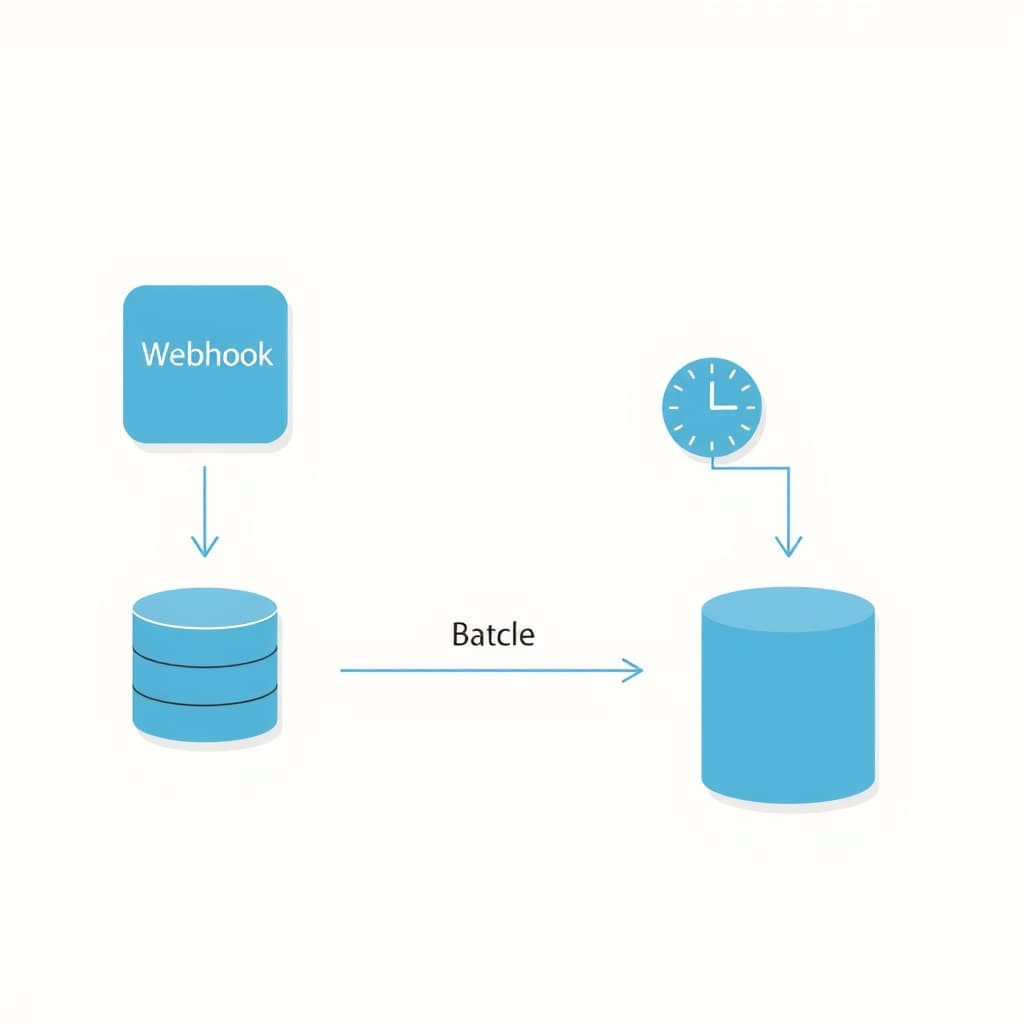
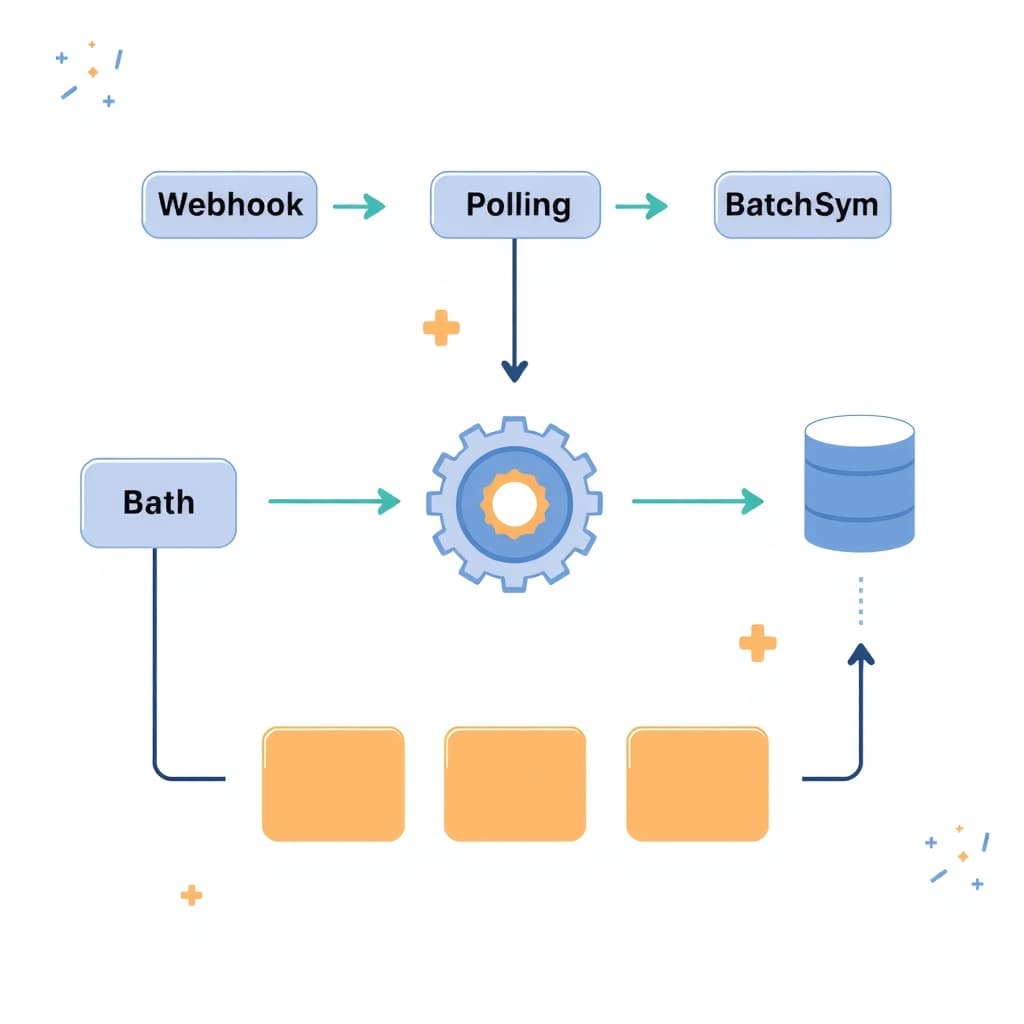
Each integration style has trade‑offs. Webhooks push events in real time, reducing latency but requiring robust verification and replay handling. Polling is simple to implement but adds unnecessary load and can miss near‑real‑time changes. Batch sync—running nightly or hourly jobs—offers consistency guarantees for large data sets but introduces delay. The right choice depends on business impact: critical order events merit webhooks with idempotent handling; low‑risk inventory updates may be fine with hourly batches. Often a hybrid approach—webhooks for high‑value actions and nightly batch reconciliation for bulk data—delivers the best balance of freshness and reliability.
Monitoring, Alerting, and Observability Best Practices
Visibility into integration health starts with structured logging: include request IDs, timestamps, and status codes in every call. Export these logs to a centralized platform and create dashboards that surface latency percentiles, error rates, and retry counts. Alert on thresholds that matter—e.g., error rate > 1 % over five minutes or latency spikes exceeding SLA. Correlate alerts with downstream service status pages to avoid false positives. For deeper insight, instrument tracing spans across service boundaries so you can pinpoint where a request stalls. The Post‑Launch Monitoring Checklist for Growing SaaS offers a ready‑made template you can adapt.
Testing Strategies: Contract Tests, Chaos Experiments, and Staging Environments
Contract testing validates that both sides of an API agree on request and response schemas before code reaches production. Tools like Pact let you generate consumer contracts that providers must honor, catching breaking changes early. Chaos engineering—injecting latency, HTTP 500s, or network partitions—verifies that retries, circuit breakers, and fallback logic behave as expected. Finally, maintain a staging environment that mirrors production credentials and rate limits; run integration suites against it on every release. Together, these practices turn reliability from an afterthought into a measurable quality gate.
When to Move from Point‑to‑Point Glue to a Central Integration Layer
Point‑to‑point adapters work for a handful of connections, but they become a maintenance nightmare as the ecosystem expands. A central integration layer—often built as an event‑driven hub or API gateway—provides a single source of truth for authentication, transformation, and error handling. It enables you to add new partners by configuring routes rather than writing custom code. Moreover, a unified layer simplifies observability: you monitor one set of logs and metrics instead of dozens of scattered scripts. Consider migrating when you have three or more critical external APIs, or when the cost of maintaining individual adapters exceeds the benefit of a shared platform.
Conclusion & Next Steps: Audit Your Current Integrations and Partner with Experts
Reliable data flows are a competitive advantage in the SaaS market. Start by inventorying every external connection, documenting failure modes, and applying the patterns outlined above—idempotency, retries, circuit breakers, and observability. Run contract tests and schedule a chaos run before each release. If the scope feels overwhelming, our team can help you design a central integration layer and implement end‑to‑end monitoring. Check out our post‑launch support offering or browse the portfolio of products we’ve built for fast‑growing SaaS firms. Ready to make your integrations rock‑solid? Book a call with SiteFusion today and turn reliability into a growth engine.