Building a GDPR‑Ready B2B SaaS from day one isn’t a legal after‑thought; it’s a product foundation. From data collection to multi‑tenant architecture, every decision impacts compliance, trust, and marketability. Below is a practical, step‑by‑step guide for founders, product leaders, and ops managers who need a compliance roadmap that scales with their business.
Why GDPR compliance matters from launch (GDPR‑Ready B2B SaaS)
Launching without GDPR in mind invites costly retrofits, regulator fines, and reputational damage—especially for B2B SaaS where enterprise customers demand strict data protection. Early compliance demonstrates respect for user privacy, accelerates sales cycles with EU‑based prospects, and reduces the need for disruptive re‑engineering later. Moreover, GDPR’s “accountability” principle forces you to document processes, making internal audits and future enhancements easier. Treating compliance as a product feature rather than a checkbox also aligns with security‑first cultures that investors and board members increasingly expect.
Core data‑flow map: knowing what you collect and store
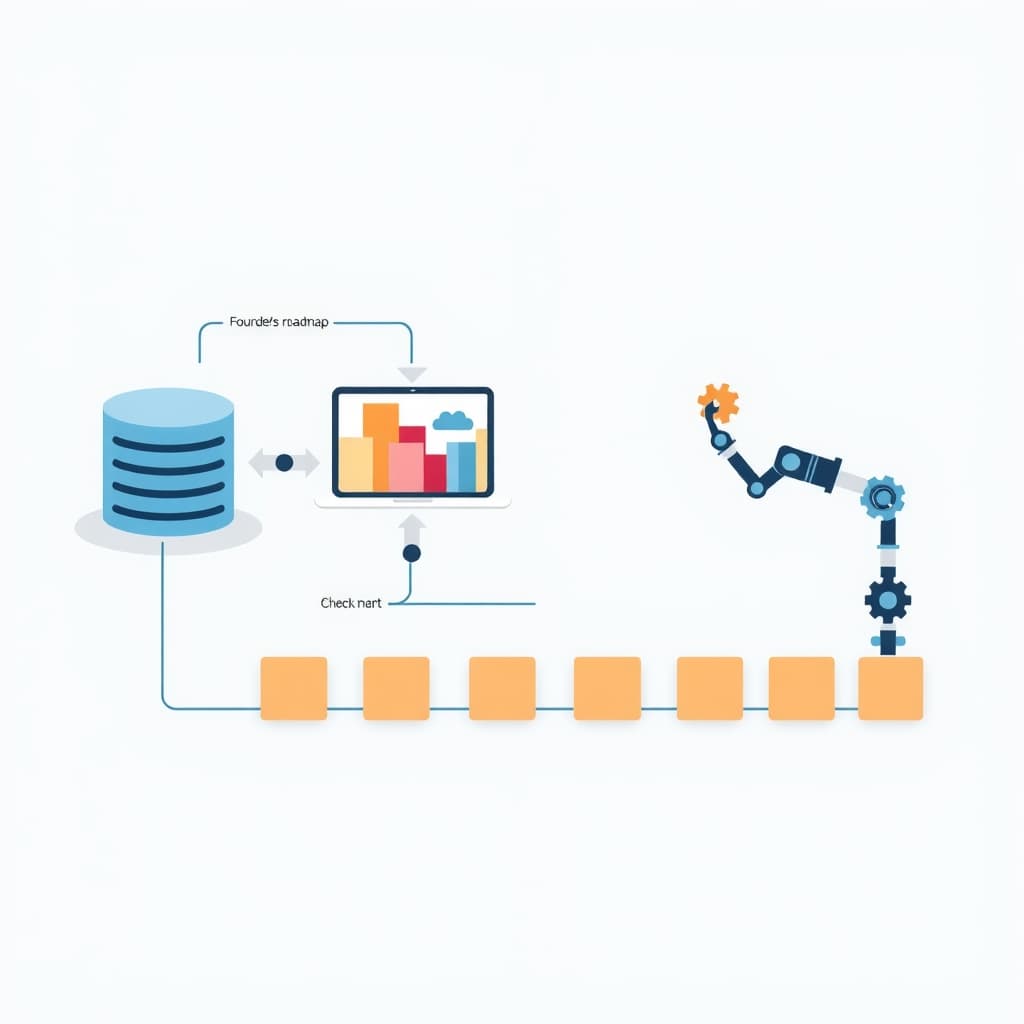
The first technical task is a data‑flow diagram that captures every touchpoint: inbound API calls, form submissions, third‑party webhooks, and internal logs. Identify personal data categories (names, emails, IP addresses, usage metrics) and classify them by sensitivity. Map where data resides—application database, analytics warehouses, backup storage, or cache layers. This map becomes the reference for data‑minimization decisions and informs the design of encryption, retention policies, and access controls. Tools like data‑flow modeling in Confluence or Lucidchart can be linked to your MVP scope checklist to keep engineering and product teams aligned.
Designing privacy‑by‑design architecture for a multi‑tenant SaaS
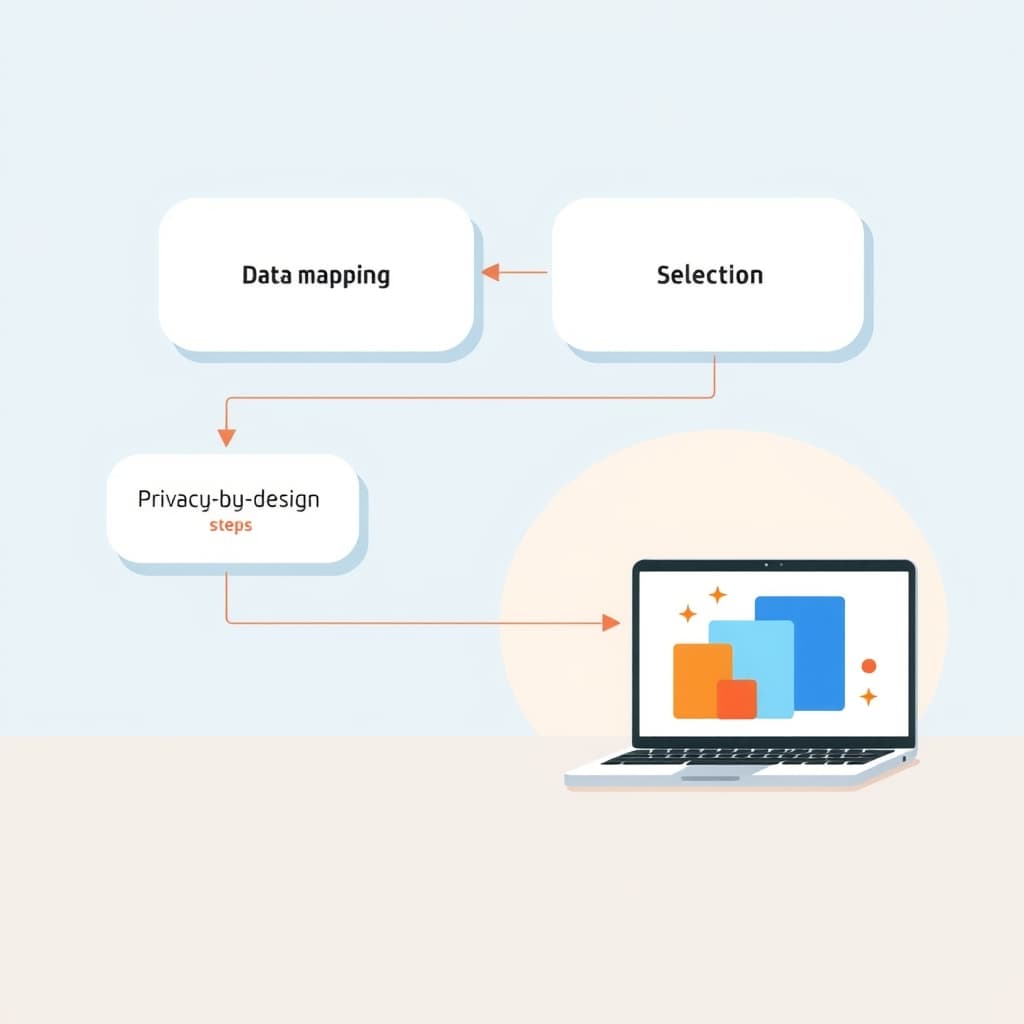
Privacy‑by‑design means embedding safeguards into the core architecture, not bolting them on later. For a multi‑tenant system, isolate each tenant’s data at the schema or row level and enforce tenant‑aware queries through an access‑control layer. Use encryption‑at‑rest for all storage buckets and consider field‑level encryption for especially sensitive attributes. Design APIs to expose only the minimal data required for a given operation, and employ token‑based identifiers instead of raw personal identifiers. When you adopt a modular micro‑service approach, ensure each service respects the same data‑handling contracts, reducing the risk of accidental leakage across boundaries.
Implementing secure authentication and least‑privilege access
Adopt industry‑standard protocols such as OAuth 2.0 with OpenID Connect for user authentication, and enforce MFA for admin accounts. Apply the principle of least privilege by granting roles that match job functions—e.g., a support agent can view a customer’s profile but cannot export raw data sets. Use scoped API keys for service‑to‑service communication, rotating them regularly. Centralize identity management with a solution like Keycloak or Azure AD, which simplifies audit logging and supports GDPR‑required consent records.
Data subject rights automation: export, deletion, and rectification
Regulators expect you to honor data‑subject requests within 30 days. Build self‑service portals where users can request export, deletion, or correction of their data. Under the hood, orchestrate workflows that query every storage location—primary DB, backups, analytics pipelines—and trigger safe deletion or anonymization scripts. Keep immutable logs of each request and its fulfillment status for audit purposes. Automating these processes not only reduces manual effort but also minimizes the chance of missing a hidden copy of personal data.
Choosing the right third‑party processors and contracts
Every external service that processes personal data becomes a data processor under GDPR. Conduct a due‑diligence checklist: verify their GDPR certifications, read their Data Processing Addendum (DPA), and ensure they offer data‑subject request support. Prefer processors that provide data residency options aligned with your customers’ requirements. Document each relationship in a central register, linking contracts to the relevant data‑flow nodes identified earlier. This register becomes essential evidence during regulator audits.
Running a pre‑launch GDPR audit checklist
Before you go live, run a comprehensive audit covering: (1) documented data‑flow map, (2) privacy‑by‑design controls, (3) encryption and key‑management policies, (4) access‑control matrices, (5) DPA compliance for all processors, (6) test runs of data‑subject request workflows, and (7) incident‑response playbooks. Use a checklist format similar to our Post‑Launch Monitoring Checklist but focused on privacy. Assign owners for each item, set deadlines, and sign off with legal counsel. A clean audit gives confidence to investors and enterprise buyers alike.
Post‑launch monitoring and continuous compliance
Compliance isn’t a one‑time event. Implement continuous monitoring for anomalous data access, encryption key usage, and third‑party processor health. Integrate alerts into your ops dashboard—linking to the internal ops dashboard guide—so security teams can act quickly. Schedule quarterly reviews of data‑flow diagrams and DPA contracts, and run automated tests of data‑subject request APIs. When you pair monitoring with our post‑launch support services, you maintain a compliance posture that evolves with product growth.
Next steps: turning compliance into a market advantage
Position your GDPR‑Ready B2B SaaS as a differentiator in sales conversations. Highlight certifications, transparent privacy policies, and the built‑in data‑subject portal as trust signals. Use compliance as a narrative in marketing collateral and case studies, showing how you reduce customer risk. Finally, revisit your product roadmap to embed privacy‑enhancing features—such as consent‑driven data collection or granular permission controls—that can open new market segments or enable premium pricing.
Ready to embed compliance into your product DNA and accelerate growth? Book a call with SiteFusion today and let our experts help you launch a truly GDPR‑Ready B2B SaaS.