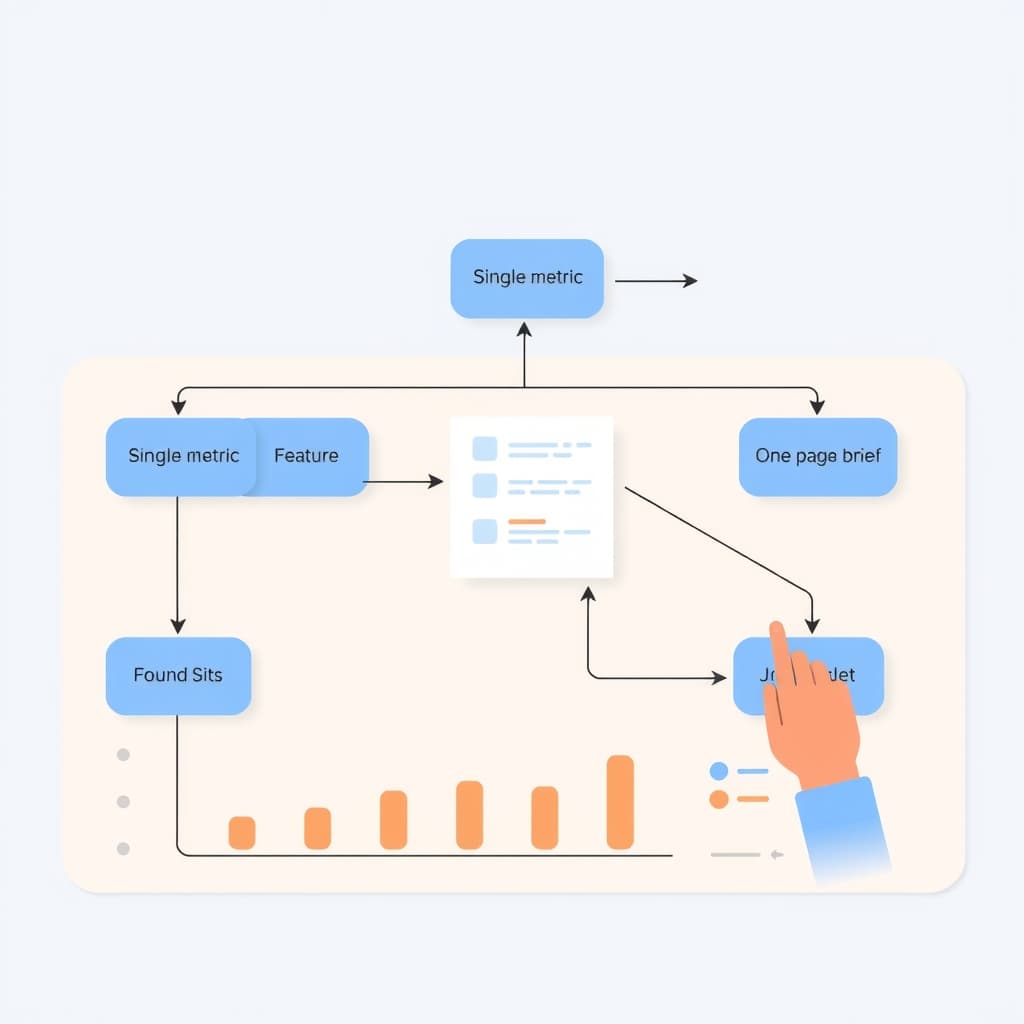
Why a Structured MVP Scope Matters for Fast‑Growing Startups
When you’re racing to prove product‑market fit, the temptation to “just build it” can drown out disciplined decision‑making. A clear MVP scope checklist forces you to prioritize outcomes over features, keeping budgets tight and timelines predictable. For B2B SaaS founders, the cost of a missed deadline is not just a delayed launch—it can mean lost enterprise contracts and a weakened fundraising narrative. By defining the scope up front, you create a shared language between product, engineering, and any external agency you hire. This alignment reduces the risk of re‑work, improves velocity, and gives investors a concrete artifact that demonstrates you understand how to iterate responsibly. In short, a structured scope is the foundation for rapid, data‑driven learning without the chaos of endless feature creep.
Step 1 – Clarify the Core Business Problem You’re Solving
The first line of any MVP scope checklist asks: what pain are you eliminating for your target customer? Skip generic statements like “improve efficiency” and drill down to the specific workflow bottleneck that drives revenue loss or operational risk. Conduct a handful of discovery interviews with senior users—product managers, ops leads, or finance heads—and capture the exact language they use to describe the problem. Translate that language into a concise problem statement, for example, “Our finance team spends 12 hours per month reconciling vendor invoices due to lack of automated data extraction.” This clarity becomes the north star for every feature decision that follows, ensuring the MVP stays laser‑focused on delivering measurable value.
Step 2 – Identify the Single Success Metric That Will Validate the Idea
Without a quantifiable north star, you’ll never know if the MVP succeeded. Choose one leading indicator that directly reflects the core problem you just defined. For a contract‑review automation tool, the metric might be “average time to complete legal review per contract.” For a dashboard, it could be “percentage of ops tickets resolved without manual data pulls.” Keep the metric simple, measurable, and tied to a business outcome. Document the baseline, the target you aim to hit within the first 30‑60 days, and the data collection method. This single success metric will guide scope decisions, prioritize experiments, and give investors a clear proof point when you report results.
Step 3 – Map User Journeys and Pinpoint the Minimum Viable Feature Set
With the problem and metric in hand, sketch the end‑to‑end user journey that leads to the desired outcome. Break the journey into discrete steps and ask: which step is absolutely required to move the needle on the success metric? Those steps become the Minimum Viable Feature Set. For example, if the journey is “upload contract → extract key clauses → flag risk → send to reviewer,” the MVP might only need upload and extraction; flagging and routing can be manual for the first release. Use a simple <ul> list to enumerate each step and mark the ones that are “must‑have.” This visual map prevents over‑engineering and keeps the team focused on delivering the core loop that proves the hypothesis.
Step 4 – Apply the ‘Must‑Have, Should‑Have, Nice‑to‑Have’ Matrix
Take the feature list from the previous step and slot each item into a three‑column matrix. Must‑Have features are those without which the success metric cannot be measured. Should‑Have items improve usability or reduce friction but are not essential for the first validation. Nice‑to‑Have features are future polish—think advanced analytics or custom branding. By explicitly categorizing, you create a visual guardrail against scope creep. When a stakeholder pushes for an extra feature, you can reference the matrix and ask, “Does this move us from Should‑Have to Must‑Have, or is it Nice‑to‑Have?” This disciplined approach aligns expectations and makes it easier to hand off a concise brief to an agency.
Step 5 – Translate the Matrix into a One‑Page Brief That Agencies Can Quote
External development partners need a single, digestible document that captures the entire MVP scope checklist. Start with a brief problem statement, then list the success metric, followed by the Must‑Have feature set in bullet form. Include high‑level acceptance criteria for each item and any non‑functional requirements such as security (see our SOC 2 Readiness Checklist) or performance budgets (Next.js Performance Budgeting). End with timelines, budget caps, and the preferred engagement model—fixed‑price or time‑and‑materials (Fixed‑Price vs Time and Materials). A concise one‑pager reduces negotiation cycles and gives agencies a clear scope to price against, accelerating the path from concept to contract.
Step 6 – Build in Guardrails to Detect and Stop Scope Creep Early
Even with a solid matrix, scope creep can sneak in during sprint planning. Implement two simple guardrails: a change‑request log and a weekly “scope health” stand‑up. Any new request must be logged, categorized against the matrix, and assigned an impact score (effort vs. metric impact). If the cumulative impact exceeds a pre‑defined threshold (e.g., 15 % of total sprint capacity), the team pauses to re‑evaluate. Additionally, embed automated alerts in your project management tool that flag when a Should‑Have or Nice‑to‑Have item is added to the sprint backlog. These early warnings keep the MVP lean and protect the timeline that investors and customers are counting on.
Step 7 – Turn the Checklist into a Living Roadmap for Post‑MVP Iterations
Once the MVP launches and you have data on the success metric, the checklist evolves into a roadmap. Review the “Should‑Have” column first—these are the low‑effort wins that can boost adoption without major re‑architecture. Next, prioritize “Nice‑to‑Have” items based on the insights gathered during the validation phase. Document each iteration as a new row in the matrix, updating the success metric targets as you scale. This living roadmap not only guides internal teams but also provides a compelling narrative for future funding rounds, showing a clear path from validated MVP to a full‑featured product.
Conclusion – Using the MVP Scope Checklist to Accelerate Funding and Delivery
A disciplined MVP scope checklist transforms vague ideas into actionable, fundable projects. By clarifying the problem, locking onto a single success metric, and rigorously categorizing features, you reduce risk, shorten time‑to‑market, and create a repeatable process that investors respect. The checklist also feeds directly into post‑launch activities—our post‑launch support team can help you monitor the success metric, iterate quickly, and keep the product on a growth trajectory. Ready to turn your vision into a lean, validated MVP? Book a call with SiteFusion and let’s build the roadmap together.