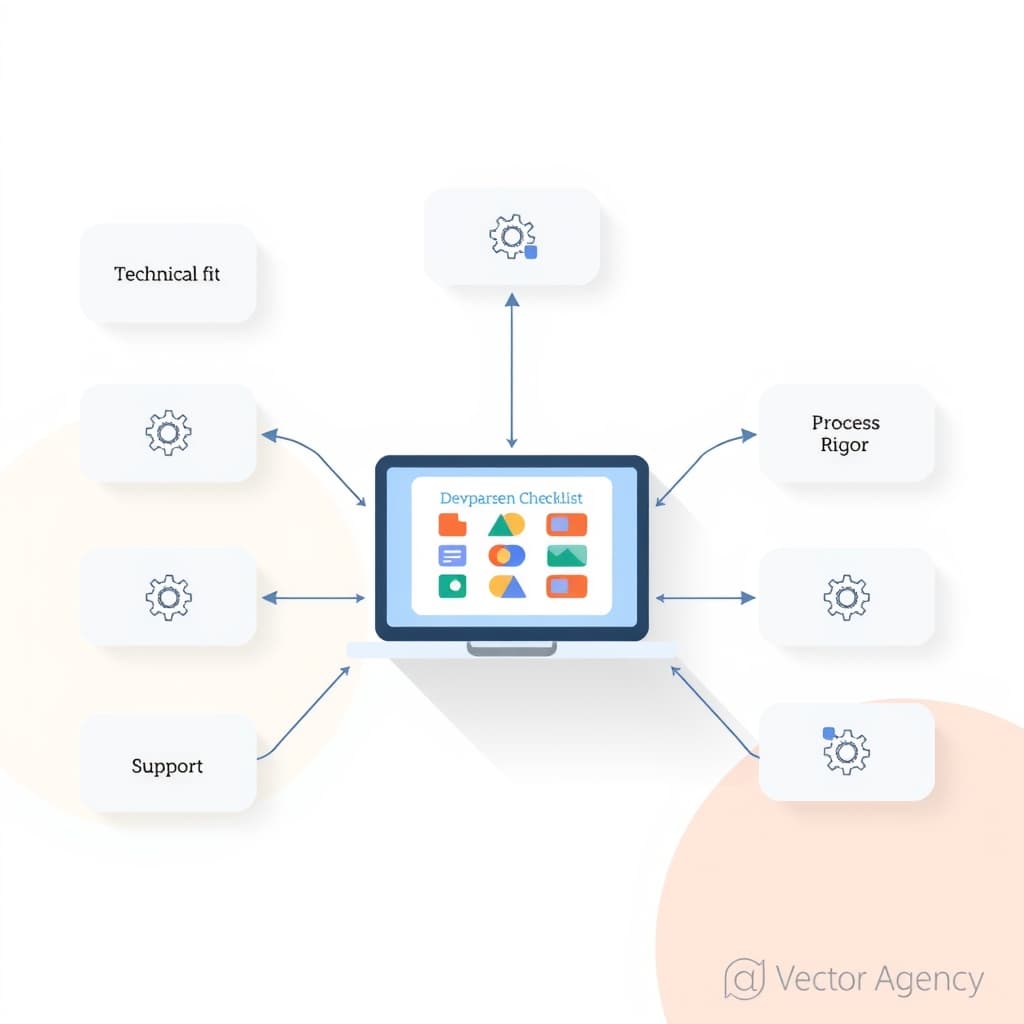
Starting a partnership with a software development firm is a strategic move, but without a clear dev partner onboarding checklist, the process can quickly become chaotic. A well‑structured onboarding sets expectations, aligns teams, and protects your investment from scope creep and miscommunication. Below you’ll find a practical, step‑by‑step checklist that founders, product leaders, and ops managers can use to hit the ground running with any dev partner.
Why a Structured Onboarding Matters
Onboarding is more than a kickoff meeting; it’s the foundation for trust and delivery predictability. When you formalize the process, you reduce the risk of hidden assumptions that often surface later as costly rework. A structured approach also accelerates the time to value, because both sides know exactly what information is needed and when. Moreover, it creates a documented trail that can be referenced during retrospectives, helping you refine future collaborations. In fast‑moving growth stages, the ability to scale processes quickly is a competitive advantage—so treat onboarding as a repeatable product feature rather than an ad‑hoc task.
Pre‑Kickoff: Aligning Goals and Success Metrics
Before the first video call, spend time clarifying business objectives and how the partnership will be measured. Define primary success metrics—revenue impact, user adoption, time‑to‑market, or cost savings—and agree on the data sources that will track them. This alignment prevents later disputes over “what success looks like.” Use a simple template to capture: business problem, desired outcome, key performance indicators, and baseline numbers. If you’re building a new SaaS feature, cross‑reference the MVP Scope Checklist: Guide to Defining What to Build to ensure the scope matches your metrics. Document these goals in a shared space so the dev partner can reference them throughout the project.
Defining Communication Cadence and Collaboration Tools
Clear communication rhythms keep momentum and surface blockers early. Decide on the frequency and format of status updates—daily stand‑ups, twice‑weekly sprint reviews, or monthly executive summaries—based on the project’s complexity. Choose collaboration tools that both teams are comfortable with: project management (e.g., Jira or Asana), design hand‑off (Figma), and real‑time chat (Slack or Teams). Establish naming conventions for tickets and branches to avoid confusion. Also, set expectations for response times; a 24‑hour turnaround for critical issues is a common baseline. By codifying these practices up front, you reduce the “lost in translation” risk that often plagues remote partnerships.
Setting Scope, Budget, and Delivery Model Up‑Front
Scope, budget, and delivery model are the three pillars that determine project feasibility. Use a detailed statement of work (SOW) that breaks down features into epics, user stories, and acceptance criteria. Align the budget with the agreed scope, and include a contingency buffer—typically 10‑15%—to accommodate unforeseen changes. Choose a delivery model that matches your risk tolerance: fixed‑price for well‑defined work, time‑and‑material for exploratory phases, or a hybrid model with milestones tied to payments. Clearly state how change requests will be handled and priced. This transparency prevents “scope creep” and ensures both parties share the same financial expectations from day one.
Knowledge Transfer and Documentation Standards
Effective knowledge transfer minimizes onboarding friction for the dev partner’s engineers. Provide access to existing architecture diagrams, API contracts, data models, and style guides. Agree on documentation standards—Markdown in a shared repo, Confluence pages, or Google Docs—and enforce version control. For API integrations, reference the API Integration Reliability Patterns for Growing SaaS guide to set expectations around error handling and monitoring. Encourage the partner to ask clarifying questions early and to produce a “tech debt register” that captures any shortcuts taken during development. This repository becomes a single source of truth throughout the engagement.
Risk Management and Red‑Flag Monitoring
Every project carries risk; the key is to identify, prioritize, and monitor them continuously. Create a risk register that lists potential issues—technical debt, resource turnover, regulatory compliance, or third‑party latency—and assign owners, probability, impact, and mitigation steps. Set up red‑flag alerts in your project management tool for missed milestones, budget overruns, or quality regressions. Conduct bi‑weekly risk reviews with the partner to adjust mitigation plans. By treating risk as a living document rather than a one‑time checklist, you keep the project agile and reduce the chance of surprises at critical delivery points.
Handoff Process and Ongoing Support Plan
When the development phase ends, a clean handoff is essential for stability and future iteration. Compile a release package that includes deployment scripts, environment variables, and runbooks. Define post‑launch support tiers—bug fixes, performance tuning, and feature enhancements—and map them to your post‑launch support services. Agree on service level agreements (SLAs) for response times and resolution windows. Establish a knowledge‑transfer session where the dev partner walks your internal team through the codebase, monitoring dashboards, and incident response procedures. This ensures you retain ownership and can scale the product without reliance on the partner for day‑to‑day operations.
Conclusion & Call to Action: Your Next Steps with a Dev Partner
Implementing this dev partner onboarding checklist transforms a vague engagement into a disciplined, outcome‑focused collaboration. Start by reviewing the checklist against your upcoming project, schedule a pre‑kickoff alignment call, and secure the necessary documentation and tools. For a deeper dive into the strategic considerations of hiring a development partner, see our comprehensive guide on Hiring a Dev Partner. When you’re ready to put the plan into action, book a call with SiteFusion and let our senior engineers help you accelerate your product roadmap.