Choosing the right dev partner pricing models is as strategic as picking the technology stack. As your product moves from prototype to a revenue‑generating service, the way you pay for development can either amplify growth or drain cash flow. A clear pricing structure lets founders and product leaders forecast budgets, align incentives, and mitigate risk before the first line of code lands on a sprint board.
Why Pricing Models Matter When Scaling Your Product
Scaling introduces tighter margins, tighter timelines, and higher stakeholder expectations. The pricing model you select directly influences how quickly you can iterate, how well you can control scope creep, and how predictable your cash burn will be. Fixed‑price contracts give you a hard ceiling but can hide hidden change orders; time‑and‑materials keep the door open for discovery but can lead to budget overruns if not tightly managed. Moreover, the model signals the partner’s confidence in their estimates—an experienced dev shop will often propose a hybrid or milestone‑based approach when the problem space is well‑defined. Aligning the model with your growth stage helps you preserve runway while still delivering the features that drive user acquisition and retention.
Fixed‑Bid vs. Time‑and‑Materials: Core Differences and Trade‑offs
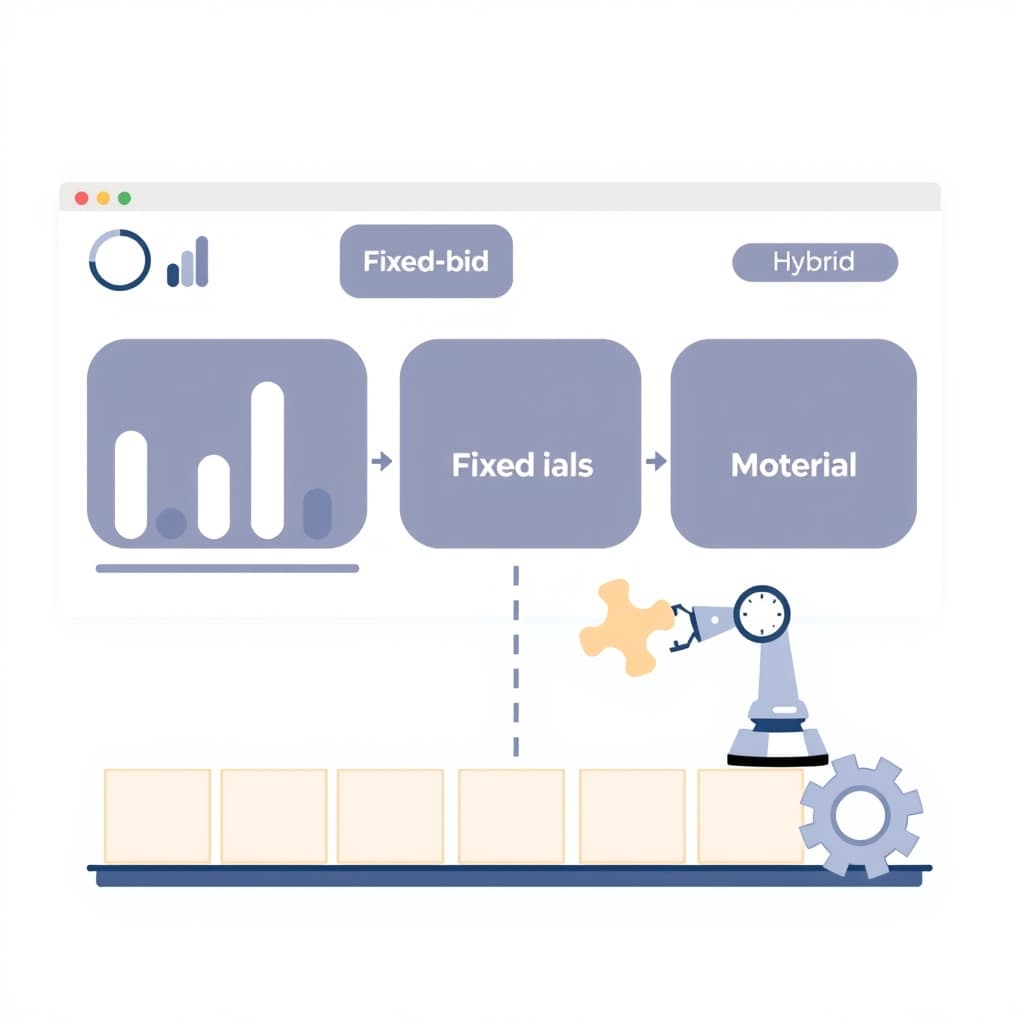
Fixed‑bid contracts lock in a total price for a clearly scoped set of deliverables. They work best when requirements are stable, the UI/UX is already designed, and the technology choices are proven. The upside is budget certainty; the downside is reduced flexibility—any change usually triggers a new change order, which can stall momentum.
Time‑and‑materials (T&M) bills by the hour or day, allowing the scope to evolve as the team learns more about the problem. This model suits exploratory phases, such as building a new AI feature where AI Feature Evaluation is still being validated. The trade‑off is that you must enforce strong governance to avoid runaway costs, typically through weekly reporting and clear sprint goals.
Milestone‑Based Pricing: Aligning Payments with Deliverables
Milestone‑based pricing breaks a project into discrete, value‑driven checkpoints—design freeze, MVP launch, integration completion, etc. Payments are tied to the acceptance of each deliverable, which creates a natural incentive for the partner to stay on schedule and meet quality criteria. This model works well for mid‑stage companies that have a product roadmap but still need flexibility to reprioritize features based on market feedback.
Key to success is defining measurable acceptance criteria up front. For example, a milestone could be “API integration that passes the reliability pattern outlined in Pick the Best API Integration Reliability Pattern for Scaling.” When the partner delivers a working integration that meets the agreed SLA, the invoice is released. This reduces the risk of paying for incomplete work and keeps cash flow aligned with tangible progress.
Retainer Agreements: When Ongoing Support Beats Project‑Based Work
Retainers are recurring monthly fees that cover a set number of hours or a dedicated team for continuous development, maintenance, and support. They are ideal for products that require rapid iteration, regular compliance updates, or 24/7 monitoring—think of a B2B partner portal that must stay secure and compliant.
Because the relationship is ongoing, the dev partner can act as an extension of your internal team, participating in sprint planning and product strategy. This model also smooths out the cost curve, turning large, unpredictable spikes into a predictable line item. Pair a retainer with a post‑launch support service to ensure you have the bandwidth for bug fixes, performance tuning, and feature enhancements long after the initial launch.
Hybrid Models: Combining Fixed Scope with Flexible Hours
Hybrid models blend the predictability of fixed‑price work with the adaptability of T&M. A common pattern is to lock the core MVP scope at a fixed price while keeping a buffer of flexible hours for “stretch” features, integration tweaks, or unexpected regulatory changes. This approach acknowledges that no project is perfectly scoped at day one, yet it still protects the budget for the most critical deliverables.
Implementing a hybrid model requires clear governance: a change‑control board that reviews any scope adjustments, and a transparent time‑tracking system for the flexible portion. When done right, it gives founders the confidence of a capped spend for the baseline while preserving the agility needed to respond to market signals.
How to Match a Pricing Model to Your Product Stage and Risk Tolerance
Early‑stage startups often operate with high uncertainty and limited cash. A T&M or hybrid model lets them explore hypotheses without committing to a full‑scale build. Mid‑stage companies with validated product‑market fit benefit from milestone‑based or fixed‑bid contracts that lock in costs for known features, freeing capital for go‑to‑market activities.
Risk‑averse leaders may prefer fixed‑price for compliance‑heavy modules, while those comfortable with iterative learning might lean on retainers to keep a dedicated team close at hand. Map your product stage—MVP, growth, or optimization—against the partner’s expertise and your own tolerance for scope changes to select the model that aligns cash flow with strategic priorities.
Red Flags in Pricing Proposals and How to Spot Them
Beware of proposals that lack breakdowns or use vague language like “unlimited revisions.” Such wording often masks hidden change orders. A flat rate with no mention of assumptions or exclusions is another red flag; it may indicate that the partner has underestimated effort and will later request additional fees.
- Missing milestones: Without clear deliverables, you lose leverage to enforce timelines.
- Hourly rates that vary without justification: This can lead to “rate creep” as the project progresses.
- Absence of a change‑control process: You need a documented method for handling scope adjustments.
Ask for a detailed estimate, a risk register, and a sample contract clause that outlines how scope changes are handled. Transparent partners will welcome these requests.
Negotiation Checklist: Securing Fair Terms and Protecting Scope
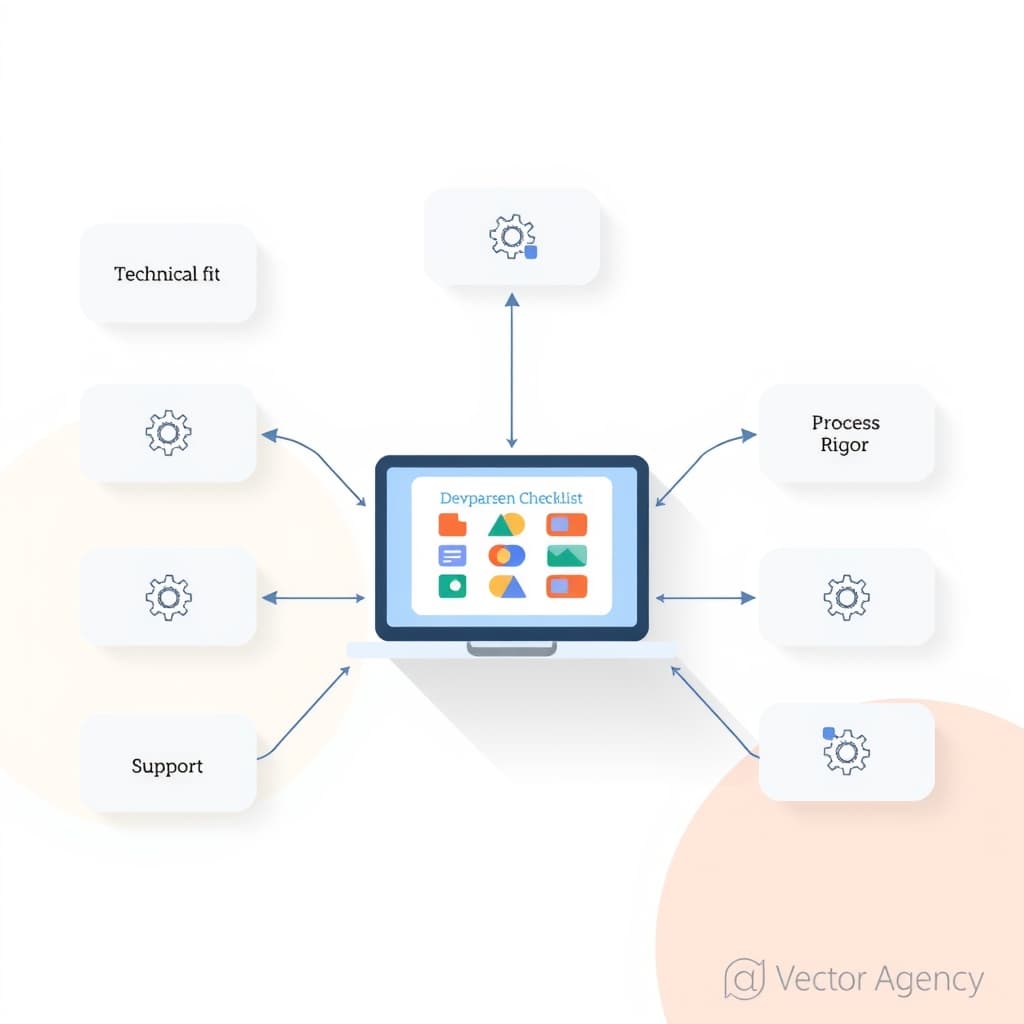
Before you sign, run through this checklist:
- Confirm that the proposal aligns with your product roadmap and includes measurable acceptance criteria.
- Verify that each milestone has a defined deliverable, deadline, and payment trigger.
- Ensure a clear change‑control process with pre‑agreed hourly rates for out‑of‑scope work.
- Ask for a cap on total hours for any flexible component in a hybrid model.
- Request a clause that ties performance incentives to key metrics (e.g., uptime, response time).
- Check for termination rights that protect you if the partner consistently misses deadlines.
Having these items in writing reduces the likelihood of surprise invoices and keeps the partnership focused on outcomes rather than billable hours.
Conclusion & Next Steps: Choosing a Model and Starting the Conversation
There is no one‑size‑fits‑all answer for dev partner pricing models. The right choice depends on your product stage, budget certainty, and appetite for flexibility. Start by mapping your current needs to the models outlined above, then use the negotiation checklist to vet potential partners.
When you’re ready to explore options that fit your growth trajectory, review our hiring a dev partner guide for a deeper dive, and browse our portfolio to see how we’ve applied these models for other scaling companies. Finally, book a call with SiteFusion to discuss which pricing structure aligns with your roadmap and cash‑flow goals.