Building a robust API integration strategy is the single most reliable way to scale a SaaS product without the constant fear of breaking changes, data loss, or costly firefighting. When integrations are treated as afterthoughts, every new partner or internal tool becomes a source of technical debt. A disciplined approach lets founders, product leaders, and ops managers turn third‑party connectivity into a predictable, reusable asset that fuels growth rather than hinders it.
Why a Strategic Integration Approach Beats Ad‑Hoc Glue – an API integration strategy
Ad‑hoc scripts are tempting: a quick webhook here, a one‑off CSV import there. They deliver immediate results but create hidden dependencies that explode as the product matures. A strategic integration approach starts with clear objectives, documented contracts, and a shared language between engineering and business. It forces you to ask: what problem are we solving, how will we measure success, and what happens when the partner changes their API? By answering these questions up front, you avoid “spaghetti code” that is hard to test, hard to monitor, and hard to hand over to new engineers. The payoff is a modular architecture where each connector can be swapped, versioned, or retired without rippling through the core product.
Mapping Your Data Landscape: Identify Sources, Flows, and Ownership
Before you write a single line of code, map every data source that will touch your system—CRM, payment gateway, analytics, internal databases, and user‑generated content. Use a simple diagram or a shared spreadsheet to capture three dimensions: the origin of the data, the direction of the flow (inbound, outbound, or bidirectional), and the team that owns the schema. This map reveals hidden duplication, clarifies who is responsible for data quality, and surfaces compliance considerations early. For example, if a billing API pushes subscription status into your user table, you need a clear owner for that field to avoid race conditions. A well‑defined data landscape becomes the blueprint for the integration contracts you’ll later codify.
Choosing the Right Sync Pattern: Webhooks, Polling, or Batch Jobs
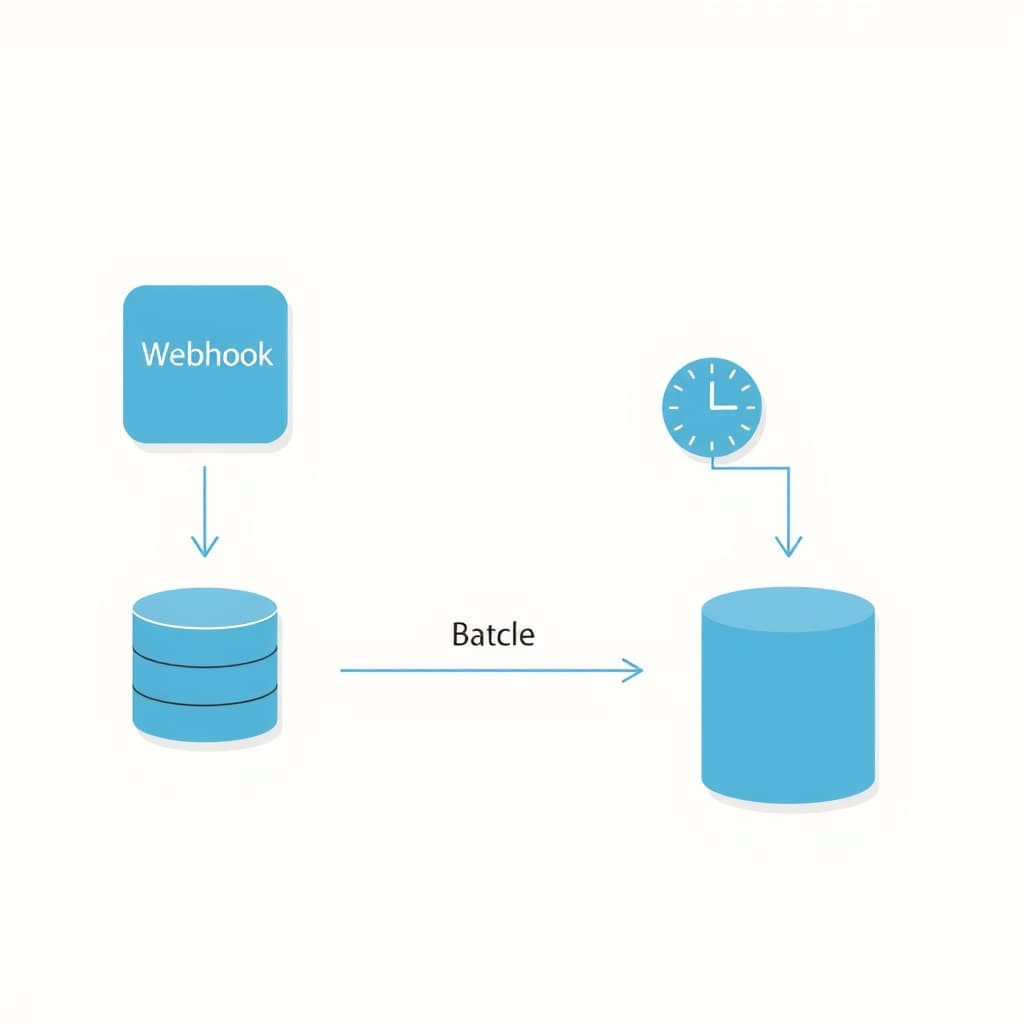
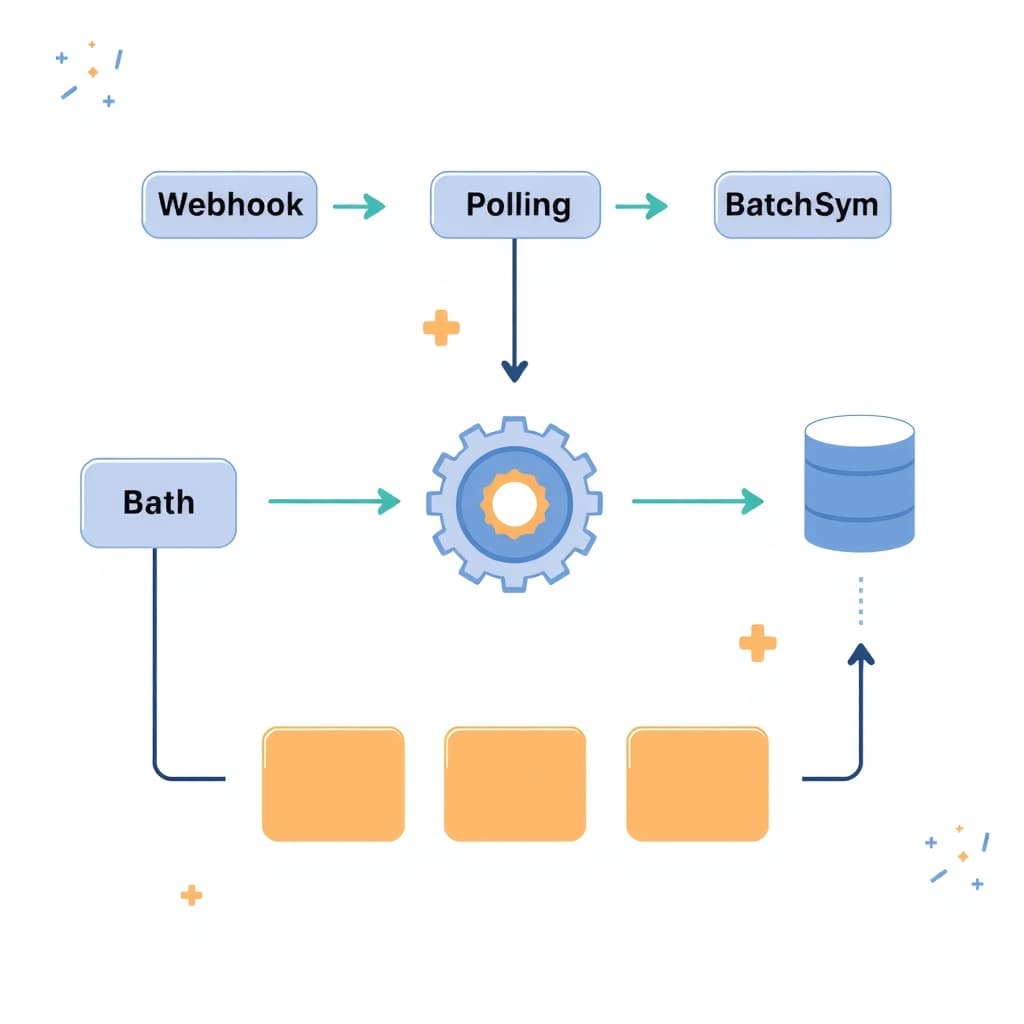
Not every integration needs the same sync mechanism. Webhooks excel when you need near‑real‑time updates and the partner guarantees delivery semantics. Polling is safer when the external API lacks reliable push support or when you need to enforce rate limits yourself. Batch jobs shine for large, periodic data loads such as nightly reconciliation of financial records. Evaluate each partner against criteria like latency tolerance, data volume, error handling, and operational cost. A hybrid approach is common: use webhooks for critical events (e.g., new lead creation) and schedule nightly batch jobs for bulk imports (e.g., historical transaction history). Choosing the right pattern up front prevents costly rewrites later.
Designing Idempotent Endpoints for Fault‑Tolerant Communication
Idempotency is the cornerstone of fault‑tolerant APIs. An endpoint that can receive the same payload multiple times without side effects protects you from duplicate webhook retries, network blips, or manual replays. Implement idempotency keys—either supplied by the caller or generated from a deterministic hash of the request body. Store the key alongside a processing status, and return a consistent response for repeated calls. This pattern also simplifies monitoring because you can count unique keys rather than raw request volume. In practice, an idempotent “create order” endpoint prevents double‑charging a customer if the payment provider retries the callback.
Implementing a Central Integration Layer vs Point‑to‑Point Scripts
A central integration layer (often called an Integration Hub or Service Bus) abstracts third‑party APIs behind a uniform internal contract. Instead of scattering point‑to‑point scripts across microservices, you route all external calls through this hub, where you enforce authentication, transformation, logging, and retry policies. The benefits are immediate: reduced code duplication, a single place to update when a partner changes their spec, and easier testing because you can mock the hub. For smaller teams, a lightweight hub built with Next.js API routes or a serverless function can provide the same discipline without the overhead of a full ESB.
Monitoring, Alerting, and Auto‑Recovery for Third‑Party Outages
Third‑party outages are inevitable; your job is to make them invisible to end users. Instrument every integration point with metrics such as latency, error rate, and success count. Use a monitoring platform to set thresholds (e.g., error rate > 2% for 5 minutes) and trigger alerts to the on‑call rotation. Auto‑recovery mechanisms—exponential backoff, circuit breakers, and dead‑letter queues—ensure that transient failures are retried without manual intervention. When a partner announces a planned downtime, your system should automatically switch to a graceful degradation mode, queuing inbound events for later processing.
Governance and Versioning: Keeping Integrations Stable Over Time
API contracts evolve. A solid governance model treats each integration as a versioned contract. When a partner releases a new version, you create a separate integration module that targets the new spec while keeping the old module active for legacy customers. Semantic versioning (MAJOR.MINOR.PATCH) helps communicate breaking changes. Pair this with a deprecation policy: give partners and internal teams at least 90 days notice before retiring an old version. Document every change in a shared changelog and automate regression tests against both versions. This disciplined versioning prevents surprise breakages during a product release cycle.
Roadmap Checklist: From Prototype to Production‑Ready Integration
Turning a proof‑of‑concept into a production‑grade connector requires a checklist:
- Define contract: request/response schemas, authentication, idempotency keys.
- Automated tests: unit, contract, and end‑to‑end tests covering success and failure paths.
- Observability: logging, metrics, and tracing integrated from day one.
- Security review: secret management, least‑privilege scopes, and GDPR considerations.
- Failover strategy: retries, circuit breakers, and dead‑letter handling.
- Documentation: internal runbooks and external partner guides.
- Release plan: staged rollout, feature flags, and rollback procedures.
Following this checklist ensures that the integration scales with your user base and aligns with the Ultimate MVP Scoping Checklist for Founders. If you need hands‑on help, our post‑launch support team can audit your integration pipeline and tighten any weak spots.
Conclusion & Next Steps: Partnering with Experts to Future‑Proof Your Stack
A well‑architected API integration strategy turns external dependencies from risk factors into growth levers. By mapping data, choosing the right sync pattern, building idempotent endpoints, centralizing logic, and instituting robust monitoring and versioning, you create a resilient foundation for scaling. The next logical step is to evaluate your current connectors against this framework and prioritize the gaps that threaten reliability.
Ready to future‑proof your SaaS stack? Book a call with SiteFusion and let our senior engineers design a custom integration layer that scales with your ambition.