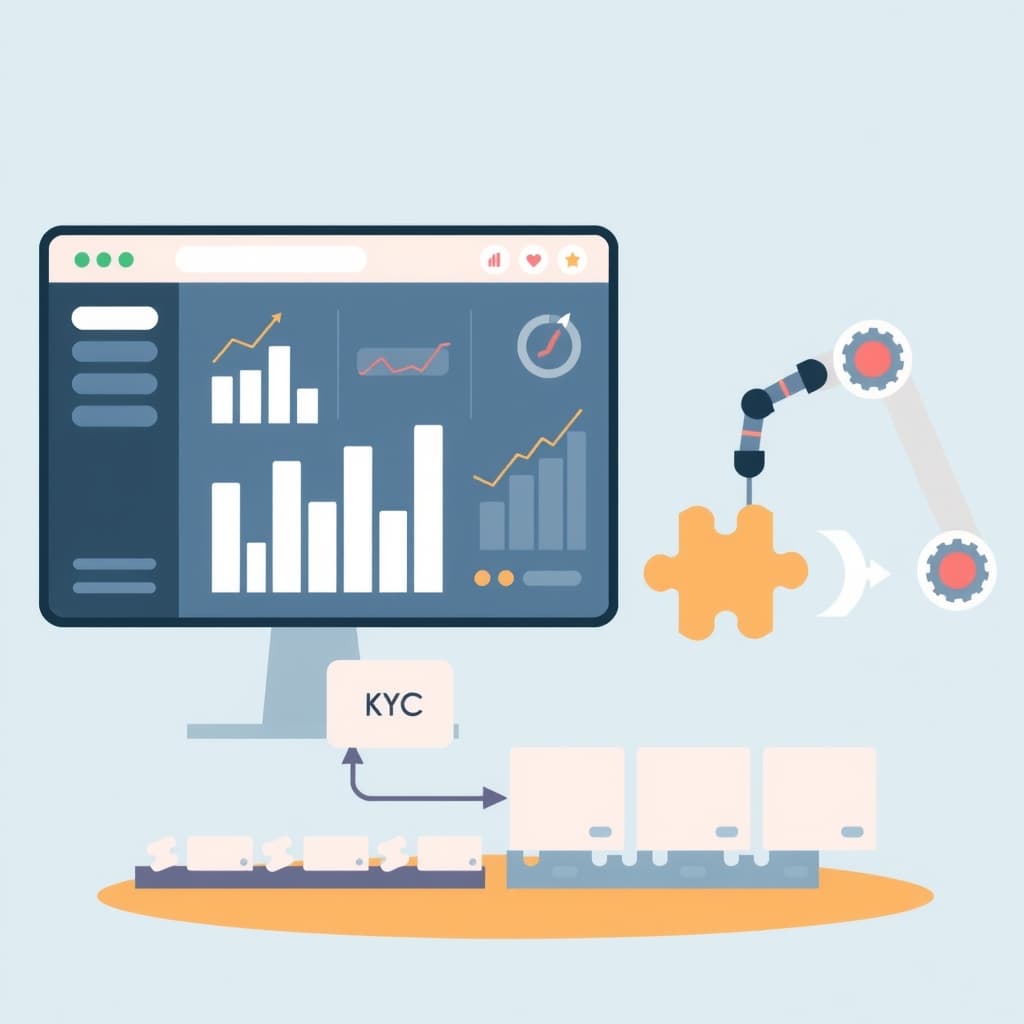
Why Fintech Companies Need Tailored Compliance Software
Fintech compliance software is not a luxury; it’s a survival tool. Rapid regulatory turnover, cross‑border transaction volumes, and the need to protect consumer data create a risk profile that generic SaaS cannot address. Off‑the‑shelf products often assume a one‑size‑fits‑all data model, which forces fintech teams to build costly work‑arounds or risk non‑compliance. Tailored solutions let you embed jurisdiction‑specific rules directly into the transaction flow, automate evidence collection for audits, and expose only the data required for each regulator. This reduces manual effort, lowers the chance of human error, and shortens the time to market for new financial products. Moreover, a custom platform can evolve alongside your business, adding new risk vectors without re‑architecting the entire stack. In short, a purpose‑built compliance layer turns a regulatory burden into a competitive advantage.
Core Regulatory Challenges That Off‑the‑Shelf SaaS Miss
Standard SaaS tools tend to focus on broad‑stroke controls—role‑based access, basic logging, and generic reporting. Fintech firms, however, confront a layered set of obligations: AML/KYC mandates, PSD2/PCI‑DSS requirements, and emerging data‑privacy statutes like GDPR or CCPA. These frameworks demand real‑time transaction screening, dynamic risk scoring, and granular audit trails that map each data point to a specific regulation. Off‑the‑shelf solutions rarely provide the configurability to toggle rules per market, nor can they handle the high‑throughput environments typical of payment processors. The result is a patchwork of manual checks, spreadsheet‑driven reconciliations, and an ever‑growing backlog of compliance tickets. By recognizing these gaps early, you can avoid costly retrofits and ensure that every new product launch passes the regulator’s checklist without a scramble.
First‑Priority Modules: Transaction Monitoring, KYC, and Reporting
When building fintech compliance software, start with three immutable pillars. Transaction monitoring must ingest every payment event, apply rule‑based filters, and flag anomalies for review—all within milliseconds. A robust KYC module should integrate identity‑verification APIs, store immutable verification records, and support ongoing customer‑due‑diligence cycles. Finally, reporting must generate regulator‑specific files on demand, with audit‑ready metadata that traces each data point back to its source. By modularizing these functions, you enable independent scaling and simplify future enhancements such as AI‑driven risk models. Each module should expose a clean API so that downstream systems—risk dashboards, fraud teams, and external auditors—can consume data without tight coupling. This architecture mirrors the best practices outlined in our API Integration Reliability Checklist, ensuring that even the most latency‑sensitive components remain reliable under load.
Designing a Scalable Data‑Pipeline for Real‑Time Risk Analysis
A fintech compliance platform lives or dies by its data pipeline. Begin with an event‑sourcing layer that captures every inbound and outbound transaction in an immutable log, such as Apache Kafka or a managed equivalent. From there, stream processors apply enrichment steps—currency conversion, geolocation tagging, and risk‑score calculation—before persisting results to a low‑latency store like Redis or DynamoDB for immediate lookup. Batch jobs can later aggregate nightly summaries for regulatory filings. To keep the pipeline resilient, implement idempotent consumers, schema versioning, and dead‑letter queues for anomalous records. Monitoring should be baked in from day one; the Post‑Launch Monitoring Checklist for Growing SaaS provides a practical framework for alerting on latency spikes, back‑pressure, and data loss. This design ensures that risk analysis scales with transaction volume, preserving both performance and compliance integrity.
Integrating Legacy Banking Systems with Modern APIs
Most fintechs inherit core banking systems that expose only SOAP or file‑based interfaces. Bridging these legacy endpoints to a modern, RESTful compliance layer requires an integration façade. Use an API gateway to translate inbound JSON payloads into the format expected by the legacy system, handling authentication, message sequencing, and error mapping. A lightweight adapter—often written in Node.js or Go—can batch requests to reduce round‑trip overhead, while a message queue smooths spikes in traffic. Security is paramount; enforce mutual TLS and token‑based auth at the gateway, and audit every transformation for traceability. By abstracting the legacy contract behind a clean API, you enable rapid feature development on the compliance side without risking destabilization of the core banking core. This approach aligns with the principles in our post‑launch support offering, ensuring that any integration hiccup is swiftly addressed.
Balancing Security, Audits, and Developer Velocity for Fintech compliance software
Security cannot be an afterthought in a compliance‑centric product, yet development teams need the agility to ship features weekly. Adopt a “security as code” mindset: embed static analysis, dependency scanning, and secret detection into the CI/CD pipeline. Use infrastructure‑as‑code tools to provision environments that meet SOC 2 and ISO 27001 baselines, and generate audit artifacts automatically. Feature flags allow you to release experimental modules to a subset of users while keeping the production‑grade compliance engine locked down. Regular “purple‑team” exercises—combining red‑team attack simulations with blue‑team defensive reviews—keep the security posture sharp without slowing delivery. By codifying controls, you satisfy auditors with reproducible evidence and free developers from manual compliance checklists, striking a pragmatic balance between risk mitigation and speed.
Roadmap: From MVP to Enterprise‑Grade Compliance Platform
Start with an MVP that validates core transaction monitoring and KYC flows for a single jurisdiction. Scope the MVP using the A Practical MVP Scoping Framework for Early‑Stage Founders, focusing on high‑impact use cases and measurable success criteria. Once the MVP passes internal audit, iterate by adding multi‑jurisdictional rule engines, automated reporting templates, and a self‑service compliance dashboard for ops teams. Parallel to feature growth, invest in observability—distributed tracing, centralized logging, and real‑time metrics—to sustain reliability at scale. By year two, the platform should support horizontal scaling of the data pipeline, role‑based access controls for enterprise customers, and a plug‑in architecture for future AI‑driven risk models. This staged approach reduces technical debt, aligns engineering effort with regulatory timelines, and provides a clear narrative for investors and board members.
Measuring ROI and Gaining Stakeholder Buy‑In
Quantifying the value of fintech compliance software hinges on two metrics: risk reduction and operational efficiency. Calculate avoided fines by estimating the probability of non‑compliance incidents before and after implementation. Pair this with time‑saved metrics—hours eliminated from manual reconciliation, onboarding, and audit preparation. Present these figures in a concise business case that ties compliance spend to revenue protection and faster market entry. Visual dashboards that surface compliance health scores can be used in quarterly board reviews to keep the conversation data‑driven. Additionally, benchmark against industry standards using the How to Prove Internal Ops Dashboard ROI in 7 Concrete Steps guide, reinforcing credibility with peers and regulators alike.
Next Steps: Partnering with a Custom Development Team
Building a robust fintech compliance platform requires deep domain expertise, seasoned full‑stack engineers, and a partner that can move from prototype to production without sacrificing security. SiteFusion’s team specializes in Next.js/React front‑ends, event‑driven back‑ends, and API‑first architecture—all essential for the use cases outlined above. We work closely with product, compliance, and ops leaders to translate regulatory language into code, delivering a solution that scales with your transaction volume and regulatory footprint. Ready to turn compliance from a bottleneck into a growth engine? Book a call with our architects today and start mapping your custom compliance roadmap.
In conclusion, a purpose‑built compliance platform empowers fintech firms to navigate complex regulations, accelerate product launches, and protect their bottom line. By following this playbook and partnering with a seasoned development team, you can achieve a secure, auditable, and scalable solution that grows alongside your business.