Why Logistics Companies Need Tailor‑Made Software Today custom software logistics
The logistics landscape is shifting from manual spreadsheets to real‑time, data‑driven operations. Legacy ERP systems were built for predictable, volume‑based shipping, but today’s customers demand same‑day visibility, dynamic pricing, and omnichannel fulfillment. Off‑the‑shelf tools can’t keep pace with the nuanced rules of carrier contracts, regional compliance, or the need to orchestrate hundreds of micro‑tasks across warehouses, trucks, and last‑mile providers. Custom software logistics solutions let you embed your unique business rules directly into the workflow, reduce manual hand‑offs, and create a single source of truth for every stakeholder. The payoff is measurable: faster order-to‑delivery cycles, lower error rates, and the ability to scale profitably without a proportional increase in headcount. In short, a bespoke platform becomes the competitive engine that turns operational complexity into a sustainable advantage.
Assessing Your Current Tech Stack: Gaps and Pain Points
Before you invest, map every system that touches a shipment—from TMS and WMS to accounting and CRM. Identify where data silos exist, where manual entry still occurs, and where latency hurts decision‑making. Common gaps include fragmented carrier rate tables, lack of real‑time GPS integration, and disconnected customer portals that force support teams to chase information. Conduct stakeholder interviews across dispatch, warehouse, finance, and customer service to surface hidden pain points. Prioritize gaps that directly impact cost (e.g., missed dock appointments) or customer experience (e.g., inaccurate ETAs). This assessment becomes the foundation for a roadmap that aligns technical debt reduction with business outcomes, ensuring you don’t build a solution that merely shifts the bottleneck elsewhere.
First‑Priority Automation: Dispatch, Routing, and Real‑Time Tracking
Automation delivers the quickest ROI in logistics because it removes repetitive decision loops. Start with dispatch: replace manual load boards with an algorithm that matches shipments to drivers based on capacity, location, and service level. Next, embed a routing engine that continuously re‑optimizes paths as traffic, weather, or load changes occur. Finally, integrate real‑time GPS feeds and IoT sensor data to provide end‑to‑end visibility. By automating these three pillars, you reduce manual planning time by up to 40% and improve on‑time delivery rates. The automation layer should be built as a set of reusable services so you can extend it later to include predictive maintenance or dynamic pricing. For deeper guidance, see our AI Workflow Automation Roadmap.
Building a Centralized Operations Dashboard for Visibility and ROI
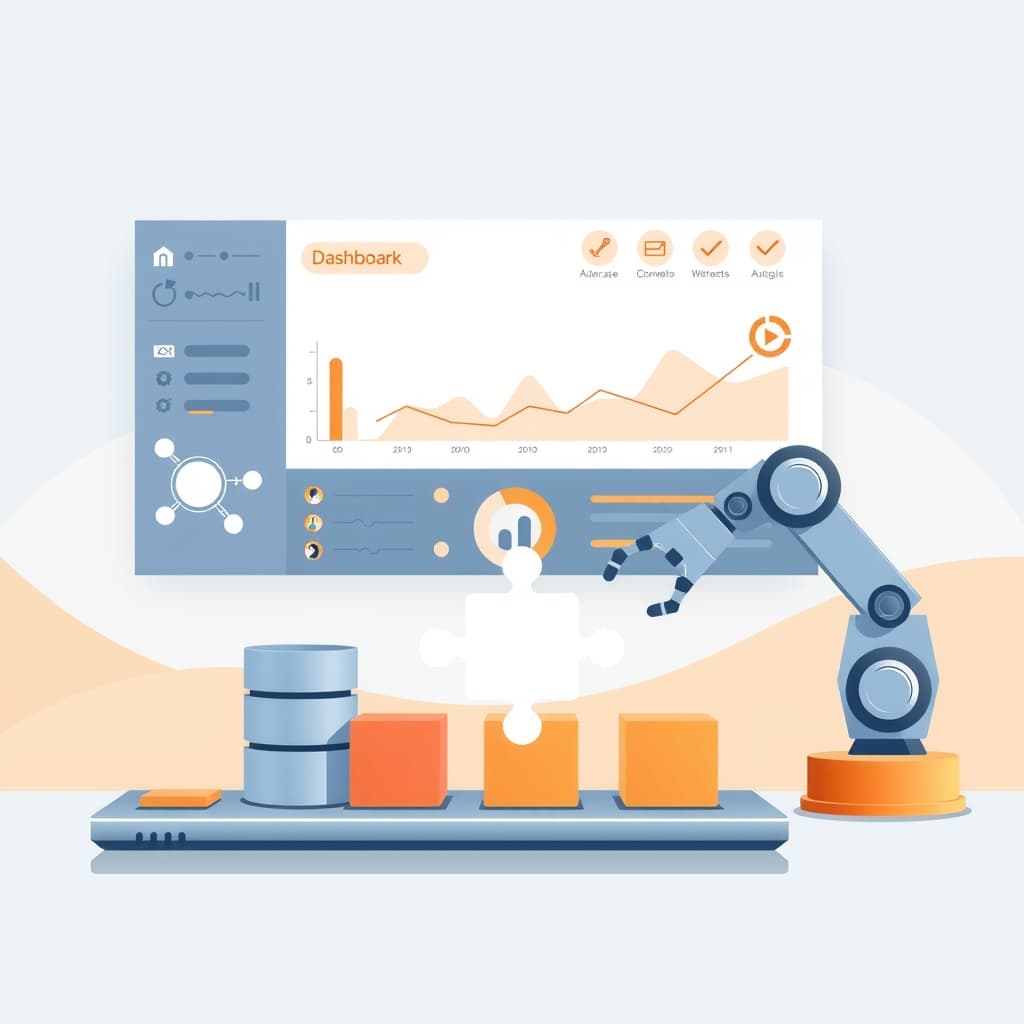
A single pane of glass turns raw data into actionable insight. Design the dashboard around the most critical metrics: load‑to‑delivery time, capacity utilization, exception rates, and cost per mile. Use role‑based views so dispatch sees real‑time alerts, finance monitors cost variance, and executives track KPI trends over quarters. Leverage component libraries that support accessibility and responsive design—principles outlined in our Designing Accessible SaaS Dashboards guide. Incorporate drill‑down capabilities so users can trace a delayed delivery back to the specific carrier event that caused it. When built on a modern stack, the dashboard can pull data from micro‑services in near real‑time, delivering the confidence needed to make rapid operational adjustments and demonstrate ROI to stakeholders.
Integrating Carrier APIs and Freight Marketplaces Securely
Carrier connectivity is the lifeblood of modern logistics platforms. Each carrier exposes its own API schema, authentication method, and rate‑calculation logic. Adopt a unified integration layer that normalizes these differences into a common contract used by your internal services. Secure the integrations with OAuth 2.0, token rotation, and strict IP whitelisting to prevent credential leakage. Implement retry and circuit‑breaker patterns to handle intermittent outages without cascading failures. Our API Integration Reliability Checklist provides a practical checklist to audit these safeguards. Once the integration layer is stable, you can quickly onboard new carriers or marketplace partners, expanding your service offering without re‑architecting core systems.
Scalable Architecture Choices: Next.js/React, Microservices, and Cloud Hosting
Choosing the right architecture determines how well your platform grows with volume. A front‑end built with Next.js and React delivers fast, server‑rendered pages for customer portals while supporting rich, interactive dashboards for internal users. Pair this with a microservices backend—each service handling a bounded context like dispatch, billing, or tracking—to enable independent scaling and rapid iteration. Deploy services on a cloud provider that offers auto‑scaling groups, managed databases, and serverless functions for burst workloads. Leverage container orchestration (e.g., Kubernetes) for predictable rollouts and zero‑downtime upgrades. For deeper technical insight, read our Next.js Component Strategy article. This combination balances developer productivity with the resilience needed for high‑volume, global logistics operations.
Compliance, Data Security, and Audits in the Logistics Space
Logistics firms handle personally identifiable information (PII), payment data, and regulated shipment details (e.g., hazardous materials). Compliance frameworks such as SOC 2, ISO 27001, and regional data‑privacy laws must be baked into the architecture from day one. Encrypt data at rest and in transit, enforce role‑based access controls, and maintain immutable audit logs for every API call and data change. Conduct regular penetration tests and third‑party audits to validate controls. Our SOC 2 Readiness Checklist outlines the steps to achieve certification, which not only protects your business but also builds trust with carriers and enterprise customers.
Measuring Success: KPI Framework and Continuous Improvement
Without a clear KPI framework, even the most sophisticated platform can drift. Define leading indicators (e.g., dispatch automation rate, API success ratio) and lagging indicators (e.g., on‑time delivery, cost per shipment). Set quarterly targets and embed automated reporting into your dashboard so teams see real‑time performance against goals. Use A/B testing for new routing algorithms or UI changes, and feed the results back into the product backlog. Continuous improvement loops—monitor, analyze, iterate—ensure the platform evolves with market demands and internal growth. This disciplined approach mirrors the methodology in our Post‑Launch Reliability Roadmap, which helps maintain stability while scaling.
Next Steps: Partnering with a Custom Software Vendor and CTA
Building a robust, future‑proof logistics platform is a multi‑discipline effort that requires deep domain knowledge, modern engineering practices, and a commitment to security. A seasoned partner can accelerate delivery, mitigate risk, and provide the ongoing support needed for post‑launch iteration. At SiteFusion we specialize in custom software logistics solutions—from initial discovery to full‑stack development and post‑launch support. Review our portfolio to see how we’ve helped other logistics firms modernize their tech stack. Ready to turn operational challenges into a competitive edge? Book a call with us today and start mapping your custom software roadmap.