Choosing the right development partner is a make‑or‑break decision for any growing company. The sooner you can spot dev partner red flags, the less likely you are to waste months of effort, budget overruns, or product delays. In this guide we break down the seven most common warning signs and give you a rapid audit you can run before you sign a contract.
Why Spotting Red Flags Early Saves Time and Money
Early detection of dev partner red flags prevents costly re‑work and protects your runway. When a partner’s processes, pricing, or technical depth are misaligned with your expectations, the inevitable result is scope creep, missed deadlines, and hidden fees. By vetting these factors up front, you keep your product roadmap on track and preserve the focus of your internal team. Moreover, early clarity builds trust: a partner that is transparent about capabilities and constraints signals a collaborative mindset, which translates into smoother hand‑offs and faster iteration cycles. In practice, founders who conduct a disciplined pre‑selection audit report up to 30 % faster time‑to‑market because they avoid the “discovery‑phase surprise” that plagues many outsourced projects.
Lack of Transparent Pricing and Scope Definition
One of the most glaring dev partner red flags is an opaque pricing model. If a vendor provides a high‑level quote without breaking down hourly rates, fixed‑price milestones, or potential change‑order fees, you’re likely to encounter surprise invoices later. Equally concerning is an ill‑defined scope: vague feature lists, ambiguous acceptance criteria, and no documented change‑control process. This combination invites scope creep and makes it impossible to measure progress against budget. Look for partners who share a detailed proposal that aligns with a framework like our MVP scoping guide. Clear line‑item pricing, a well‑articulated scope, and a mutually agreed‑upon change‑request workflow are non‑negotiable signs of a professional engagement.
Poor Communication Cadence and Unclear Points of Contact
Communication breakdowns are a classic dev partner red flag. If the vendor cannot commit to a regular status cadence—whether it’s weekly stand‑ups, bi‑weekly demos, or a shared project board—you’ll struggle to stay aligned on priorities. Equally problematic is the absence of a single point of contact (SPOC). When you have to chase multiple engineers, account managers, and recruiters for updates, accountability evaporates. A reliable partner will designate a project manager who owns the communication rhythm, escalates risks, and ensures that every stakeholder knows who to reach for technical or contractual questions. Consistent, transparent updates reduce uncertainty and keep your internal team focused on strategic decisions rather than firefighting.
Missing or Outdated Portfolio and Case Studies
A partner that cannot showcase recent, relevant work is raising a serious dev partner red flag. Portfolios should reflect the technologies you plan to use—such as Next.js, React, or AI‑driven automation—and demonstrate outcomes like user adoption or revenue impact. Outdated case studies, especially those predating modern cloud architectures, suggest the team may not be keeping pace with industry best practices. Ask for live demos or references from clients who have launched products similar to yours. Our own portfolio of products illustrates the depth of experience we bring, from B2B SaaS platforms to complex internal dashboards.
Inconsistent Technical Expertise and Staffing Gaps
Technical depth is a non‑negotiable criterion; gaps in expertise are a clear dev partner red flag. If the team’s skill matrix shows turnover in key roles—like senior full‑stack engineers, UI/UX designers, or DevOps specialists—you risk delays when those individuals leave. Verify that the partner maintains a bench of senior talent and that junior staff are paired with mentors. Ask about their hiring pipeline, training programs, and how they handle resource scaling during peak development phases. Consistency in staffing ensures continuity of architectural decisions and reduces the learning curve when new members join the project.
Absence of Formal Project Governance and Documentation
Without a governance framework, projects drift. A missing governance structure—no defined sprint reviews, risk registers, or documented decisions—is a red flag that can lead to misaligned expectations. Look for partners who adopt industry‑standard artifacts: a product backlog, sprint goals, and a definition of “done.” Documentation should be version‑controlled and accessible to both parties, covering API contracts, data models, and deployment pipelines. This level of rigor not only supports current work but also eases future maintenance, especially when you engage post‑launch support services like our post‑launch support offering.
Unrealistic Timelines and Overpromising Delivery
When a vendor promises a launch date that seems too good to be true, treat it as a dev partner red flag. Overly aggressive schedules often hide hidden assumptions—such as unlimited overtime, reduced testing, or omitted features. A realistic timeline accounts for discovery, design iterations, development sprints, QA, and user acceptance testing. Ask the partner to walk you through their estimation methodology and to provide a risk‑adjusted schedule. If they cannot justify the dates with concrete milestones, you should expect delays and potential quality compromises.
How to Conduct a Rapid Red‑Flag Audit Before Signing
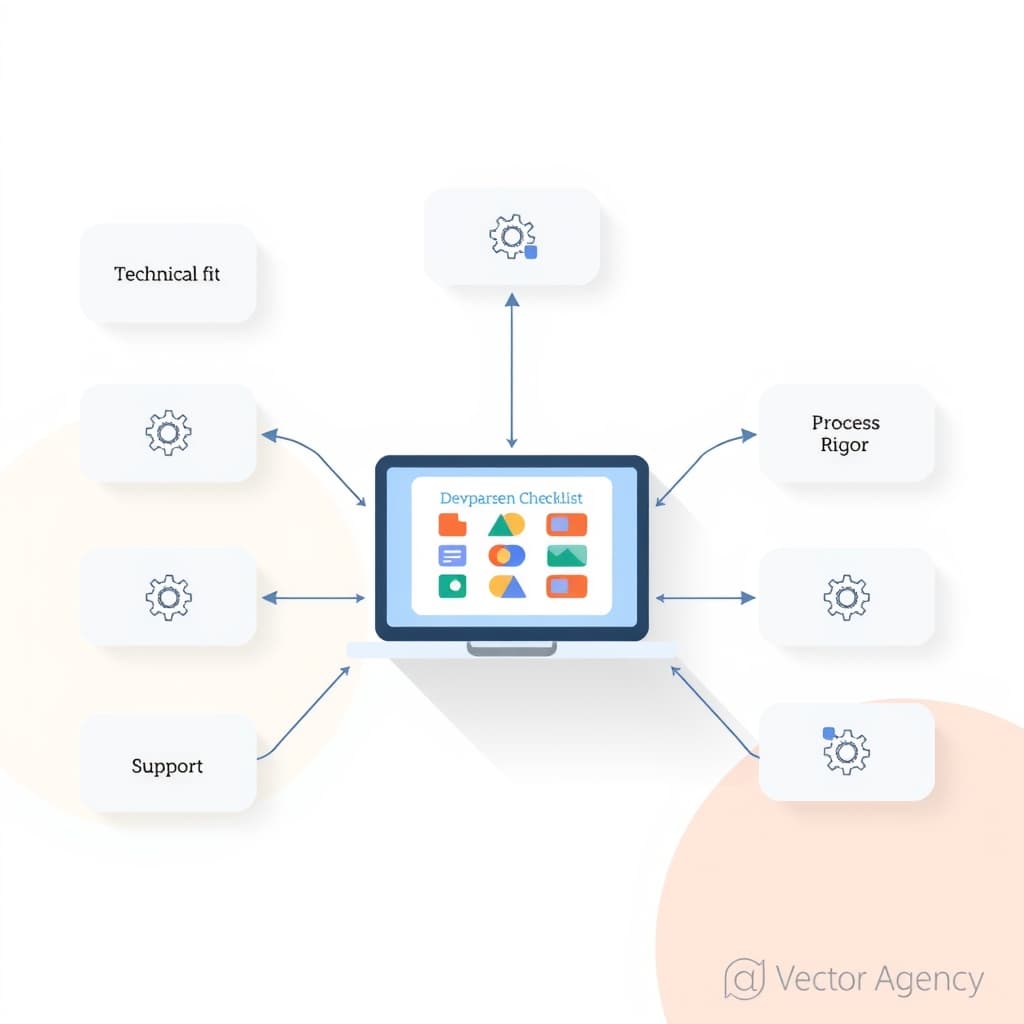
Before you commit, run a focused audit using this checklist:
- Request a detailed proposal that breaks down pricing, scope, and change‑order procedures.
- Confirm a single point of contact and a documented communication cadence.
- Review at least three recent case studies that match your technology stack.
- Verify the team’s composition, seniority levels, and turnover rates.
- Ask for samples of project governance artifacts: sprint plans, risk logs, and documentation repositories.
- Challenge any timeline that lacks buffer for testing and iteration.
- Cross‑reference the partner’s claims with the broader guidance in our hiring a dev partner pillar guide.
Completing this audit typically takes a few hours but can save months of rework and hundreds of thousands of dollars.
Next Steps: Choosing a Trustworthy Dev Partner and Onboarding Checklist
Once you’ve cleared the red flags, move forward with a structured onboarding process. Start with a kickoff meeting that aligns on goals, success metrics, and a shared project timeline. Establish a collaboration space—such as a shared Confluence or Notion workspace—and populate it with the agreed‑upon documentation. Define clear acceptance criteria for each deliverable and set up regular demo sessions. Finally, schedule a post‑launch review to assess performance against the initial roadmap and to plan any needed support. By following this checklist, you turn a vetted partner into a strategic extension of your product team.
Ready to partner with a team that respects transparency, technical depth, and reliable delivery? Book a call with SiteFusion today and start building with confidence.