Why a Dedicated Automation Playbook Matters for Healthcare Providers
In a sector where patient safety, regulatory compliance, and rapid response intersect, a Healthcare Automation Playbook is more than a checklist—it’s a strategic framework that aligns technology with clinical outcomes. Founders and ops leads often juggle fragmented tools, leading to duplicated effort and hidden costs. A playbook forces you to define the end‑to‑end flow, prioritize high‑impact automation, and set measurable success criteria before any code is written. This disciplined approach reduces the risk of costly rework, accelerates time‑to‑value, and creates a common language between product managers, clinicians, and developers. By documenting assumptions, data hand‑offs, and compliance checkpoints up front, you lay the groundwork for scalable growth and future‑proof integrations.
Assessing Current Pain Points: Data Silos, Manual Reporting, and Compliance Burdens
The first step in any Healthcare Automation Playbook is a candid audit of existing friction. Data silos between EHRs, billing platforms, and scheduling systems force staff to copy‑paste information, increasing error rates and audit exposure. Manual reporting—often built in spreadsheets—drains analyst hours and makes real‑time decision‑making impossible. Compliance burdens, from HIPAA to local accreditation standards, require repeatable processes that are rarely documented. Map each workflow, note the hand‑offs, and quantify the time spent on non‑value‑added tasks. This exercise uncovers low‑hanging automation opportunities and informs the prioritization matrix you’ll use later. For a deeper dive on ROI measurement, see our guide on How to Prove ROI for an Internal Ops Dashboard in 5 Steps.
System #1 – Patient Intake & Scheduling Hub
Front‑door automation starts with a unified intake portal that captures demographics, insurance verification, and consent forms before a patient steps into the clinic. By integrating with calendar APIs and the EHR, the hub can auto‑populate appointment slots, send reminders, and flag eligibility issues in real time. The result is a smoother patient experience, reduced no‑show rates, and a cleaner data set for downstream processes. Building this as a custom solution—rather than stitching together multiple SaaS widgets—ensures HIPAA‑compliant data handling and the flexibility to add specialty‑specific fields as your practice expands.
System #2 – Integrated Billing & Claims Automation
Billing teams spend a disproportionate amount of time reconciling charges, verifying coverage, and re‑submitting denied claims. An integrated billing engine pulls service codes directly from the clinical documentation system, applies payer contracts, and generates claim packets ready for electronic submission. Automated denial management workflows route rejected claims back to the originating clinician with clear remediation steps, cutting the claim cycle from weeks to days. The engine also produces real‑time revenue dashboards, giving CFOs visibility into cash flow without manual report compilation.
System #3 – Clinical Documentation & EHR Sync Engine
Physicians still wrestle with click‑heavy EHR interfaces that force them to duplicate notes across systems. A sync engine that listens to clinical events—procedure start, medication administration, discharge—can auto‑populate structured fields in the primary EHR while simultaneously feeding data to ancillary tools like population health platforms. Leveraging standards such as FHIR ensures interoperability and future‑proofs the architecture against new regulations. The engine also supports versioned templates, enabling specialty teams to tailor documentation without breaking downstream analytics.
System #4 – Provider Credentialing & Compliance Tracker
Maintaining up‑to‑date provider credentials is a compliance nightmare for growing health systems. A dedicated tracker centralizes licenses, board certifications, malpractice insurance, and background checks. Automated alerts notify credentialing coordinators of upcoming expirations, and workflow rules enforce re‑verification before a provider can be scheduled for patient encounters. By logging every action, the system creates an audit trail that satisfies regulators and reduces the risk of credentialing gaps that could lead to penalties.
System #5 – Analytics Dashboard for Population Health & Operational KPIs
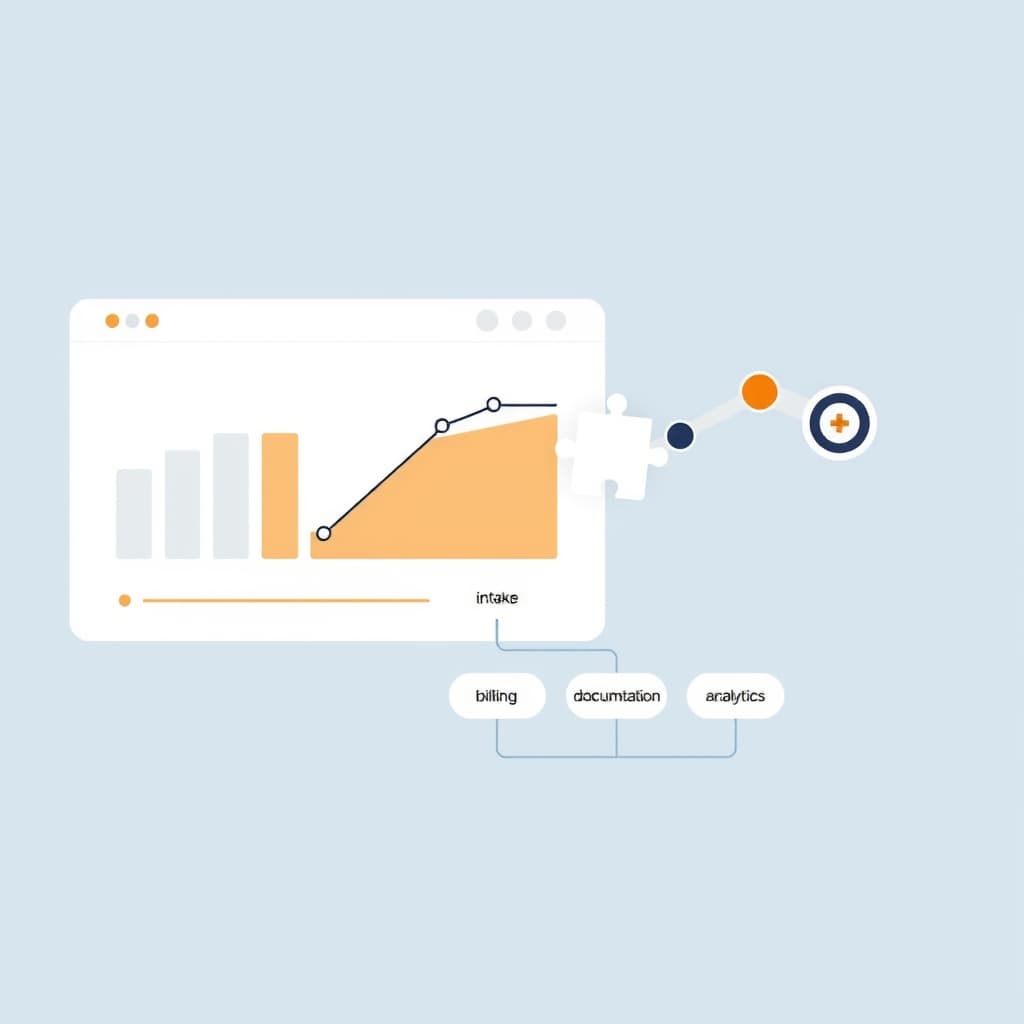
Data becomes actionable only when presented in a coherent, role‑based dashboard. This system aggregates metrics from intake, billing, clinical documentation, and credentialing engines into a single view. Operational leaders can monitor throughput, average length of stay, and claim denial rates, while population health teams track disease prevalence, readmission risk, and preventive care compliance. Built on a modular Next.js front‑end, the dashboard supports drill‑down capabilities and can be extended with new widgets as your analytics maturity evolves.
Healthcare Automation Playbook – Roadmap & Prioritization: From MVP to Full‑Scale Rollout
With the five systems identified, the next step is a phased rollout that balances impact and risk. Start with an MVP focused on the Patient Intake & Scheduling Hub, as it delivers immediate patient‑facing benefits and validates integration patterns. Use the MVP Scoping Strategies for Founders to Scale to define success metrics and a timeline of 8‑12 weeks. Once the hub is stable, layer in Billing Automation to capture revenue gains, followed by the Clinical Documentation Sync Engine to close the data loop. Credentialing and the analytics dashboard are higher‑complexity initiatives that should be tackled after core revenue‑impact systems are reliable. Throughout, adopt a post‑launch support model to monitor performance, address edge cases, and iterate based on user feedback.
Conclusion & Next Steps: Partnering with a Custom Software Team
Executing a Healthcare Automation Playbook requires deep domain knowledge, robust architecture, and disciplined product management. Off‑the‑shelf tools rarely meet the strict security and integration demands of mid‑size providers, making a custom development partner essential. Our team at SiteFusion has built end‑to‑end automation suites for dozens of health tech clients, handling everything from API reliability to SOC 2 readiness. Ready to turn your automation vision into reality? Book a call with us today and let’s design a roadmap that scales with your organization.